


The Changing Therapeutic Landscape of Metastatic Renal Cancer
- PMID: 31443471
- PMCID: PMC6770566
- DOI: 10.3390/cancers11091227
The Changing Therapeutic Landscape of Metastatic Renal Cancer
Abstract
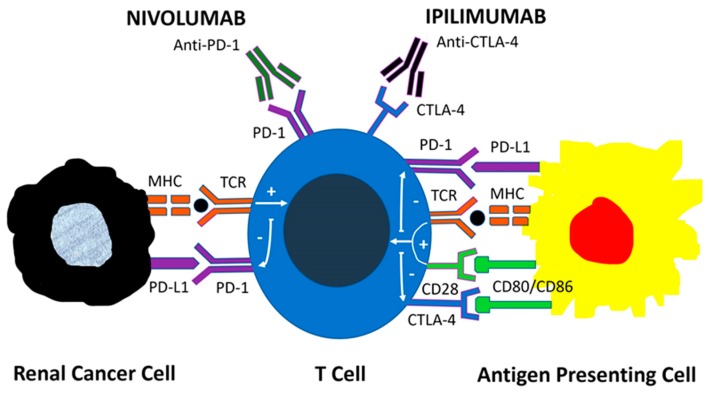
The practising clinician treating a patient with metastatic clear cell renal cell carcinoma (CCRCC) faces a difficult task of choosing the most appropriate therapeutic regimen in a rapidly developing field with recommendations derived from clinical trials. NCCN guidelines for kidney cancer initiated a major shift in risk categorization and now include emerging treatments in the neoadjuvant setting. Updates of European Association of Urology clinical guidelines also include immune checkpoint inhibition as the first-line treatment. Randomized trials have demonstrated a survival benefit for ipilimumab and nivolumab combination in the intermediate and poor-risk group, while pembrolizumab plus axitinib combination is recommended not only for unfavorable disease but also for patients who fit the favorable risk category. Currently vascular endothelial growth factor (VEGF) targeted therapy based on tyrosine kinase inhibitors (TKI), sunitinib and pazopanib is the alternative regimen for patients who cannot tolerate immune checkpoint inhibitors (ICI). Cabozantinib remains a valid alternative option for the intermediate and high-risk group. For previously treated patients with TKI with progression, nivolumab, cabozantinib, axitinib, or the combination of ipilimumab and nivolumab appear the most plausible alternatives. For patients previously treated with ICI, any VEGF-targeted therapy, not previously used in combination with ICI therapy, seems to be a valid option, although the strength of this recommendation is weak. The indication for cytoreductive nephrectomy (CN) is also changing. Neoadjuvant systemic therapy does not add perioperative morbidity and can help identify non-responders, avoiding unnecessary surgery. However, the role of CN should be investigated under the light of new immunotherapeutic interventions. Also, markers of response to ICI need to be identified before the optimal selection of therapy could be determined for a particular patient.
Keywords: cytoreductive nephrectomy; efficacy; immune checkpoint inhibitors; renal cell carcinoma; toxicity; tyrosine kinase inhibitors.
Conflict of interest statement
The authors declare no conflict of interest.
Figures
References
Publication types
LinkOut - more resources
Full Text Sources
