


Critical combination of initial markers for predicting refractory Mycoplasma pneumoniae pneumonia in children: a case control study
- PMID: 31443650
- PMCID: PMC6706904
- DOI: 10.1186/s12931-019-1152-5
Critical combination of initial markers for predicting refractory Mycoplasma pneumoniae pneumonia in children: a case control study
Abstract
Background: It is unclear whether the responses of refractory and common Mycoplasma pneumoniae (MP) pneumonia to macrolides differ. Hence, this study aimed to identify biomarkers that may be used to distinguish refractory and common pneumonias caused by MP in children at hospital admission.
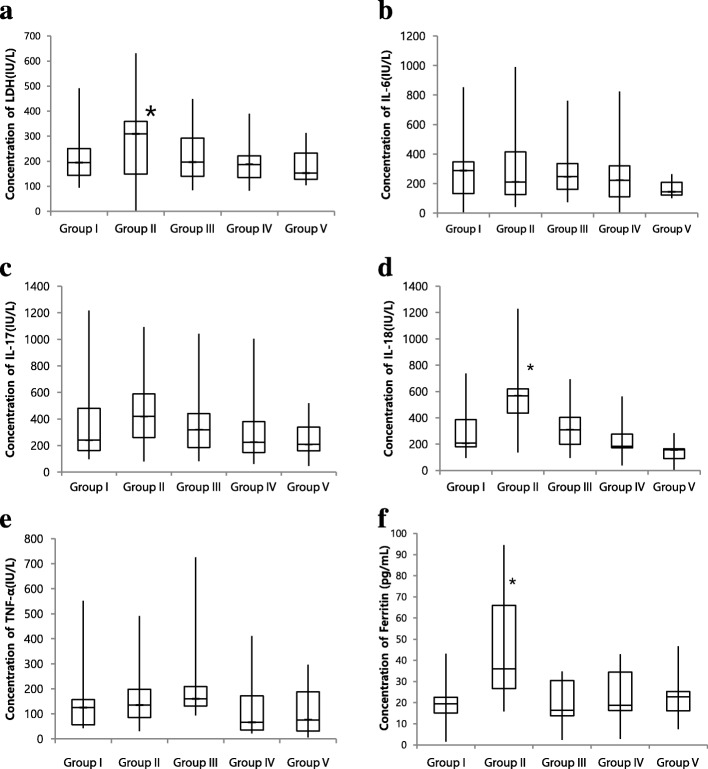
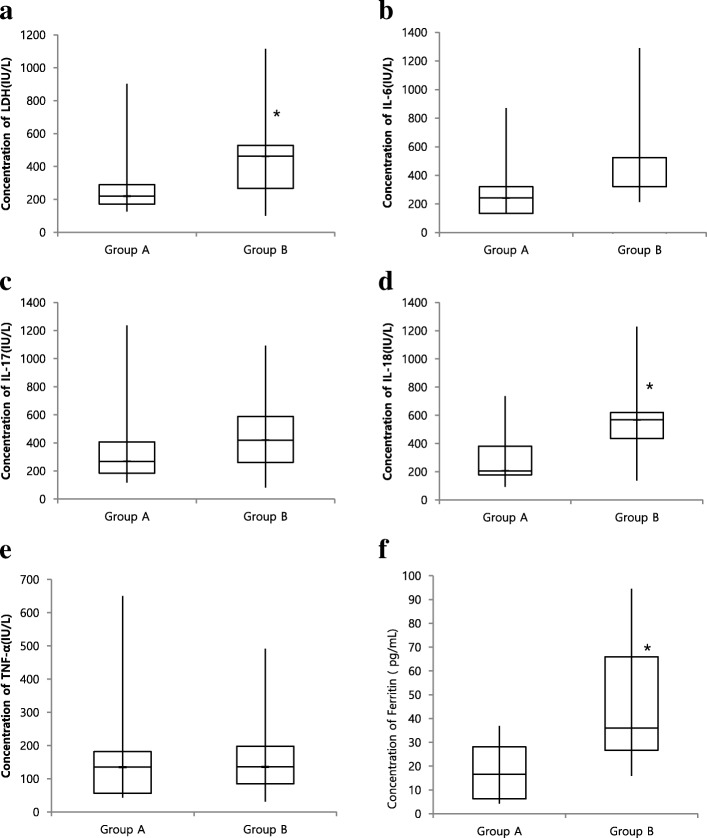
Methods: The study included 123 children divided into five groups according to infection agent and treatment protocol: Group I included those with MP infection without documented viral infection, treated with only macrolides; Group II included those with MP infection without documented viral infection, treated with a combination of macrolides and methylprednisolone; Group III included those with MP infection and documented viral infection, treated with only macrolides; Group IV included those with viral pneumonia without documented MP infection; Group V was the control group composed of admitted children without MP or a documented viral infection. These five groups were further subdivided into Groups A (including Groups I, III, IV, and V) and B (Group II) according to the responses to macrolide treatment. Concentrations of cytokines interleukin 6, interleukin 17, interleukin 18, and tumor necrosis factor-α, and lactate dehydrogenase, and ferritin of all children were evaluated, and these levels were compared among the groups. Statistical comparisons were made using Kruskal Wallis test and Mann-Whitney U test.
Results: Serum lactate dehydrogenase, interleukin 18, and ferritin concentrations were significantly higher in Group II than in Groups I, III, IV, and V and were significantly higher in Group B than in Group A. When the serum lactate dehydrogenase concentration was 350 IU/L or higher, the sensitivity and specificity for diagnosing refractory MP pneumonia were 73 and 80%, respectively. When the interleukin 18 level was 360 pg/mL or higher, the sensitivity and specificity for diagnosing refractory MP pneumonia were 93 and 70%, respectively. When the ferritin level was 230 pg/mL or higher, the sensitivity and specificity for diagnosing refractory MP pneumonia were 67 and 67%, respectively.
Conclusion: These results suggest that serum lactate dehydrogenase, interleukin 18, and ferritin constitute the critical combination of biomarkers useful for predicting refractory MP pneumonia in children at hospital admission.
Keywords: Biomarkers; Mycoplasma pneumoniae; Refractory Mycoplasma pneumoniae pneumonia.
Conflict of interest statement
The authors declare that they have no competing interests.
Figures

References
MeSH terms
Substances
LinkOut - more resources
Full Text Sources
