


Neoantigen vaccine: an emerging tumor immunotherapy
- PMID: 31443694
- PMCID: PMC6708248
- DOI: 10.1186/s12943-019-1055-6
Neoantigen vaccine: an emerging tumor immunotherapy
Abstract
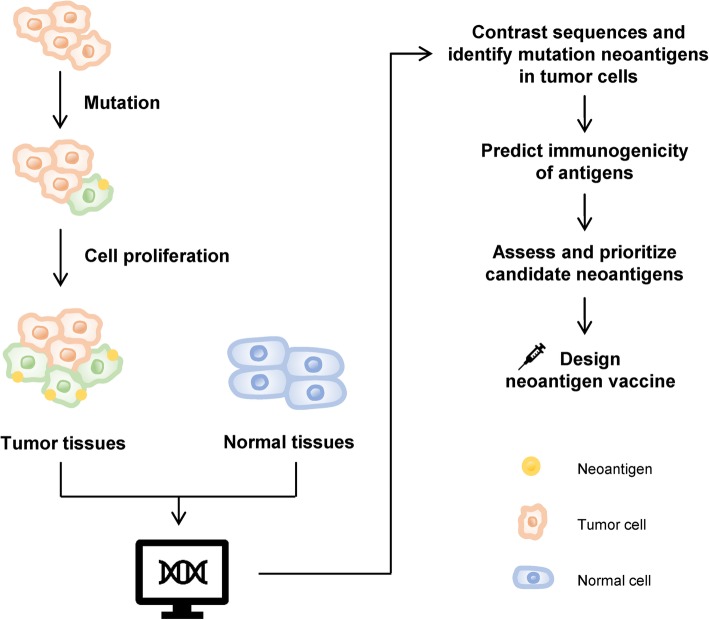
Genetic instability of tumor cells often leads to the occurrence of a large number of mutations, and expression of non-synonymous mutations can produce tumor-specific antigens called neoantigens. Neoantigens are highly immunogenic as they are not expressed in normal tissues. They can activate CD4+ and CD8+ T cells to generate immune response and have the potential to become new targets of tumor immunotherapy. The development of bioinformatics technology has accelerated the identification of neoantigens. The combination of different algorithms to identify and predict the affinity of neoantigens to major histocompatibility complexes (MHCs) or the immunogenicity of neoantigens is mainly based on the whole-exome sequencing technology. Tumor vaccines targeting neoantigens mainly include nucleic acid, dendritic cell (DC)-based, tumor cell, and synthetic long peptide (SLP) vaccines. The combination with immune checkpoint inhibition therapy or radiotherapy and chemotherapy might achieve better therapeutic effects. Currently, several clinical trials have demonstrated the safety and efficacy of these vaccines. Further development of sequencing technologies and bioinformatics algorithms, as well as an improvement in our understanding of the mechanisms underlying tumor development, will expand the application of neoantigen vaccines in the future.
Keywords: Immunotherapy; Malignancy; Neoantigen; Tumor; Vaccine.
Conflict of interest statement
The authors declare that they have no competing interests.
Figures


References
-
- Bray Freddie, Ferlay Jacques, Soerjomataram Isabelle, Siegel Rebecca L., Torre Lindsey A., Jemal Ahmedin. Global cancer statistics 2018: GLOBOCAN estimates of incidence and mortality worldwide for 36 cancers in 185 countries. CA: A Cancer Journal for Clinicians. 2018;68(6):394–424. - PubMed
-
- Krall Jordan A., Reinhardt Ferenc, Mercury Oblaise A., Pattabiraman Diwakar R., Brooks Mary W., Dougan Michael, Lambert Arthur W., Bierie Brian, Ploegh Hidde L., Dougan Stephanie K., Weinberg Robert A. The systemic response to surgery triggers the outgrowth of distant immune-controlled tumors in mouse models of dormancy. Science Translational Medicine. 2018;10(436):eaan3464. doi: 10.1126/scitranslmed.aan3464. - DOI - PMC - PubMed
Publication types
MeSH terms
Substances
LinkOut - more resources
Full Text Sources
Other Literature Sources
Research Materials
