Review
. 2019 Aug 9:6:124.
doi: 10.3389/fnut.2019.00124. eCollection 2019.

Variables Influencing the Effectiveness of Creatine Supplementation as a Therapeutic Intervention for Sarcopenia

Affiliations
Review

Variables Influencing the Effectiveness of Creatine Supplementation as a Therapeutic Intervention for Sarcopenia

Darren G Candow et al. Front Nutr. .

Abstract

Sarcopenia is an age-related muscle condition characterized by a reduction in muscle quantity, force generating capacity and physical performance. Sarcopenia occurs in 8-13% of adults ≥ 60 years of age and can lead to disability, frailty, and various other diseases. Over the past few decades, several leading research groups have focused their efforts on developing strategies and recommendations for attenuating sarcopenia. One potential nutritional intervention for sarcopenia is creatine supplementation. However, research is inconsistent regarding the effectiveness of creatine on aging muscle. The purpose of this perspective paper is to: (1) propose possible reasons for the inconsistent responsiveness to creatine in aging adults, (2) discuss the potential mechanistic actions of creatine on muscle biology, (3) determine whether the timing of creatine supplementation influences aging muscle, (4) evaluate the evidence investigating the effects of creatine with other compounds (protein, conjugated linoleic acid) in aging adults, and (5) provide insight regarding the safety of creatine for aging adults.

Keywords: mechanisms; muscle; resistance training; safety; strength.


Figures
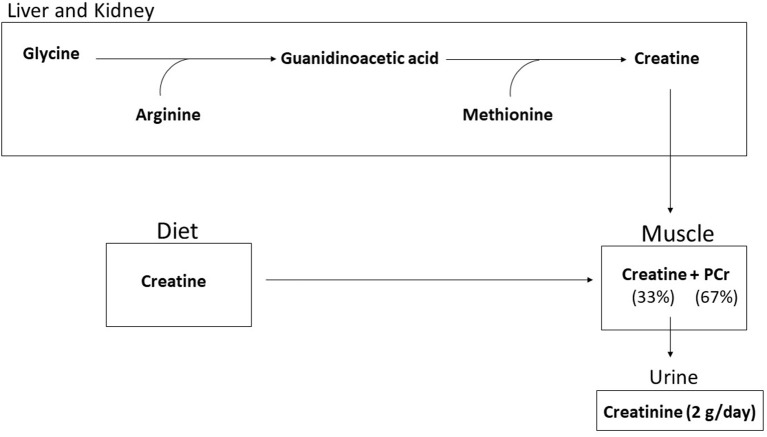
Figure 1
Figure 1
Creatine is synthesized endogenously by a two step process from glycine, arginine, and methoione or through dietary intake. Ninety-five percent of creatine is taken up into the muscle and stored as free creatine (33%) or as phosphorylcreatine (67%). Approximately 2 g per day is broken down to creatinine and excreted.
Figure 2
Figure 2
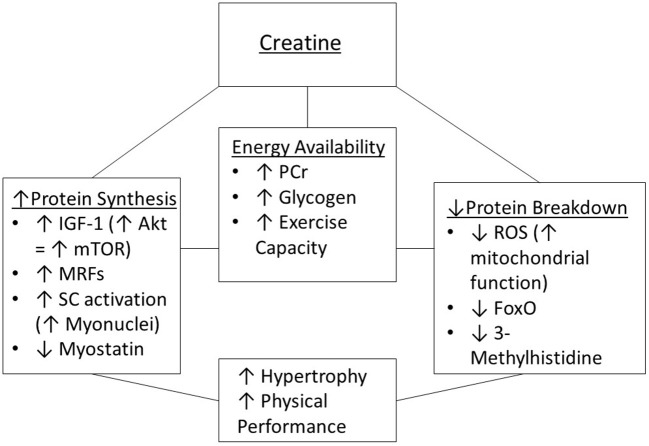
Potential mechanisms of creatine supplementation to enhance muscle hypertrophy and physical performance. IGF-1, insulin-like growth factor 1; MRFs, myogenic regulatory factors; mTOR, mammalian target of rapamycin; PCr, phosphorylcreatine; ROS, reactive oxygen species; SC, satellite cells.

References

    1. Rosenberg IH. Sarcopenia: origins and clinical relevance. J Nutr. (1997) 127(5 Suppl.):991S. 10.1093/jn/127.5.990S - DOI - PubMed
    1. Marty E, Liu Y, Samuel A, Or O, Lane J. A review of sarcopenia: enhancing awareness of an increasingly prevalent disease. Bone. (2017) 105:276–86. 10.1016/j.bone.2017.09.008 - DOI - PubMed
    1. Anker SD, Morley JE, von Haehling S. Welcome to the ICD-10 code for sarcopenia. J Cachexia Sarcopenia Muscle. (2016) 7:512–4. 10.1002/jcsm.12147 - DOI - PMC - PubMed
    1. Shafiee G, Keshtkar A, Soltani A, Ahadi Z, Larijani B, Heshmat R. Prevalence of sarcopenia in the world: a systematic review and meta- analysis of general population studies. J Diabetes Metab Disord. (2017) 16:21. 10.1186/s40200-017-0302-x - DOI - PMC - PubMed
    1. Cruz-Jentoft AJ, Bahat G, Bauer J, Boirie Y, Bruyere O, Cederholm T, et al. Sarcopenia: revised European consensus on definition and diagnosis. Age Ageing. (2019) 48:16–31. 10.1093/ageing/afy169 - DOI - PMC - PubMed