


Physicians' perspectives on medication adherence and health promotion among cancer survivors
- PMID: 31448414
- PMCID: PMC6856382
- DOI: 10.1002/cncr.32410
Physicians' perspectives on medication adherence and health promotion among cancer survivors
Abstract
Background: Cancer survivors face an increased risk of cardiovascular events compared with the general population. Adopting a healthy lifestyle may reduce these risks, and guidelines encourage health-promotion counseling for cancer survivors, but the extent of physician adherence is unclear.
Methods: This mixed-method study surveyed 91 physicians, including 30 primary care physicians (PCPs), 30 oncologists, and 31 specialists (urologists, dermatologists, and gynecologists). Interviews also were conducted with 12 oncologists.
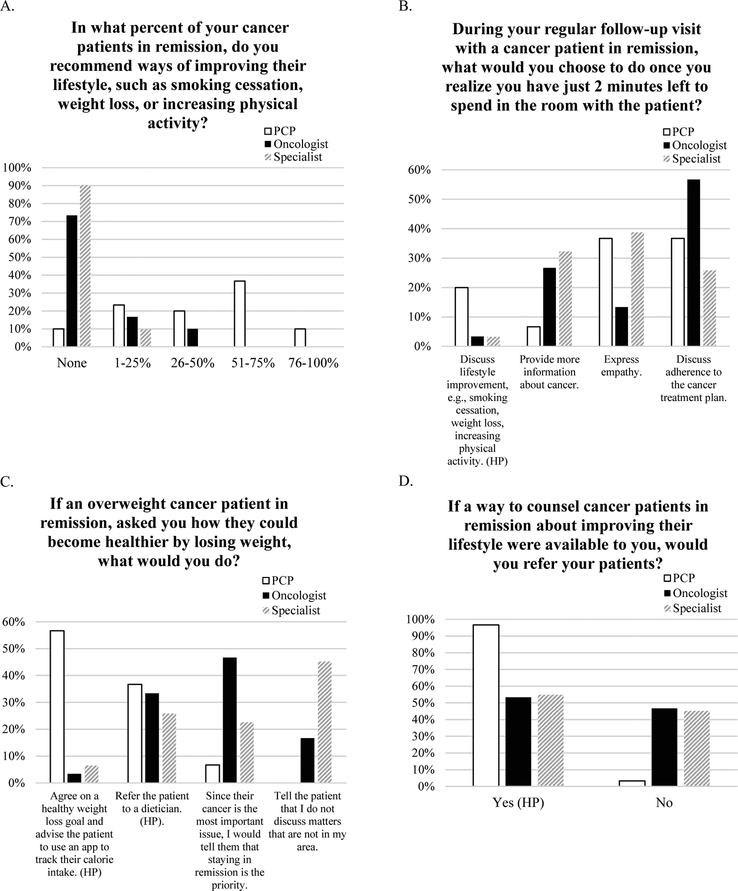
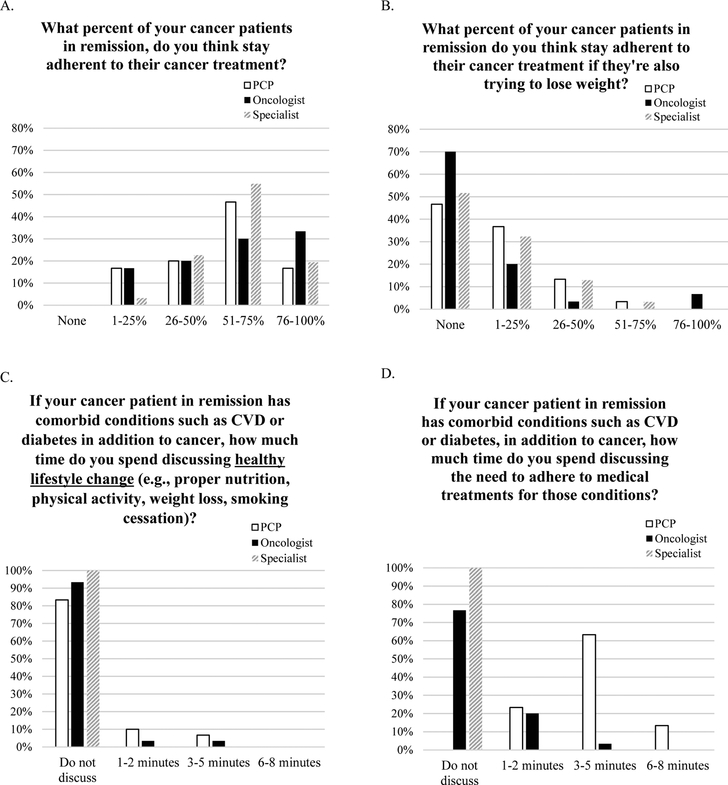
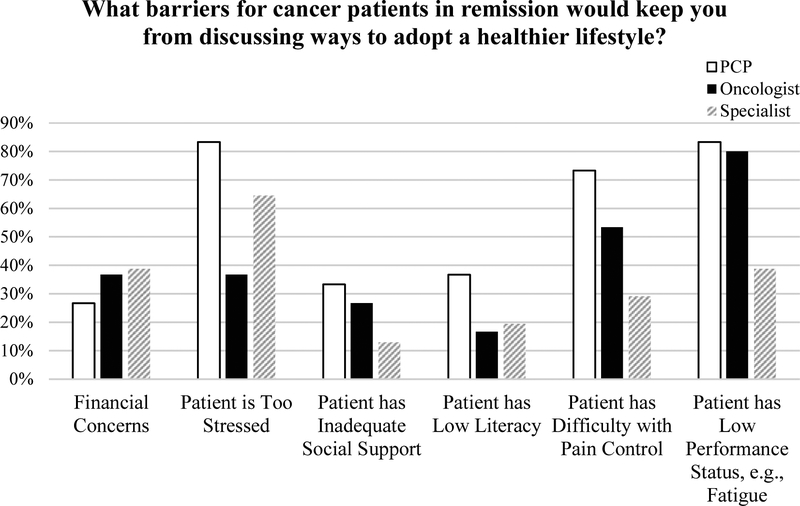
Results: Most PCPs (90%) reported recommending health promotion (eg, weight loss, smoking cessation) to at least some cancer survivors, whereas few oncologists (26.7%) and specialists (9.7%) said they ever did so (P < .001). Although most physicians believed that at least 50% of cancer survivors would be adherent to medication regimens to prevent cancer recurrence, they also believed that, if patients were trying to lose weight, they would not remain medication-adherent. In interviews, oncologists expressed fear that providing health-promotion advice would distress or overwhelm patients. Additional health-promotion barriers identified by thematic analysis included: identifying cancer as oncologists' focal concern, time pressure, insufficient behavior change training, and care coordination challenges. Facilitators included perceiving a patient benefit and having health-promotion resources integrated into the cancer care system.
Conclusions: Physicians often do not have the time, expertise, or resources to address health promotion with cancer survivors. Research is needed to evaluate whether health-promotion efforts compromise medical regimen adherence, as physicians' responses suggest.
Keywords: cancer survivors; comorbidity; health promotion; oncologists; primary health care.
© 2019 American Cancer Society.
Conflict of interest statement
The authors report no conflicts of interest.
Figures
References
-
- DeSantis CE, Lin CC, Mariotto AB, et al. Cancer treatment and survivorship statistics, 2014. CA Cancer J Clin. 2014;64(4):252–271. - PubMed
-
- Hooning MJ, Botma A, Aleman BM, et al. Long-term risk of cardiovascular disease in 10-year survivors of breast cancer. J Natl Cancer Inst. 2007;99(5):365–375. - PubMed
Publication types
MeSH terms
Grants and funding
LinkOut - more resources
Full Text Sources
