


Emerging mechanistic underpinnings and therapeutic targets for chemotherapy-related cognitive impairment
- PMID: 31449084
- PMCID: PMC7205182
- DOI: 10.1097/CCO.0000000000000578
Emerging mechanistic underpinnings and therapeutic targets for chemotherapy-related cognitive impairment
Abstract
Purpose of review: Modern innovations in cancer therapy have dramatically increased the number of cancer survivors. An unfortunately frequent side-effect of cancer treatment is enduring neurological impairment. Persistent deficits in attention, concentration, memory, and speed of information processing afflict a substantial fraction of cancer survivors following completion of these life-saving therapies. Here, we highlight chemotherapy-related cognitive impairment (CRCI) and discuss the current understanding of mechanisms underlying CRCI.
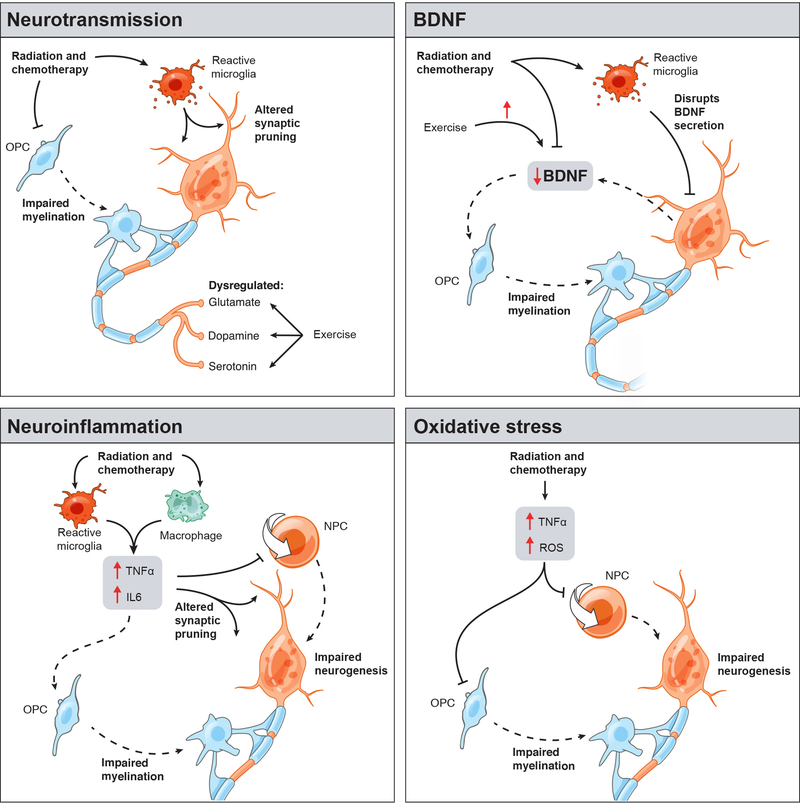
Recent findings: New studies emphasize the deleterious impact of chemotherapeutic agents on glial-glial and neuron-glial interactions that shape the form, function and plasticity of the central nervous system. An emerging theme in cancer therapy-related cognitive impairment is therapy-induced microglial activation and consequent dysfunction of both neural precursor cells and mature neural cell types. Recent work has highlighted the complexity of dysregulated intercellular interactions involving oligodendrocyte lineage cells, microglia, astrocytes, and neurons following exposure to traditional cancer therapies such as methotrexate. This new understanding of the mechanistic underpinnings of CRCI has elucidated potential therapeutic interventions, including colony-stimulating factor 1 receptor inhibition, TrkB agonism, and aerobic exercise.
Summary: Traditional cancer therapies induce lasting alterations to multiple neural cell types. Therapy-induced microglial activation is a critical component of the cause of CRCI, contributing to dysregulation of numerous processes of neural plasticity. Therapeutic targeting of microglial activation or the consequent dysregulation of neural plasticity mechanisms are emerging.
Conflict of interest statement
Figures
References
-
- American Cancer Society. Cancer Treatment & Survivorship Facts & Figures 2016–2017; 2016.
-
- Wefel JS, Schagen SB. Chemotherapy-related cognitive dysfunction. Current neurology and neuroscience reports. 2012;12(3):267–75. - PubMed
-
- Bisen-Hersh EB, Hineline PN, Walker EA. Effects of early chemotherapeutic treatment on learning in adolescent mice: implications for cognitive impairment and remediation in childhood cancer survivors. Clinical cancer research : an official journal of the American Association for Cancer Research. 2013;19(11):3008–18. - PMC - PubMed
-
- Hermelink K, Buhner M, Sckopke P, Neufeld F, Kaste J, Voigt V, et al. Chemotherapy and Post-traumatic Stress in the Causation of Cognitive Dysfunction in Breast Cancer Patients. J Natl Cancer Inst. 2017;109(10). - PubMed
Publication types
MeSH terms
Grants and funding
LinkOut - more resources
Full Text Sources
Research Materials
