


Lightning-induced pacing system malfunction: a case report
- PMID: 31449643
- PMCID: PMC6601167
- DOI: 10.1093/ehjcr/ytz092
Lightning-induced pacing system malfunction: a case report
Abstract
Background: Atmospheric electrical discharge is an extremely powerful natural phenomenon which can have dangerous and lethal effects on the human body. However, there is no evidence to indicate whether and, if so, to what extent the electric current travelling through the body can affect proper pacemaker function.
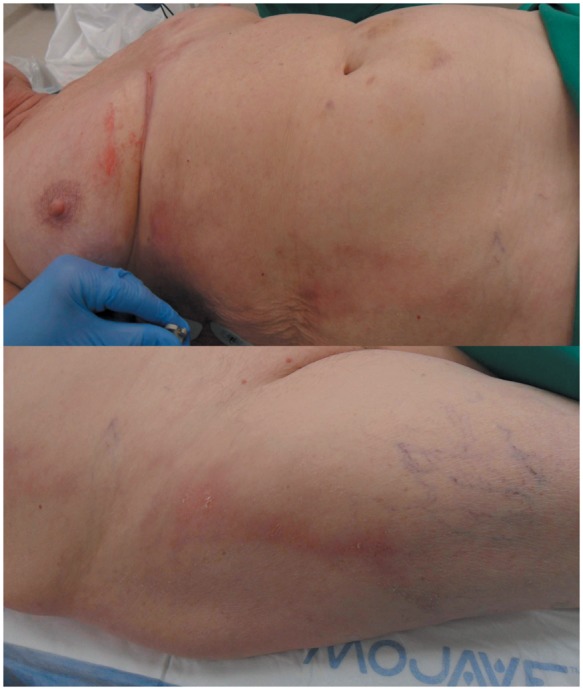
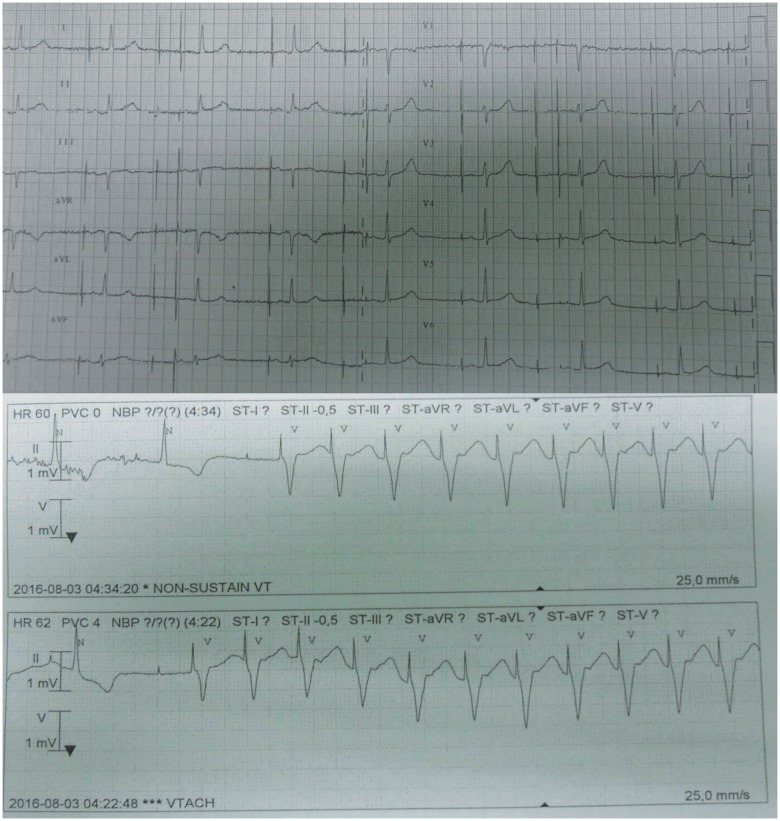
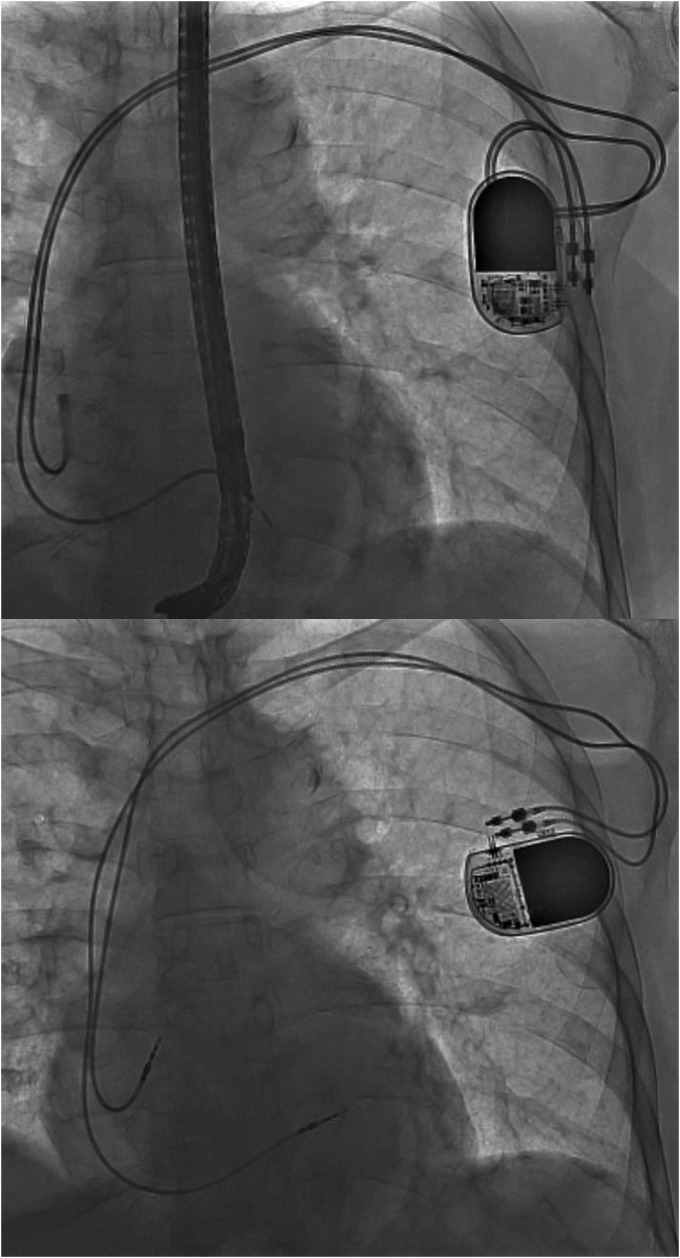
Case summary: An 80-year-old patient admitted to emergency department after being struck by a lightning bolt while riding a bike. The patient had a DDD pacemaker implanted 4 years prior to the incident. The ECG on admission depicted pacemaker spikes and native sinus rhythm at 50-60 b.p.m. On the 3rd day after admission the patient developed recurrent pacing-induced tachycardia. Pacemaker interrogation showed high pacing thresholds (failure to pace in the atrial channel). When the patient's condition stabilized she was transferred to the tertiary hospital for transcutaneous lead extraction. The extracted pacing system was sent to Biotronik for thorough evaluation.
Discussion: Injuries due to a lightning strike are considered a rare occurrence but being struck by lightning with a pacemaker or an ICD is even less common. In the present case, the cause of cardiac arrhythmia was most probably electrical burn at the endocardial-electrode interface and a sudden elevation of the pacing threshold leading to transient pacing failure in both PM channels. To the best of our knowledge, in this case presentation we first described permanent lightning-induced pacemaker dysfunction.
Keywords: Case report; Lightning; Lightning in pacemaker carrier; Lightning-induced takotsubo cardiomyopathy; Pacemaker; Transcutaneous lead extraction.
© The Author(s) 2019. Published by Oxford University Press on behalf of the European Society of Cardiology.
Figures
References
-
- Sumangala CN, Pradeep Kumar MP.. Lightning death: a case report. J Indian Acad Forensic Med 2015;37:93–95.
-
- Pedersen ML, Uslu B, Lind MN, Carl P.. Survival following lightning strike and treatment of sequelae. Ugeskr Laeger 2011;173:1138–1139. - PubMed
-
- Fahmy FS, Brinsden MD, Smith J, Frame JD.. Lightning: the multisystem group injuries. J Trauma 1999;46:937–940. - PubMed
-
- Alyan O, Ozdemir O, Tufekcioglu O, Geyik B, Aras D, Demirkan D.. Myocardial injury due to lightning strike-a case report. Angiology 2006;57:219–223. - PubMed
LinkOut - more resources
Full Text Sources
Research Materials