Review
. 2019 Aug 23;55(9):526.
doi: 10.3390/medicina55090526.

Hepatocellular Carcinoma: Molecular Mechanisms and Targeted Therapies

Affiliations
Review

Hepatocellular Carcinoma: Molecular Mechanisms and Targeted Therapies

Ali Alqahtani et al. Medicina (Kaunas). .

Abstract

Hepatocellular carcinoma (HCC) is one of the most common and lethal malignant tumors worldwide. HCC is a complex process that is associated with several etiological factors, which in turn result in aberrant activation of different cellular and molecular pathways and the disruption of balance between activation and inactivation of protooncogenes and tumor suppressor genes, respectively. Since HCC most often occurs in the setting of a diseased or cirrhotic liver and most of the patients are diagnosed at the late stage of disease, prognosis is generally poor. At present, limited treatment options with marginal clinical benefits are available. Systemic therapy, particularly in the form of conventional cytotoxic drugs, are generally ineffective. In recent years, molecular-targeted therapies have been clinically used to treat various cancers, including liver cancer. This approach inhibits the growth of tumor cells by interfering with molecules that are involved in carcinogenesis, which makes it more selective and specific than cytotoxic chemotherapy. Many clinical trials have been carried out while using molecular targeted drugs in advanced HCC with many more in progress. The clinical trials in HCC to date have evaluated a single-targeted therapy alone, or two or more targeted therapies in parallel. The aim of this review is to provide insight of various molecular mechanisms, leading to HCC development and progression, and also the range of experimental therapeutics for patients with advanced HCC. The review will summarize different clinical trials data the successes and failures of these treatments, as well as the most effective and approved drugs designed against HCC.

Keywords: hepatocellular carcinoma; molecular pathways; precision medicine; targeted therapy.


Conflict of interest statement

The authors declare no conflict of interest.

Figures
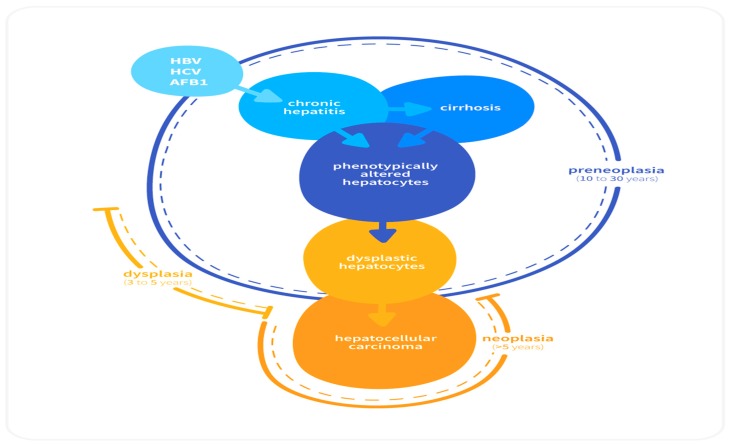
Figure 1
Figure 1
Sequence of cellular lesions in liver leading to the development of hepatocellular carcinoma [18].
Figure 2
Figure 2
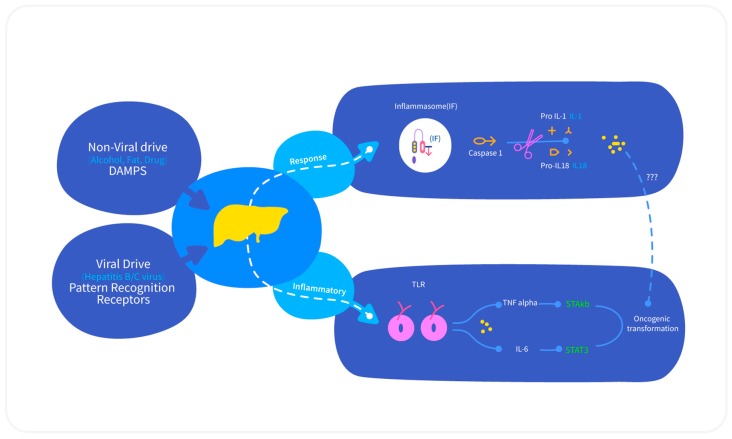
Basic molecular events during inflammatory hepatocarcinogensis. The inflammatory response caused by viral (microbial attack) or non-viral etiologies (sterile attacks) produced proinflammatory cytokines through inflammasome-dependent or independent pathways. The inflammosome component provides a platform for activation of caspase. Proinflammatory cytokines, through activation of transcription factors or by some unknown mechanisms make the hepatic environment suitable for cellular transformation. The accompanying pathological stages are shown in right panel. DAMPS—damage-associated molecular patterns [17].
Figure 3
Figure 3
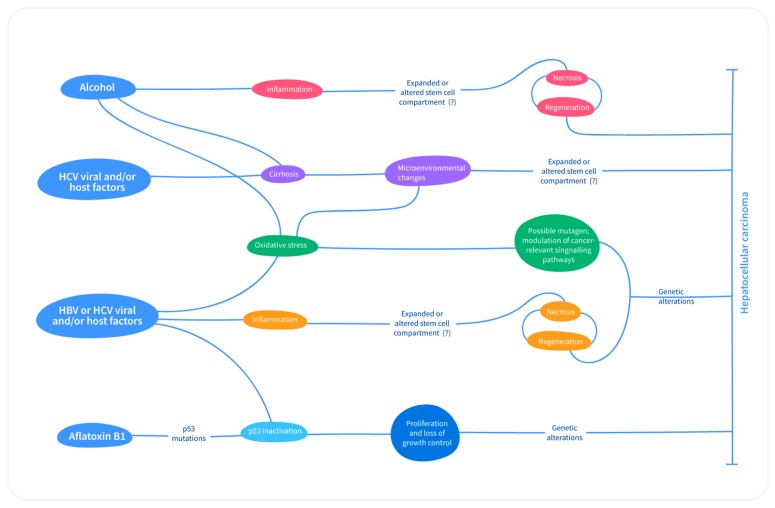
Mechanisms of hepatocarcinogenesis. The suspected mechanisms of hepatocarcinogenesis for various risk factors. Same color indicates commonalities. Hepatitis B virus (HBV) and aflatoxin both can affect the genome—HBV can integrate into host genome and aflatoxin B1 is a mutagen. Hepatitis C virus (HCV) cannot integrate into the host genome [10].
Figure 4
Figure 4
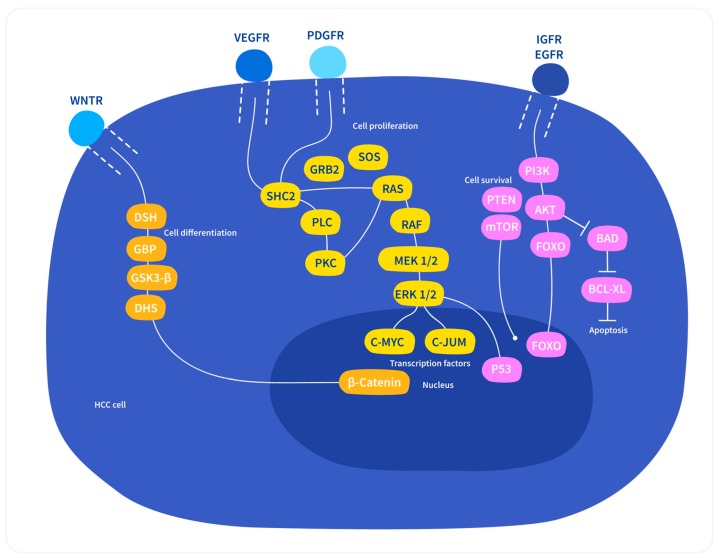
Potential cellular signaling pathways involved in the pathogenesis of hepatocellular carcinoma [28].

References

    1. Pan H., Fu X., Huang W. Molecular mechanism of liver cancer. Anti-Cancer Agents Med. Chem. 2011;11:493–499. doi: 10.2174/187152011796011073. - DOI - PubMed
    1. Sia D., Villanueva A., Friedman S.L., Llovet J.M. Liver Cancer Cell of Origin, Molecular Class, and Effects on Patient Prognosis. Gastroenterology. 2017;152:745–761. doi: 10.1053/j.gastro.2016.11.048. - DOI - PMC - PubMed
    1. Venook A.P., Papandreou C., Furuse J., De Guevara L.L. The Incidence and Epidemiology of Hepatocellular Carcinoma: A Global and Regional Perspective. Oncologist. 2010;15(Suppl. S4):5–13. doi: 10.1634/theoncologist.2010-S4-05. - DOI - PubMed
    1. Liu C.Y., Chen K.F., Chen P.J. Treatment of liver cancer. Cold Spring Harb. Perspect. Med. 2015;5:a021535. doi: 10.1101/cshperspect.a021535. - DOI - PMC - PubMed
    1. Golabi P., Fazel S., Otgonsuren M., Sayiner M., Locklear C.T., Younossi Z.M. Mortality assessment of patients with hepatocellular carcinoma according to underlying disease and treatment modalities. Medicine. 2017;96:e5904. doi: 10.1097/MD.0000000000005904. - DOI - PMC - PubMed

MeSH terms

LinkOut - more resources