


A Mechanistic and Pathophysiological Approach for Stroke Associated with Drugs of Abuse
- PMID: 31450861
- PMCID: PMC6780697
- DOI: 10.3390/jcm8091295
A Mechanistic and Pathophysiological Approach for Stroke Associated with Drugs of Abuse
Abstract
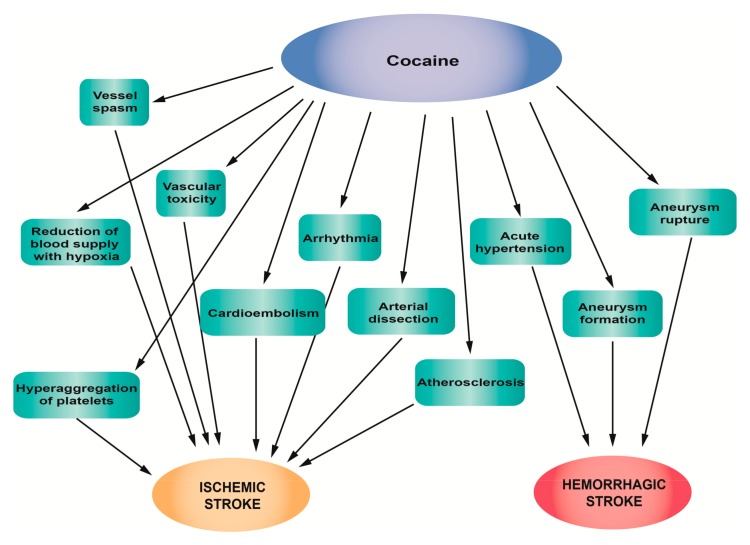
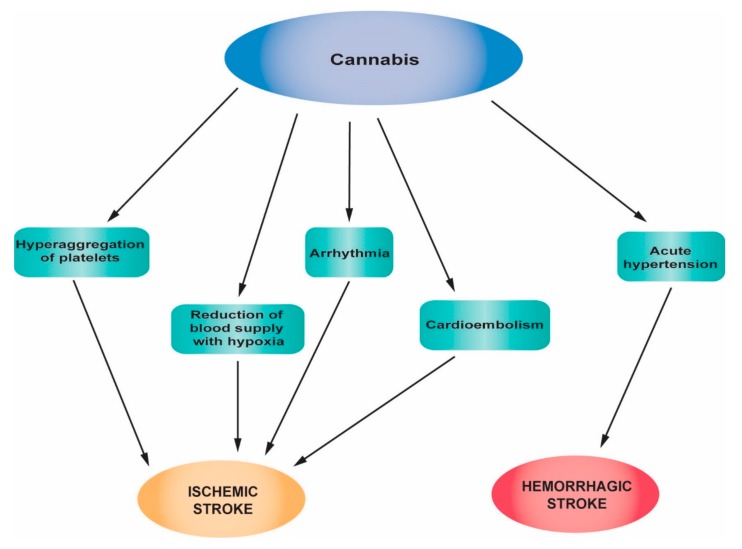
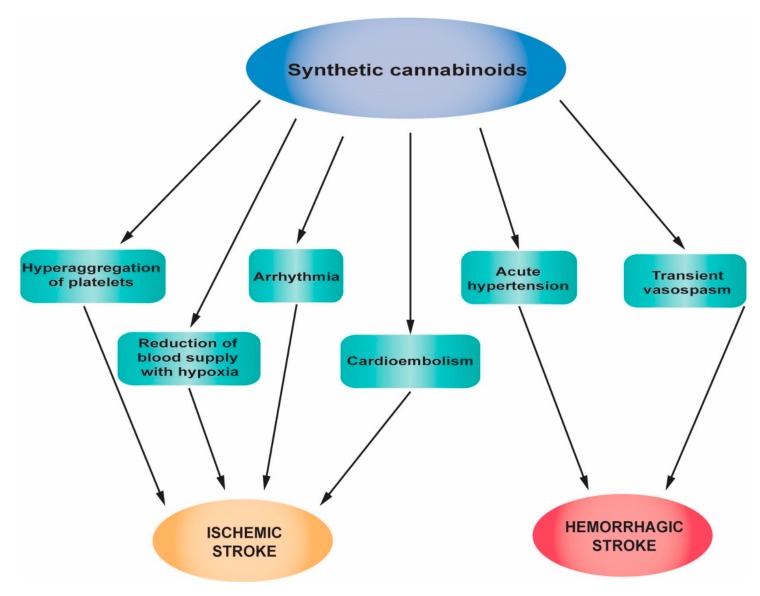
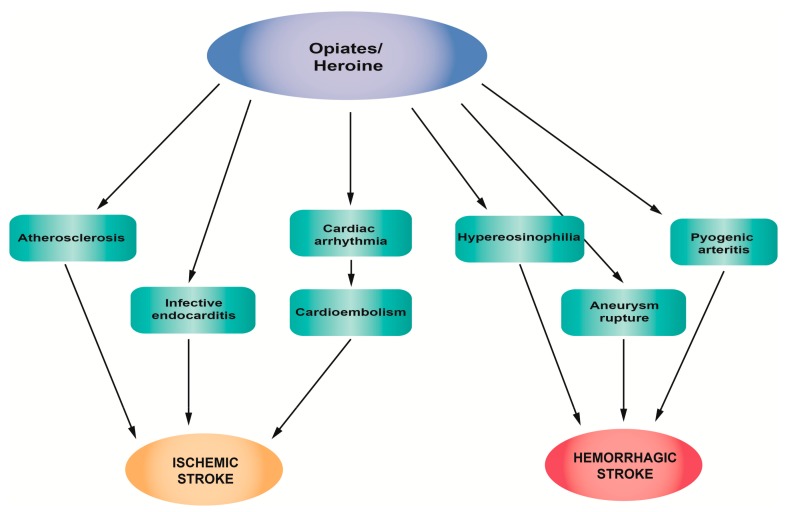
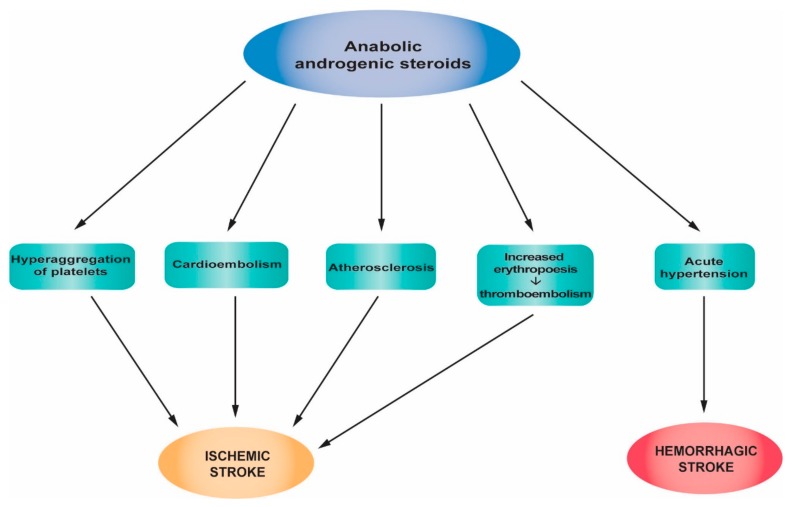
Drugs of abuse are associated with stroke, especially in young individuals. The major classes of drugs linked to stroke are cocaine, amphetamines, heroin, morphine, cannabis, and new synthetic cannabinoids, along with androgenic anabolic steroids (AASs). Both ischemic and hemorrhagic stroke have been reported due to drug abuse. Several common mechanisms have been identified, such as arrhythmias and cardioembolism, hypoxia, vascular toxicity, vascular spasm and effects on the thrombotic mechanism, as causes for ischemic stroke. For hemorrhagic stroke, acute hypertension, aneurysm formation/rupture and angiitis-like changes have been implicated. In AAS abuse, the effect of blood pressure is rather substance specific, whereas increased erythropoiesis usually leads to thromboembolism. Transient vasospasm, caused by synthetic cannabinoids, could lead to ischemic stroke. Opiates often cause infective endocarditis, resulting in ischemic stroke and hypereosinophilia accompanied by pyogenic arthritis, provoking hemorrhagic stroke. Genetic variants are linked to increased risk for stroke in cocaine abuse. The fact that case reports on cannabis-induced stroke usually refer to the young population is very alarming.
Keywords: amphetamines; anabolic androgenic steroids; cannabis; cocaine; heroin; morphine; stroke; synthetic cannabinoids.
Conflict of interest statement
The authors declare no conflict of interest.
Figures

References
-
- Easton J.D., Saver J.L., Albers G.W., Alberts M.J., Chaturvedi S., Feldmann E., Hatsukami T.S., Higashida R.T., Johnston S.C., Kidwell C.S., et al. Definition and evaluation of transient ischemic attack: A scientific statement for healthcare professionals from the American Heart Association/American Stroke Association Stroke Council; Council on Cardiovascular Surgery and Anesthesia; Council on Cardiovascular Radiology and Intervention; Council on Cardiovascular Nursing; and the Interdisciplinary Council on Peripheral Vascular Disease. The American Academy of Neurology affirms the value of this statement as an educational tool for neurologists. Stroke. 2009;40:2276–2293. doi: 10.1161/strokeaha.108.192218. - DOI - PubMed
-
- National Collaborating Centre for Chronic Conditions . Stroke: National Clinical Guideline for Diagnosis and Initial Management of Acute Stroke and Transient Ischaemic Attack (TIA) Royal College of Physicians (UK) Royal College of Physicians of London; London, UK: 2008. National Collaborating Centre for Chronic Conditions. National Institute for Health and Clinical Excellence: Guidance. - PubMed
-
- United Nations Oddice on Drugs and Crime World Drug Report 2017. [(accessed on 26 February 2019)]; Available online: https://www.unodc.org/wdr2017/field/WDR_2017_presentation_lauch_version.pdf.
Publication types
Grants and funding
LinkOut - more resources
Full Text Sources
