Review
. 2019 Oct;62(10):1811-1822.
doi: 10.1007/s00125-019-4940-z. Epub 2019 Aug 27.

Environmental neglect: endocrine disruptors as underappreciated but potentially modifiable diabetes risk factors

Affiliations
Review

Environmental neglect: endocrine disruptors as underappreciated but potentially modifiable diabetes risk factors

Robert M Sargis et al. Diabetologia. 2019 Oct.

Abstract

Type 2 diabetes prevalence is increasing dramatically across the globe, imposing a tremendous toll on individuals and healthcare systems. Reversing these trends requires comprehensive approaches to address both classical and emerging diabetes risk factors. Recently, environmental toxicants acting as endocrine-disrupting chemicals (EDCs) have emerged as novel metabolic disease risk factors. EDCs implicated in diabetes pathogenesis include various inorganic and organic molecules of both natural and synthetic origin, including arsenic, bisphenol A, phthalates, polychlorinated biphenyls and organochlorine pesticides. Indeed, evidence implicates EDC exposures across the lifespan in metabolic dysfunction; moreover, specific developmental windows exhibit enhanced sensitivity to EDC-induced metabolic disruption, with potential impacts across generations. Importantly, differential exposures to diabetogenic EDCs likely also contribute to racial/ethnic and economic disparities. Despite these emerging links, clinical practice guidelines fail to address this underappreciated diabetes risk factor. Comprehensive approaches to stem the tide of diabetes must include efforts to address its environmental drivers.

Keywords: Beta cell; Bisphenol A; Diabetes; Endocrine disruptor; Endocrine-disrupting chemical; Environmental justice; Glucose; Insulin; Life course development; Review.


Figures
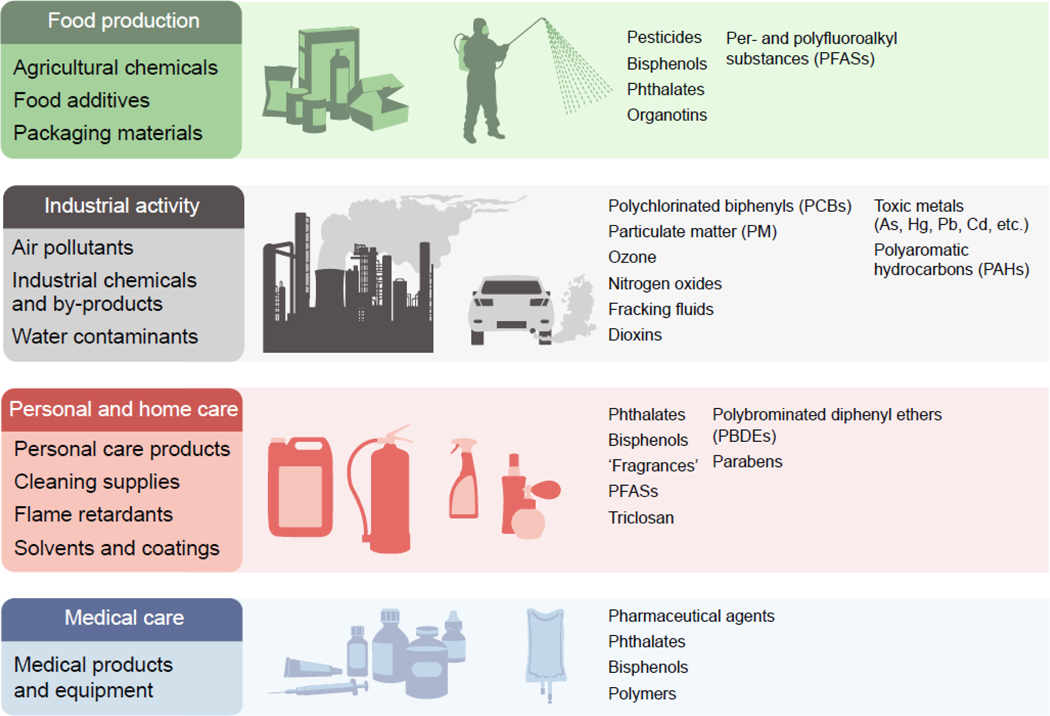
Fig. 1
Fig. 1
Sources of EDCs. A diverse array of chemicals from various sources have been linked to metabolic dysfunction in cell-based, animal and epidemiological studies. These metabolism-disrupting EDCs include both inorganic and organic compounds of both natural and synthetic origin. Humans are exposed through the use, production and environmental dissemination of these chemicals in food production, industrial activity, and home and personal care, as well as through medical care. This figure is available as part of a downloadable slideset
Fig. 2
Fig. 2
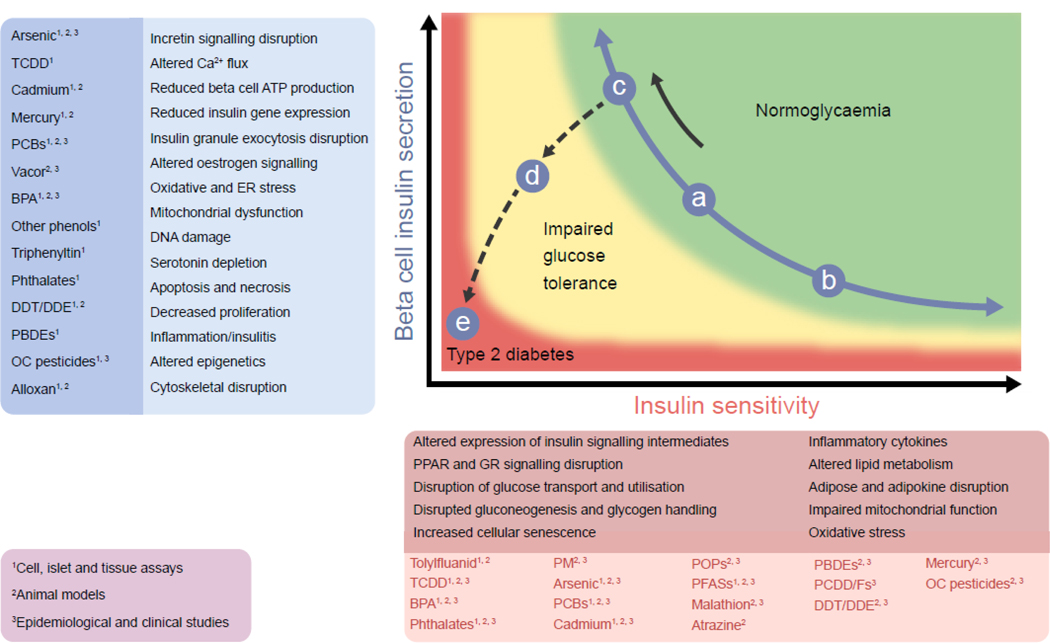
EDCs associated with type 2 diabetes pathogenesis and their proposed mechanisms of action. Type 2 diabetes arises from a combination of reduced insulin sensitivity (solid black arrow) and progressive beta cell failure (dashed black arrow). The blue circles, labelled a to e, represent individual states. Starting at state ‘a’, (in the middle of the normoglycaemia curve, green shading), if a person with these levels of insulin sensitivity and insulin secretion were to exercise, lose weight and get better sleep, they would slide down the curve to ‘b’. Unfortunately, our society is instead less active, consuming excess food and sleeping less, driving individuals from state ‘a’ to state ‘c’. This situation is, however, untenable in the long run. As one’s beta cells begin to fail, they fall off the curve (dashed line) to ‘d’ (impaired glucose tolerance, yellow shading); this condition then further deteriorates to ‘e’ (type 2 diabetes, red). Several EDCs have been linked to altered insulin sensitivity (darker red text box), beta cell disruptions (darker blue text box), or both. Multiple mechanisms have been ascribed to EDC-induced beta cell dysfunction and altered functioning of insulin-responsive tissues (lighter blue and lighter red text boxes). Data supporting EDC-mediated diabetes pathogenesis are derived from: cell-, islet- and tissue-based studies; animal models; and epidemiological and clinical studies (indicated by the superscript numbers; purple text box). BPA, bisphenol A; DDE, dichlorodiphenyldichloroethylene; DDT, dichlorodiphenyltrichloroethane; GR, glucocorticoid receptor; OC, organochlorine; PBDEs, polybrominated diphenyl ethers; PCBs, polychlorinated biphenyls; PFASs, per- and polyfluoroalkyl substances; PCDD/Fs, polychlorinated dibenzo-p-dioxins and furans; PM, particulate matter; POPs, persistent organic pollutants; PPARs, peroxisome proliferator-activated receptors; TCDD, 2,3,7,8-tetrachlorodibenzodioxin. Data compiled from [–10]. Figure adapted by permission from Springer Nature [129], ©2006 Nature Publishing Group. This figure is available as part of a downloadable slideset
Fig. 3
Fig. 3
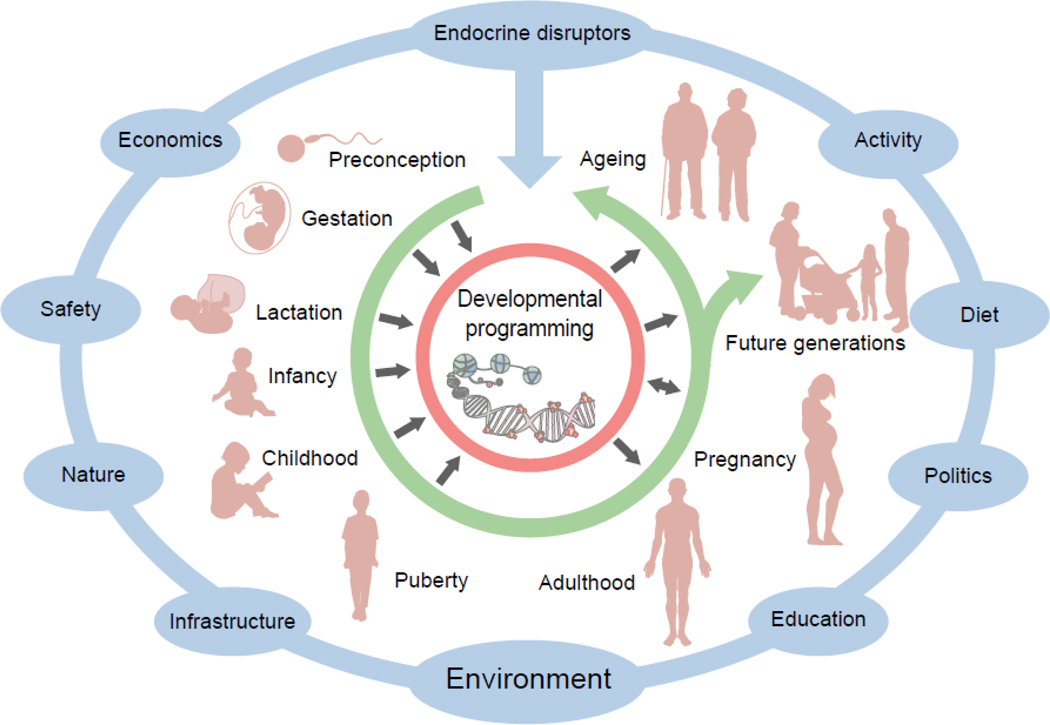
Influence of EDCs across the lifespan. EDCs and other environmental toxicants are an important component of the overall environmental milieu (blue) that interacts with genetic susceptibility to influence diabetes pathogenesis across the lifespan (green arrow). Importantly, exposures during sensitive windows can disrupt developmental programming and result in long-term metabolic dysfunction in both the exposed individual as well as future generations (black arrows). This figure is available as part of a downloadable slideset

References

    1. International Diabetes Federation (2017) IDF Diabetes Atlas, 8th Edition. Available from www.idf.org/e-library/epidemiology-research/diabetes-atlas/134-idf-diabe.... Accessed 15 Jan 2018
    1. World Health Organization (2016) Global report on diabetes. World Health Organization, Geneva
    1. American Diabetes Association (2018) Economic costs of diabetes in the U.S. in 2017. Diabetes care 41(5): 917–928. 10.2337/dci18-0007 - DOI - PMC - PubMed
    1. Squires E, Duber H, Campbell M, et al. (2018) Health care spending on diabetes in the U.S., 1996–2013. Diabetes care 41(7): 1423–1431. 10.2337/dc17-1376 - DOI - PMC - PubMed
    1. Gore AC, Chappell VA, Fenton SE, et al. (2015) EDC-2: The Endocrine Society’s Second Scientific Statement on Endocrine-Disrupting Chemicals. Endocrine reviews 36(6): E1–E150. 10.1210/er.2015-1010 - DOI - PMC - PubMed

Publication types

MeSH terms