


Racial/ethnic differences in the burden of type 2 diabetes over the life course: a focus on the USA and India
- PMID: 31451876
- PMCID: PMC7181870
- DOI: 10.1007/s00125-019-4968-0
Racial/ethnic differences in the burden of type 2 diabetes over the life course: a focus on the USA and India
Abstract
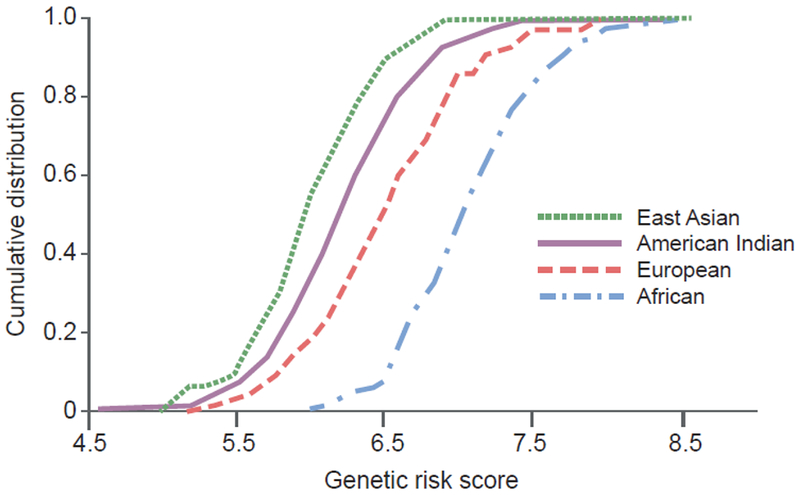
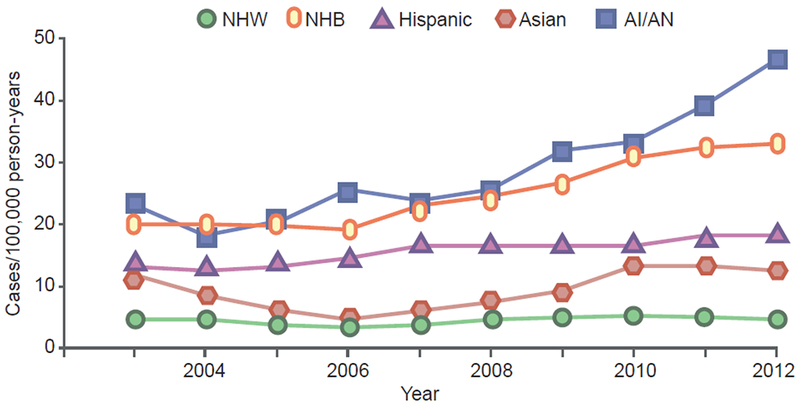
Type 2 diabetes is a common disease worldwide, but its prevalence varies widely by geographical region and by race/ethnicity. This review summarises differences in the frequencies of type 2 diabetes according to race, ethnicity, socioeconomic position, area of residence and environmental toxins. Type 2 diabetes susceptibility often begins early in life, starting with genetic susceptibility at conception and continuing in later life, via in utero, childhood and adult exposures. Early-life factors may lead to overt type 2 diabetes in childhood or in later life, supporting the concept of developmental origins of health and disease. The causes of the racial/ethnic differences in incidence of type 2 diabetes are not well understood. Specifically, the relative contributions of genetic and environmental factors to such differences are largely unknown. With a few exceptions in isolated populations, there is little evidence that differences in frequencies of known type 2 diabetes susceptibility genetic alleles account for racial/ethnic differences, although the search for genetic susceptibility has not been uniform among the world's racial/ethnic groups. In the USA, race/ethnicity is associated with many other risk factors for type 2 diabetes, including being overweight/obese, diet and socioeconomic status. Some studies suggest that some of these factors may account for the race/ethnic differences in prevalence of type 2 diabetes, although there is inadequate research in this area. A better understanding of the impact of these factors on type 2 diabetes risk should lead to more effective prevention and treatment of this disease. This has not yet been achieved but should be a goal for future research.
Keywords: Life course development; Race/ethnicity; Review; Type 2 diabetes mellitus.
Conflict of interest statement
Figures


References
-
- Cowie CC, Casagrande SS, Geiss LS (2018) Prevalence and incidence of type 2 diabetes and prediabetes In: Cowie CC, Casagrande SS, Menke A et al. (eds), Diabetes in America, 3rd edn . National Institutes of Health, Bethesda, MD, pp 3-1–3-32
-
- Williams DR (1997) Race and health: basic questions, emerging directions. Ann Epidemiol 7(5): 322–333 - PubMed
Publication types
MeSH terms
Grants and funding
LinkOut - more resources
Full Text Sources
Medical
