


Role of mobile health on patient enrollment for cleft lip-palate surgery: A comparative study using SMS blast text messaging in zimbabwe
- PMID: 31453345
- PMCID: PMC6703104
- DOI: 10.1002/lio2.287
Role of mobile health on patient enrollment for cleft lip-palate surgery: A comparative study using SMS blast text messaging in zimbabwe
Abstract
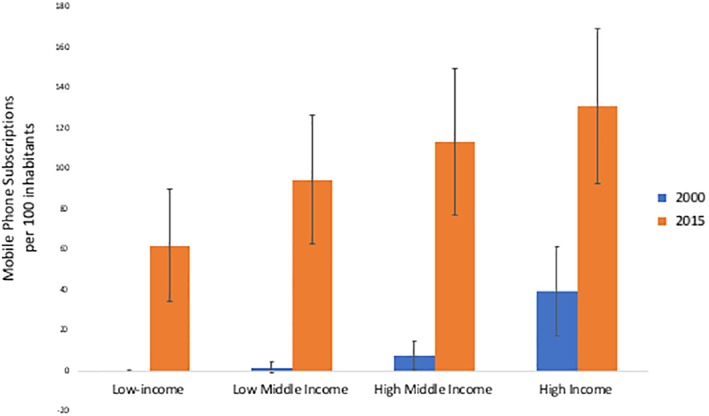
Background: Patients' lack of awareness of available services is a significant barrier to delivering surgical care in resource-limited settings. Short message service (SMS) text messaging is a potential means to disseminate this information in resource-limited settings, where rates of mobile phone usage are high.
Methods: A blast SMS text informing local populations of upcoming cleft lip-palate (CLP) surgical services was distributed to 25% of the subscriber base 1 week prior to arrival of a (CLP) surgical team in Zimbabwe. A retrospective cohort analysis comparing characteristics of patients presenting to the CLP clinic in the year prior to (2016) and 2 years following (2017-2018) the implementation of the blast SMS text messaging system is performed to assess its impact.
Results: Patients presenting to a single Zimbabwean CLP surgical program in the years with SMS messaging notifications were significantly more likely (52 [64%] vs. 5 [17%], P < .001) to have been informed of surgical services through their mobile phones. The average distance traveled per patient was not significantly different prior to implementation of mass text messaging (180.4 km [SD114.8] vs. 167.4 km [SD105.9], P = .580). The average patient age was significantly higher following the implementation of mass text messaging (7.4 [SD8.7] vs. 3.0 [SD2.8] years, P = .010).
Conclusions: SMS messaging is an effective method of informing patients of CLP surgical services in resource-limited settings. After implementation of SMS text notifications, surgical patients were of increased age, but showed no difference in distance traveled.
Level of evidence: IV.
Keywords: Global health; cleft lip and palate; global surgery; mhealth; mobile health; text messaging.
Figures
References
-
- Grimes CE, Bowman KG, Dodgion CM, Lavy CBD. Systematic review of barriers to surgical care in low‐income and middle‐income countries. World J Surg 2011;35(5):941–950. - PubMed
-
- Swanson JW, Yao CA, Auslander A, et al. Patient barriers to accessing surgical cleft care in Vietnam: a multi‐site, cross‐sectional outcomes study. World J Surg 2017;41(6):1435–1446. - PubMed
-
- Ojabo CO, Alao O. Cataract surgery: limitations and barriers in Makurdi, Benue State. Niger J Med 2009;18(3):250–255. - PubMed
-
- Hsia RY, Mbembati NA, Macfarlane S, Kruk ME. Access to emergency and surgical care in sub‐Saharan Africa: the infrastructure gap. Health Policy Plan 2012;27(3):234–244. - PubMed
-
- Increasing access to surgical services in sub‐Saharan Africa: priorities for national and international agencies recommended by the Bellagio Essential Surgery Group. Available at: http://journals.plos.org/plosmedicine/article?id=10.1371/journal.pmed.10.... Accessed February 19, 2018. - PMC - PubMed
LinkOut - more resources
Full Text Sources
Research Materials
Miscellaneous