


Auditory synaptopathy, auditory neuropathy, and cochlear implantation
- PMID: 31453354
- PMCID: PMC6703118
- DOI: 10.1002/lio2.288
Auditory synaptopathy, auditory neuropathy, and cochlear implantation
Abstract
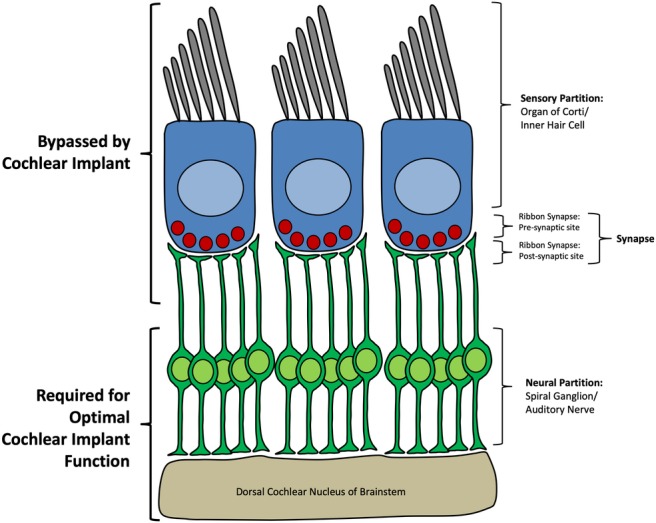
Cochlear implantation has become the standard-of-care for adults and children with severe to profound hearing loss. There is growing evidence that qualitative as well as quantitative deficits in the auditory nerve may affect cochlear implant (CI) outcomes. Auditory neuropathy spectrum disorder (ANSD) is characterized by dysfunctional transmission of sound from the cochlea to the brain due to defective synaptic function or neural conduction. In this review, we examine the precise mechanisms of genetic lesions causing ANSD and the effect of these lesions on CI outcomes. Reviewed data show that individuals with lesions that primarily affect the cochlear sensory system and the synapse, which are bypassed by the CI, have optimal CI outcomes. Individuals with lesions that affect the auditory nerve show poor performance with CIs, likely because neural transmission of the electrical signal from the CI is affected. We put forth a nuanced molecular classification of ANSD that has implications for preoperative counseling for patients with this disorder prior to cochlear implantation. We propose that description of ANSD patients should be based on the molecular site of lesion typically derived from genetic evaluation (synaptopathy vs. neuropathy) as this has implications for expected CI outcomes. Improvements in our understanding of genetic site of lesions and their effects on CI function should lead to better CI outcomes, not just for individuals with auditory neuropathy, but all individuals with hearing loss.
Keywords: Cochlear implants; auditory neuropathy spectrum disorder; genetics.
Figures
References
-
- Mo B, Lindbaek M, Harris S. Cochlear implants and quality of life: a prospective study. Ear Hear 2005;26(2):186–194. - PubMed
Publication types
Grants and funding
LinkOut - more resources
Full Text Sources