


Psychiatric comorbidity and childhood trauma in fibromyalgia syndrome
- PMID: 31453497
- PMCID: PMC6657761
- DOI: 10.5606/tftrd.2018.1470
Psychiatric comorbidity and childhood trauma in fibromyalgia syndrome
Abstract
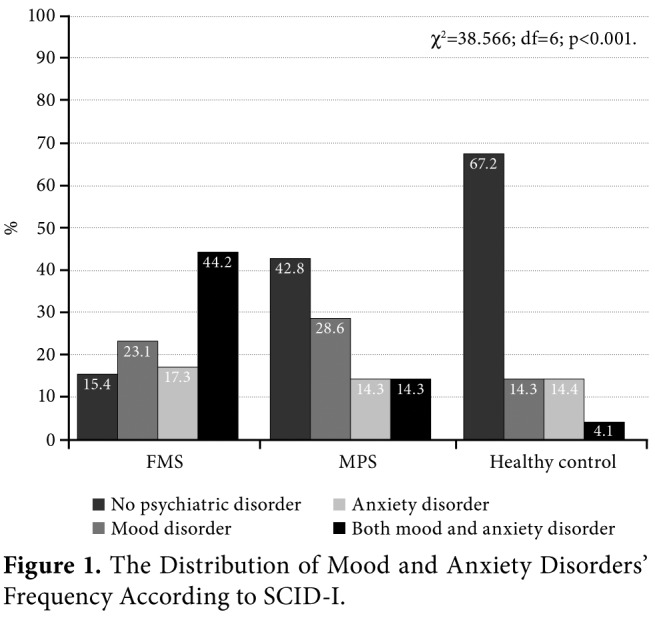
Objectives: In this study, we aimed to compare patients with fibromyalgia syndrome (FMS) and those with myofascial pain syndrome (MPS) and healthy women and to investigate the prevalence of childhood traumatic experiences (CTEs) in relation to comorbid mood and anxiety disorders.
Patients and methods: Between February 2014 and May 2014, a total of 136 women including 52 with FMS, 35 with MPS, and 49 healthy controls were included in the study. The Sociodemographic Data Form, Mood and Anxiety Disorders Modules of Structured Clinical Interview for Diagnostic and Statistical Manual of Mental Disorders fourth edition (DSM-IV) Axis I Disorders (SCID-I), Fibromyalgia- related Symptom Scale (FSS), Hamilton Depression Rating Scale (HDRS), Hamilton Anxiety Rating Scale (HARS), and Childhood Trauma Questionnaire-28 (CTQ-28) were applied to participants.
Results: As a result of the semi-structured clinical interview conducted by a psychiatrist experienced in psychological trauma, the prevalence of any mood or anxiety disorder were found to be significantly more common in the FMS group. Childhood traumatic experiences, not only in general, but also with all subtypes, were also reported to be significantly more in FMS patients. Besides, only in patients with FMS, a significant relationship was found between the psychiatric diagnoses and the presence of CTEs. Furthermore, the CTQ-28 scores were correlated positively with the FSS scores as well as HDRS and HARS. Among the symptoms screened by the FSS, only crying and over-reacting to incidents were significantly associated with CTEs in FMS group.
Conclusion: Based on our study results, CTEs may play a critical role in the development of fibromyalgia and may be related with comorbid mood and anxiety disorders in FMS patients. Associating psychological symptoms such as crying or over-reacting to incidents in FMS patients should be, therefore, alerting for psychiatric consultation.
Keywords: Anxiety; childhood traumatic experiences; depression; fibromyalgia; myofascial pain.
Conflict of interest statement
Conflict of Interest: The authors declared no conflicts of interest with respect to the authorship and/or publication of this article.
Figures
References
-
- Wolfe F, Clauw DJ, Fitzcharles MA, Goldenberg DL, Katz RS, Mease P, et al. The American College of Rheumatology preliminary diagnostic criteria for fibromyalgia and measurement of symptom severity. Arthritis Care Res (Hoboken) 2010;62:600–610. - PubMed
-
- Topbas M, Cakirbay H, Gulec H, Akgol E, Ak I, Can G. The prevalence of fibromyalgia in women aged 20-64 in Turkey. Scand J Rheumatol. 2005;34:140–144. - PubMed
-
- González E, Elorza J, Failde I. Fibromyalgia and psychiatric comorbidity: their effect on the quality of life patients. Actas Esp Psiquiatr. 2010;38:295–300. - PubMed
-
- Thieme K, Turk DC, Flor H. Comorbid depression and anxiety in fibromyalgia syndrome: relationship to somatic and psychosocial variables. Psychosom Med. 2004;66:837–844. - PubMed
LinkOut - more resources
Full Text Sources
Research Materials
Miscellaneous