


Obesity-related cognitive impairment: The role of endothelial dysfunction
- PMID: 31454547
- PMCID: PMC6834913
- DOI: 10.1016/j.nbd.2019.104580
Obesity-related cognitive impairment: The role of endothelial dysfunction
Abstract
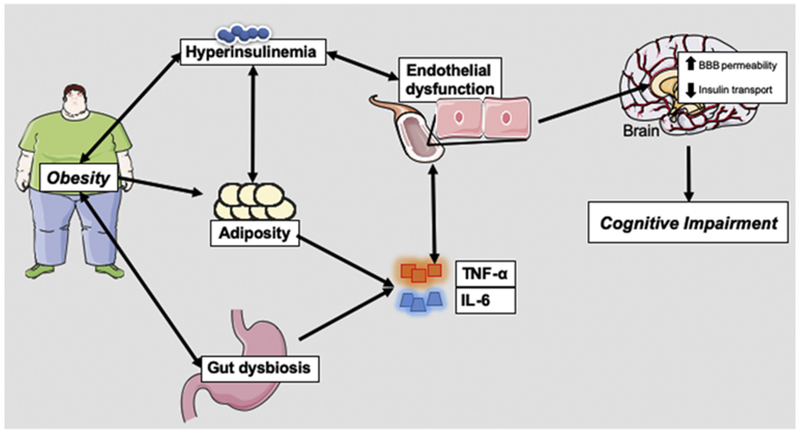
Obesity is a global pandemic associated with macro- and microvascular endothelial dysfunction. Microvascular endothelial dysfunction has recently emerged as a significant risk factor for the development of cognitive impairment. In this review, we present evidence from clinical and preclinical studies supporting a role for obesity in cognitive impairment. Next, we discuss how obesity-related hyperinsulinemia/insulin resistance, systemic inflammation, and gut dysbiosis lead to cognitive impairment through induction of endothelial dysfunction and disruption of the blood brain barrier. Finally, we outline the potential clinical utility of dietary interventions, exercise, and bariatric surgery in circumventing the impacts of obesity on cognitive function.
Keywords: diet; gut dysbiosis; hyperinsulinemia; inflammation; insulin resistance; memory.
Copyright © 2019 Elsevier Inc. All rights reserved.
Conflict of interest statement
Competing interests
The authors declare no competing interests.
Figures
References
-
- Adami GF, et al. , 2004. Long-term normalization of insulin sensitivity following biliopancreatic diversion for obesity. Int J Obes Relat Metab Disord. 28, 671–3. - PubMed
-
- Adams TD, et al. , 2007. Long-term mortality after gastric bypass surgery. N Engl J Med. 357, 753–61. - PubMed
-
- Agosti PC,C; Schilardi A;, D’lntrono A; Valiani V; Lozupone M; Panza F; Dibello V; Piccininni C; Solfrizzi V; Sabbà C, 2018. Dietary intervention and prevention of cognitive-related outcomes in healthy older adults without cognitive dysfunction. Journal of Gerontology and Geriatrics. 87–100.
-
- Akiguchi I, Yamamoto Y, 2010. Vascular mechanisms of cognitive impairment: roles of hypertension and subsequent small vessel disease under sympathetic influences. Hypertens Res 33,29–31. - PubMed
-
- Ala Abu Saleh RS, Nimer Assy, 2015. Cognitive Dysfunction in Obese Individuals With or Without Metabolic Risk Factors (I12-5A). Neurology. 84,I12–5A.
Publication types
MeSH terms
Grants and funding
LinkOut - more resources
Full Text Sources
Medical
