


Association of diabetes-related kidney disease with cardiovascular and non-cardiovascular outcomes: a retrospective cohort study
- PMID: 31455289
- PMCID: PMC6712860
- DOI: 10.1186/s12902-019-0417-9
Association of diabetes-related kidney disease with cardiovascular and non-cardiovascular outcomes: a retrospective cohort study
Abstract
Background: Diabetes-related kidney disease is associated with end-stage renal disease and mortality, but opportunities remain to quantify its association with cardiovascular and non-cardiovascular morbidity outcomes.
Methods: We used the Truven Health MarketScan Commercial Claims and Encounters Database, 2010-2014, which includes specific health services records for employees and their dependents from a selection of large employers, health plans, and government and public organizations. We used administrative claims data to quantify the association between diabetes-related kidney disease and end-stage renal disease, myocardial infarction, congestive heart failure, stroke, and infections. Cox proportional hazard regression models were used to estimate adjusted hazard ratios of developing complications.
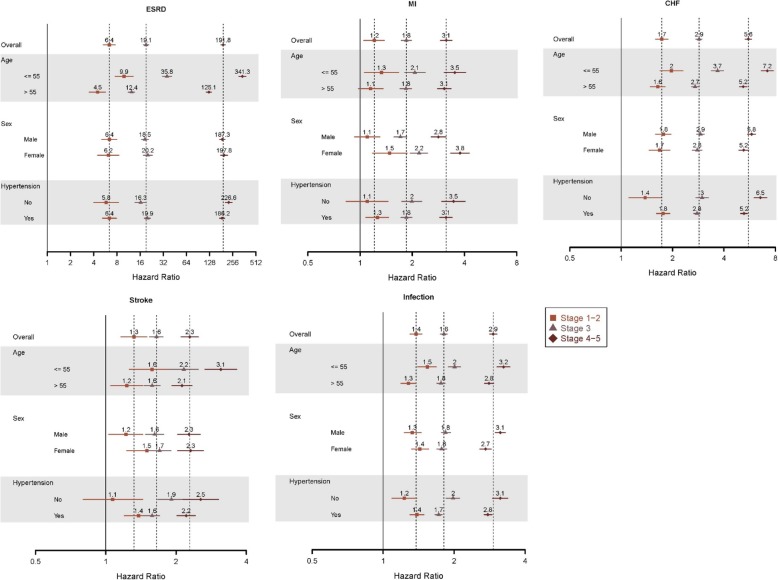
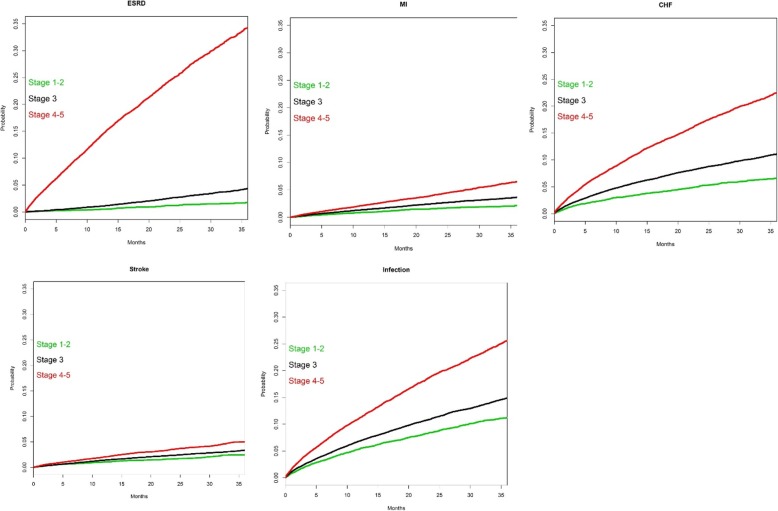
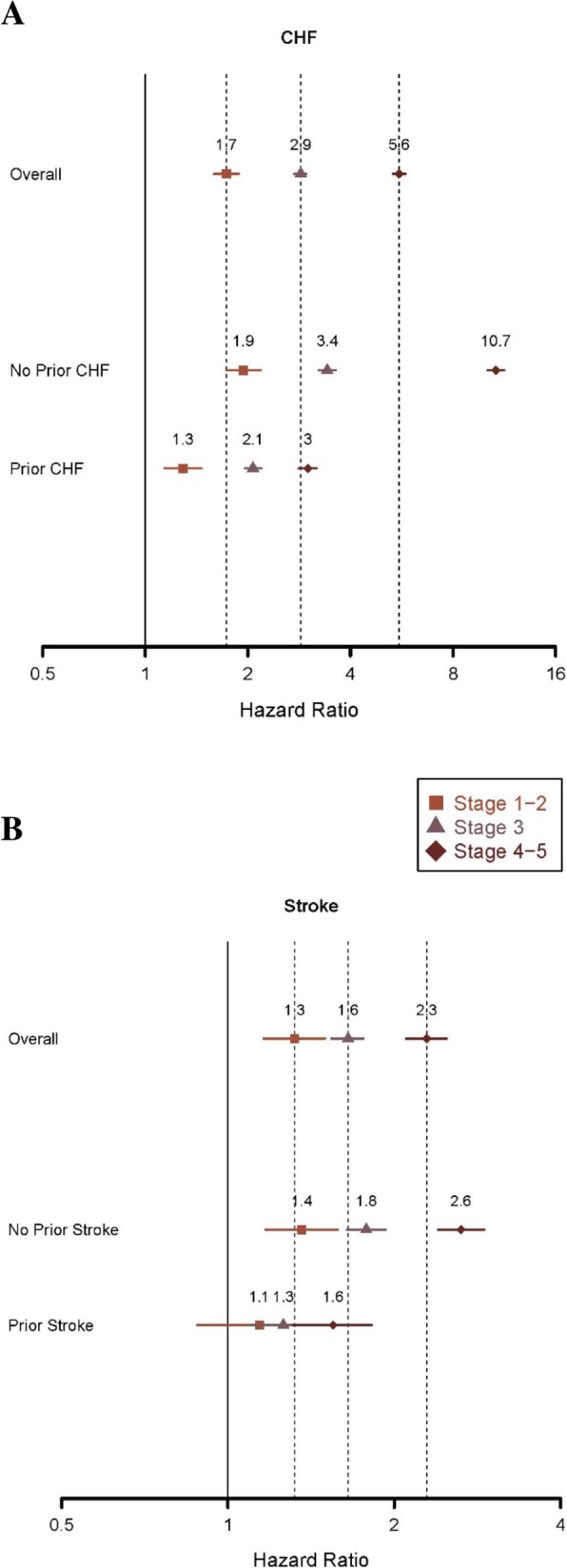
Results: Among 2.2 million patients with diabetes, 7.1% had diabetes-related kidney disease: 13.5%, stage 1-2; 33.8%, stage 3; 13.2% stages 4-5; 39.5%, unknown stage. In multivariable Cox proportional hazard models adjusted for demographic characteristics, baseline comorbid conditions, and total hospital days during the baseline period, hazard ratios for each outcome increased with greater diabetes-related kidney disease severity (stage 1-2 vs. stage 4-5) compared with no diabetes-related kidney disease: myocardial infarction, 1.2 (95% confidence interval 1.1-1.4) and 3.1 (2.9-3.4); congestive heart failure, 1.7 (1.6-1.9) and 5.6 (5.3-5.8); stroke, 1.3 (1.2-1.5) and 2.3 (2.1-2.5); infection, 1.4 (1.3-1.5) and 2.9 (2.8-3.0). Among patients with stage 4-5 disease, 36-month cumulative incidence was nearly 22.8% for congestive heart failure, and 25.8% for infections.
Conclusions: Diabetes-related kidney disease appears to be formally diagnosed at a more advanced stage than might be expected, given clinical practice guidelines. Risks of cardiovascular and non-cardiovascular outcomes are high.
Keywords: Cardiovascular disease; Diabetes; End-stage renal disease; Kidney disease.
Conflict of interest statement
JBW is on the Speakers’ Bureau for OPKO Renal. TGNT is employed by Precision Health Economics. MKH, CN, and RR are employed by Janssen. DTG has provided statistical consultation to DaVita Clinical Research. SL, YP, and JL report no conflicts of interest.
Figures
References
-
- World Health Organization . Global report on diabetes. 2016.
-
- Centers for Disease Control and Prevention . National diabetes statistics report, 2014: Estimates of diabetes and its burden in the United States, 2014. 2017.
-
- United States Renal Data System . 2016 USRDS annual data report: Epidemiology of kidney disease in the United States. Bethesda: National Institutes of Health, National Institute of Diabetes and Digestive and Kidney Diseases; 2016.
MeSH terms
Substances
Grants and funding
LinkOut - more resources
Full Text Sources
Medical
Molecular Biology Databases
