


Primary outcome measures used in interventional trials for ankle fractures: a systematic review
- PMID: 31455297
- PMCID: PMC6712770
- DOI: 10.1186/s12891-019-2770-2
Primary outcome measures used in interventional trials for ankle fractures: a systematic review
Abstract
Background: Ankle fractures cause considerable pain, loss of function and healthcare resource use. High quality randomised controlled trials are required to evaluate the optimal management protocols for ankle fracture. However, there is debate regarding the most appropriate outcome measure to use when assessing patients with ankle fractures. The aim of this systematic review is to identify and summarise primary outcome measure use in clinical trials of non-pharmacological interventions for adults with an ankle fracture.
Methods: We performed comprehensive searches of the Medline, Embase, CINAHL, AMED and Cochrane CENTRAL databases, as well as ISRCTN and ClinicalTrials.gov online clinical trial registries on 19/06/2019 with no date limits applied. The titles and abstracts were initially screened to identify randomised or quasi-randomised clinical trials of non-pharmacological interventions for ankle fracture in adults. Two authors independently screened the full text of any articles which could potentially be eligible. Descriptive statistics we used to summarise the outcome measures collected in these articles including an assessment of trends over time. Secondary analysis included a descriptive summary of the multi-item patient reported outcome measures used in this study type.
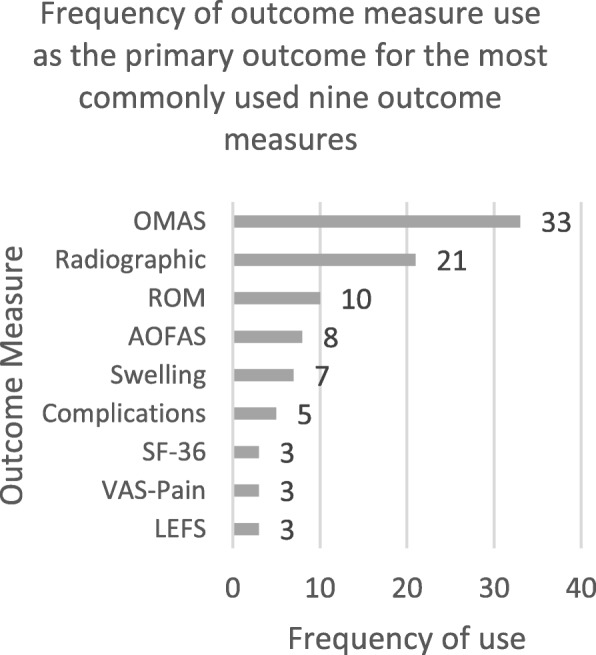
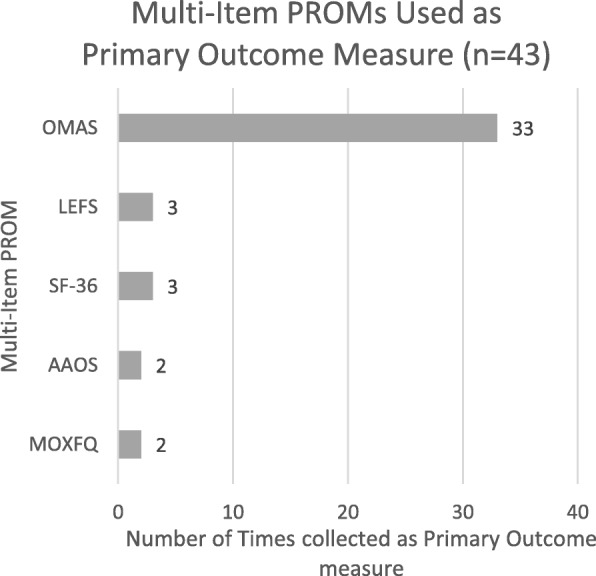
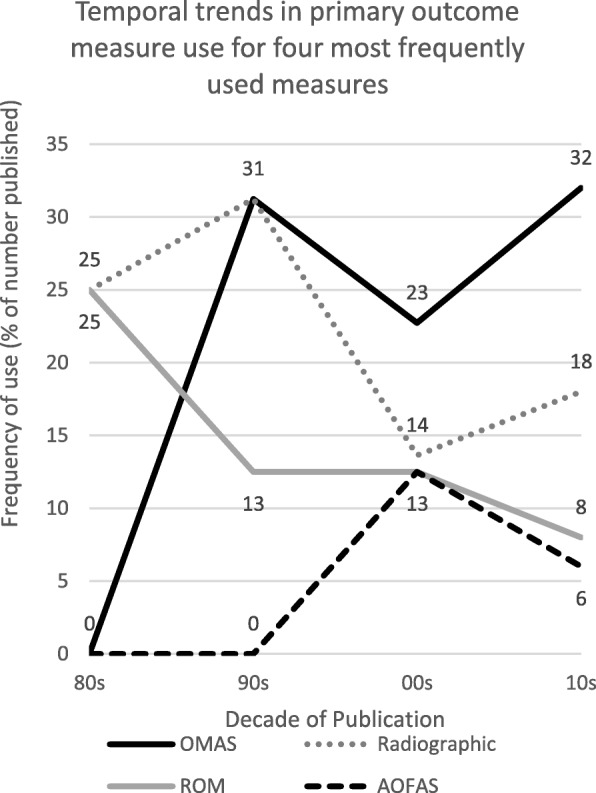
Results: The searches returned a total of 3380 records. Following application of the eligibility criteria, 121 records were eligible for inclusion in this review. The most frequently collected primary outcome measures in this type of publication was the Olerud Molander Ankle Score, followed by radiographic and range of movement assessments. There was a total of 28 different outcome measures collected and five different multi-item, patient reported outcome measures collected as the primary outcome measure. There was a sequential increase in the number of this type of study published per decade since the 1980's.
Conclusion: This review demonstrates the wide range of measurement methods used to assess outcome in adults with an ankle fracture. Future research should focus on establishing the validity and reliability of the outcome measures used in this patient population. Formulation of a consensus based core outcome set for adults with an ankle fracture would be advantageous for ensuring homogeneity across studies in order to meta-analyse trial results.
Keywords: Ankle; Ankle fractures; Ankle injuries; Outcome measures; Patient reported outcome measures; Randomised controlled trials.
Conflict of interest statement
RSK is a member of the UK NIHR HTA CET board, NIHR ICA Doctoral board and NIHR RfPB board.
Figures

References
Publication types
MeSH terms
Grants and funding
LinkOut - more resources
Full Text Sources
Medical
