


Low polymorphisms in pfact, pfugt and pfcarl genes in African Plasmodium falciparum isolates and absence of association with susceptibility to common anti-malarial drugs
- PMID: 31455301
- PMCID: PMC6712813
- DOI: 10.1186/s12936-019-2919-3
Low polymorphisms in pfact, pfugt and pfcarl genes in African Plasmodium falciparum isolates and absence of association with susceptibility to common anti-malarial drugs
Abstract
Background: Resistance to all available anti-malarial drugs has emerged and spread including artemisinin derivatives and their partner drugs. Several genes involved in artemisinin and partner drugs resistance, such as pfcrt, pfmdr1, pfK13 or pfpm2, have been identified. However, these genes do not properly explain anti-malarial drug resistance, and more particularly clinical failures observed in Africa. Mutations in genes encoding for Plasmodium falciparum proteins, such as P. falciparum Acetyl-CoA transporter (PfACT), P. falciparum UDP-galactose transporter (PfUGT) and P. falciparum cyclic amine resistance locus (PfCARL) have recently been associated to resistance to imidazolopiperazines and other unrelated drugs.
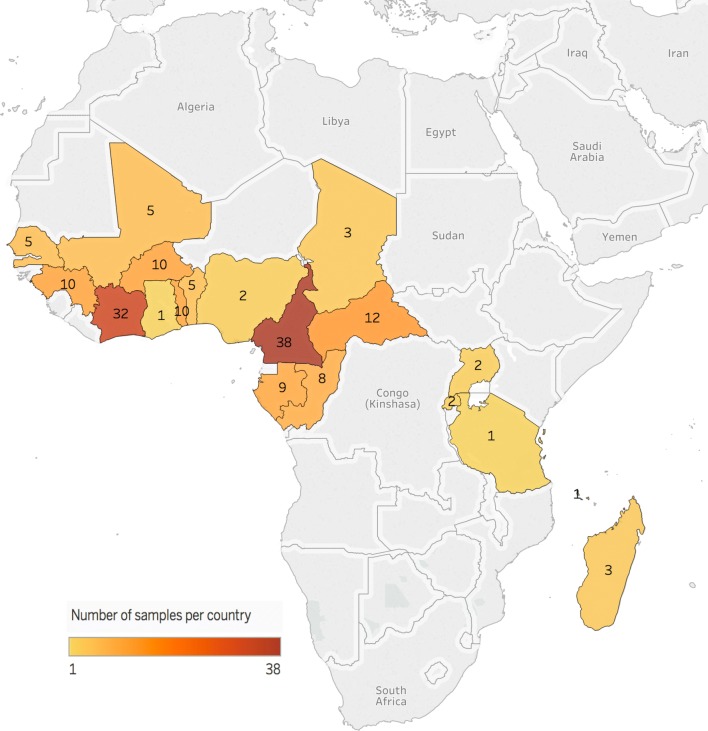
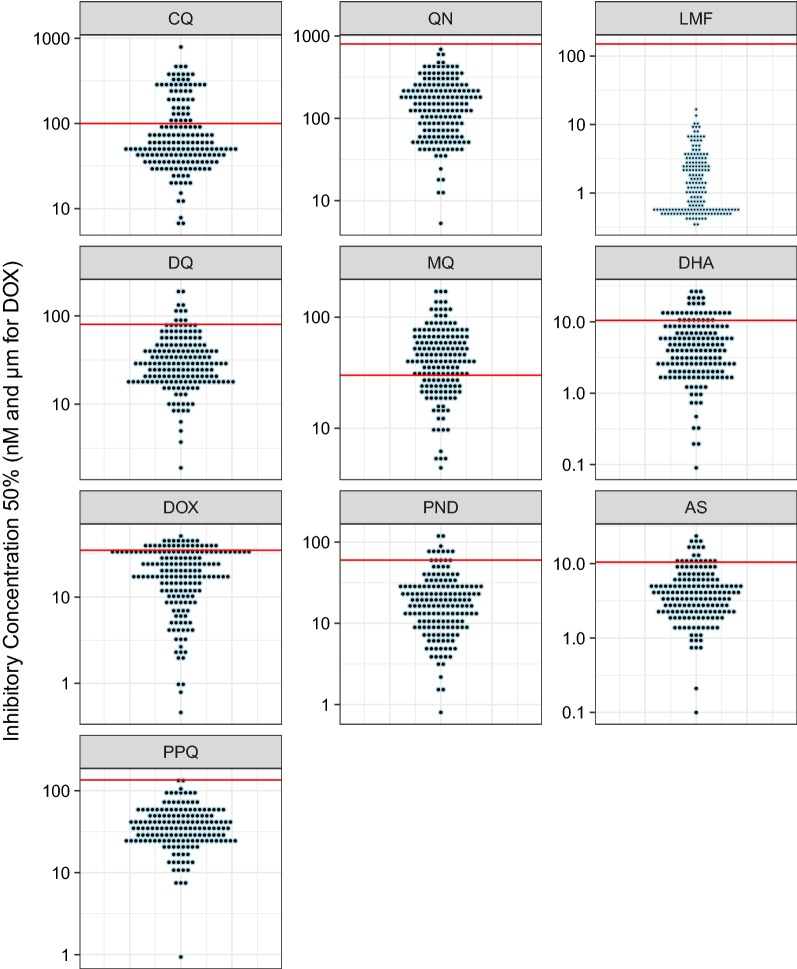
Methods: Mutations on pfugt, pfact and pfcarl were characterized on 86 isolates collected in Dakar, Senegal and 173 samples collected from patients hospitalized in France after a travel in African countries from 2015 and 2016 to assess their potential association with ex vivo susceptibility to chloroquine, quinine, lumefantrine, monodesethylamodiaquine, mefloquine, dihydroartemisinin, artesunate, doxycycline, pyronaridine and piperaquine.
Results: No mutations were found on the genes pfugt and pfact. None of the pfcarl described mutations were identified in these samples from Africa. The K784N mutation was found in one sample and the K734M mutation was identified on 7.9% of all samples for pfcarl. The only significant differences in ex vivo susceptibility according to the K734M mutation were observed for pyronaridine for African isolates from imported malaria and for doxycycline for Senegalese parasites.
Conclusion: No evidence was found of involvement of these genes in reduced susceptibility to standard anti-malarial drugs in African P. falciparum isolates.
Keywords: Anti-malarial drug; In vitro; Malaria; Molecular marker; PfACT; PfCARL; PfUGT; Plasmodium falciparum; Resistance.
Conflict of interest statement
The authors declare that they have no competing interests.
Figures

References
-
- WHO . Guidelines for the treatment of malaria. 3. Geneva: World Health Organization; 2015. - PubMed
-
- WHO . World malaria report 2018. Geneva: World Health Organization; 2018.
MeSH terms
Substances
Grants and funding
LinkOut - more resources
Full Text Sources
