


Physical multimorbidity and subjective cognitive complaints among adults in the United Kingdom: a cross-sectional community-based study
- PMID: 31455875
- PMCID: PMC6711967
- DOI: 10.1038/s41598-019-48894-8
Physical multimorbidity and subjective cognitive complaints among adults in the United Kingdom: a cross-sectional community-based study
Abstract
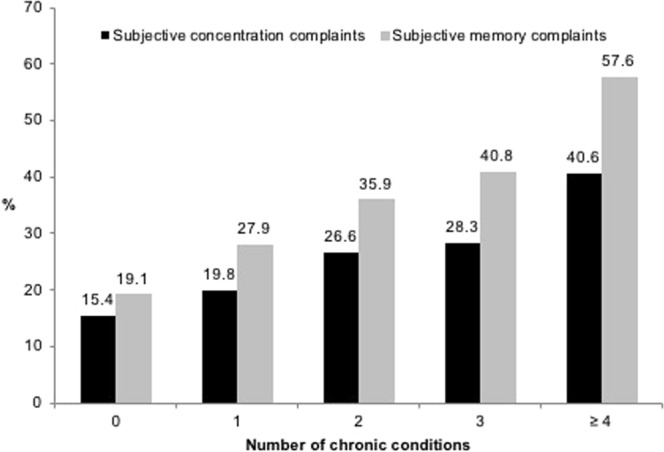
Our goal was to examine the association between physical multimorbidity and subjective cognitive complaints (SCC) using UK nationally representative cross-sectional community-based data, and to quantify the extent to which a broad range of mainly psychological and behavioral factors explain this relationship. Data from the 2007 Adult Psychiatric Morbidity Survey were analyzed [N = 7399 adults, mean (SD) age 46.3 (18.6) years, 48.6% men]. Multimorbidity was defined as ≥2 physical diseases. SCC included two different cognitive constructs: subjective concentration and memory complaints. Multivariable logistic regression and mediation analyses were conducted. Multimorbidity was associated with higher prevalence of subjective concentration (30.7% vs. 17.3%) and memory complaints (42.8% vs. 22.9%) compared to no multimorbidity. In the regression model adjusted for sociodemographics, multimorbidity was associated with subjective concentration (OR = 2.58; 95% CI = 2.25-2.96) and memory complaints (OR = 2.34; 95% CI = 2.08-2.62). Sleep problems, stressful life events and any anxiety disorder explained 21-23%, 20-22% and 14-15% of the multimorbidity-SCC association, respectively. Multimorbidity and SCC are highly co-morbid. The utility of SCC screening in identifying individuals at high risk for future cognitive decline among individuals with multimorbidity should be assessed.
Conflict of interest statement
The authors declare no competing interests.
Figures
References
Publication types
MeSH terms
LinkOut - more resources
Full Text Sources
Medical
Research Materials
