


Neurogenic Orthostatic Hypotension in Parkinson Disease: A Primer
- PMID: 31456212
- PMCID: PMC6946781
- DOI: 10.1007/s40120-019-00152-9
Neurogenic Orthostatic Hypotension in Parkinson Disease: A Primer
Abstract
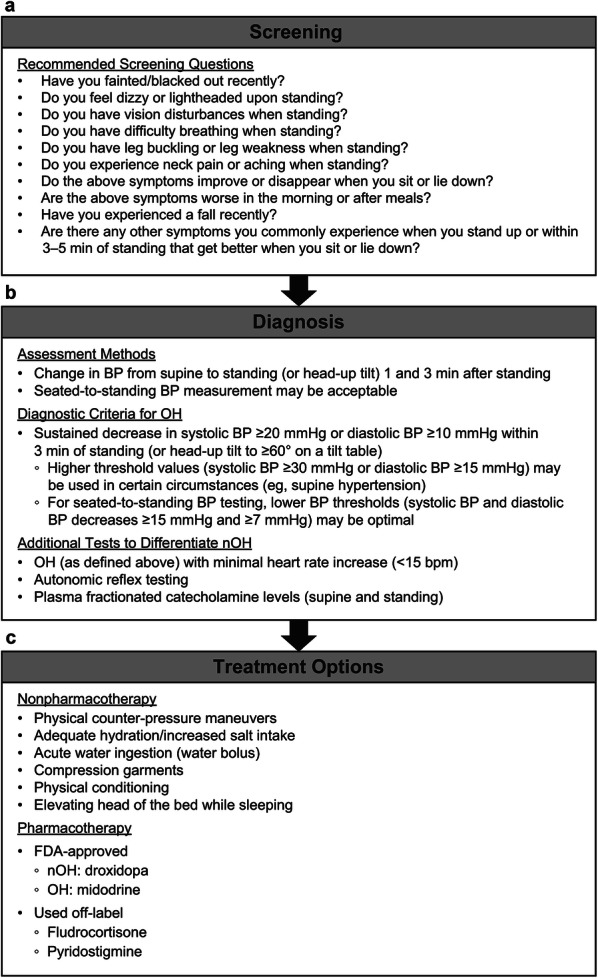
Parkinson disease (PD) is associated with a variety of motor and non-motor clinical manifestations, including cardiovascular autonomic dysfunction. Neurogenic orthostatic hypotension (nOH) is a potentially serious manifestation of cardiovascular sympathetic failure that occurs in approximately 30% of patients with PD. Here we review the pathophysiology and effects of the condition as well as treatment considerations for patients with PD and nOH. Screening for nOH using orthostatic symptom questionnaires, orthostatic blood pressure measurements, and specialized autonomic testing is beneficial for the identification of symptomatic and asymptomatic cases because cardiac sympathetic denervation and nOH can occur even at early (premotor) stages of PD. Symptoms of nOH, such as orthostatic lightheadedness, in patients with PD, have been shown to adversely affect patient safety (with increased risk of falls) and quality of life and should prompt treatment with non-pharmacologic and, occasionally, pharmacologic measures. Patients with nOH are also at increased risk of supine hypertension, which requires balancing various management strategies. FUNDING: Lundbeck (Deerfield, IL).
Keywords: Non-motor symptoms of Parkinson disease; Orthostatic hypotension; Screening; Supine hypertension; Treatment.
Conflict of interest statement
Dr. Cutsforth-Gregory receives royalties for the textbook
Figures
References
-
- Lyons KE, Pahwa R. The impact and management of non-motor symptoms of Parkinson’s disease. Am J Manag Care. 2011;17(Suppl 12):S308–S314. - PubMed
Publication types
Grants and funding
LinkOut - more resources
Full Text Sources
