Hg2+ Sensor Development Based on (E)- N'-Nitrobenzylidene-Benzenesulfonohydrazide (NBBSH) Derivatives Fabricated on a Glassy Carbon Electrode with a Nafion Matrix
- PMID: 31457448
- PMCID: PMC6641063
- DOI: 10.1021/acsomega.6b00359
Hg2+ Sensor Development Based on (E)- N'-Nitrobenzylidene-Benzenesulfonohydrazide (NBBSH) Derivatives Fabricated on a Glassy Carbon Electrode with a Nafion Matrix
Abstract
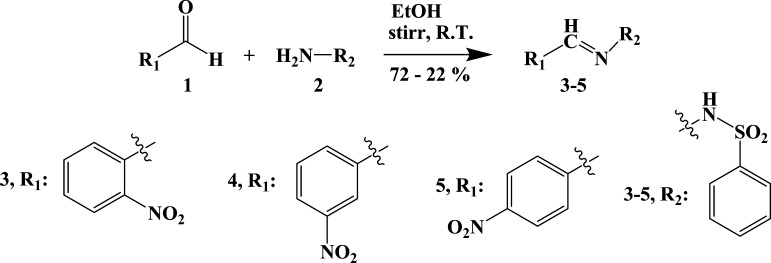
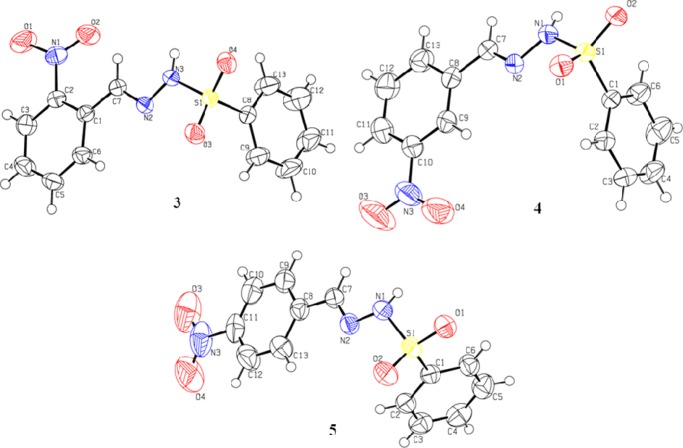
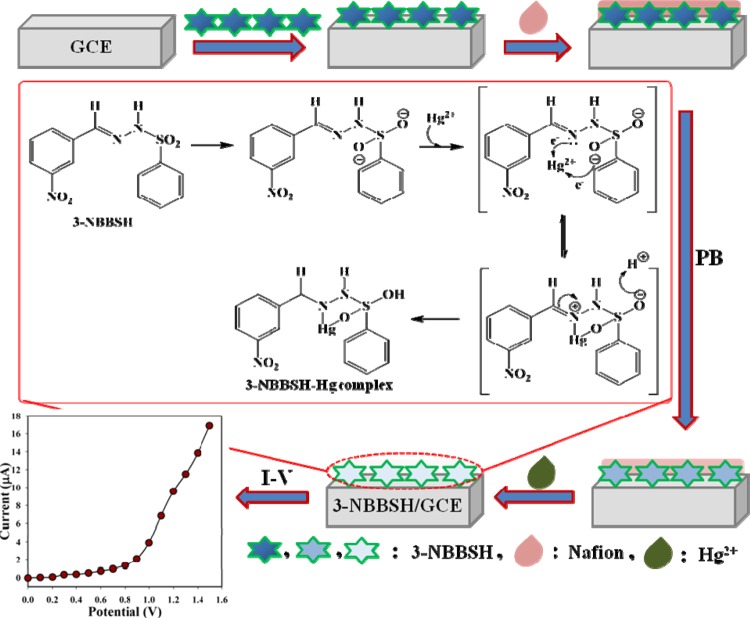
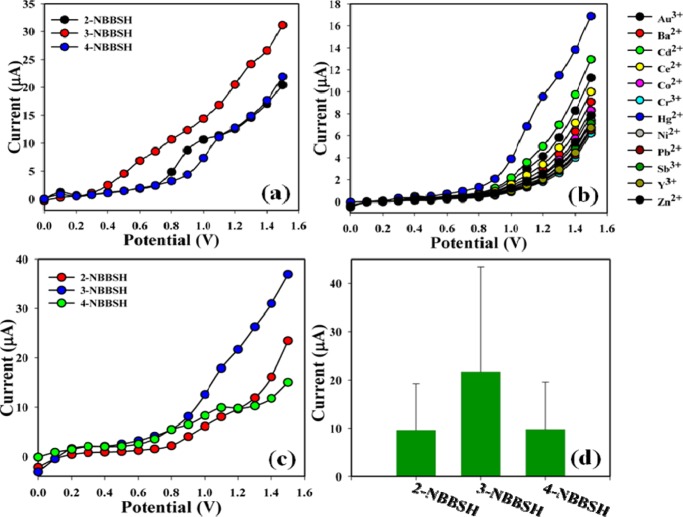
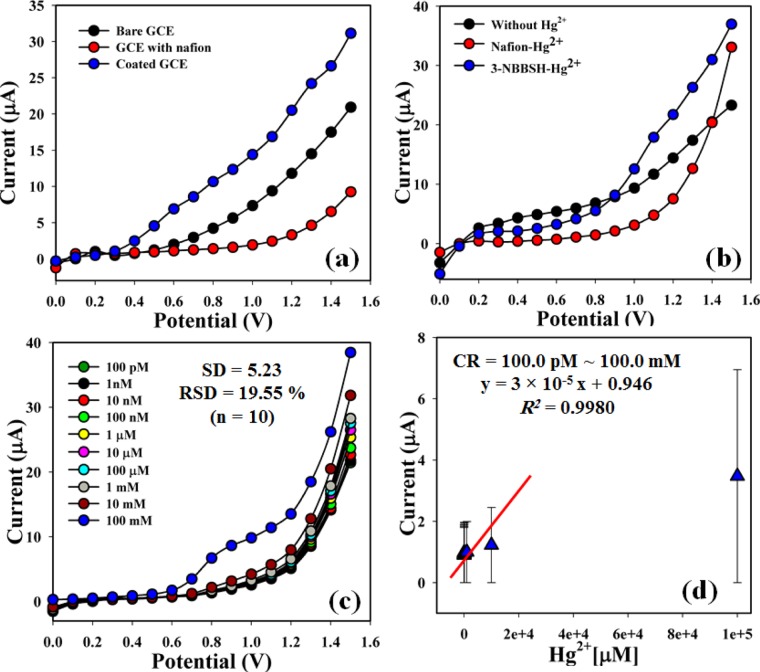
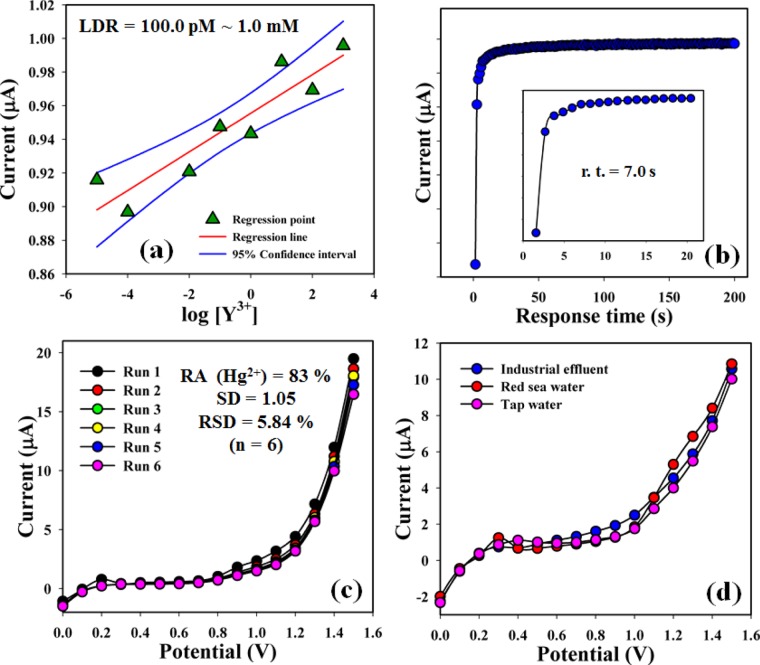
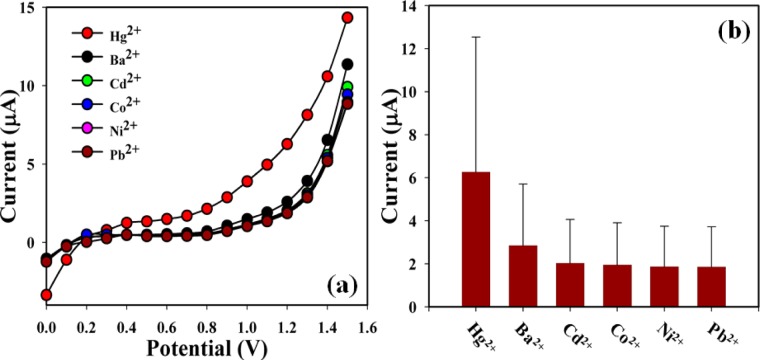
Three novel derivatives of (E)-N'-nitrobenzylidene-benzenesulfonohydrazide (NBBSH) were synthesized by a condensation method from nitrobenzaldehyde and benzenesulfonylhydrazine reactants in low to moderate yields, which crystallized in methanol, acetone, ethyl acetate, and ethanol. NBBSH derivatives were totally characterized using various spectroscopic techniques, such as Fourier transform infrared spectroscopy, ultraviolet-visible spectroscopy, proton nuclear magnetic resonance spectroscopy (1H NMR), and carbon-13 nuclear magnetic resonance (13C NMR) spectroscopy. The molecular structure of the NBBSH derivates was confirmed by the single crystal X-ray diffraction method and used for potential detection of a selective heavy metal ion, mercury (Hg2+), by a reliable I-V method. A thin coating of NBBSH derivatives was deposited on a glassy carbon electrode (surface area = 0.0316 cm2) with a binder (nafion) coating to modify a sensitive and selective Hg2+ sensor with a short response time in phosphate buffer. The modified cationic sensor exhibited enhanced chemical performances, such as higher sensitivity, linear dynamic range, limit of detection (LOD), reproducibility, and long-term stability toward Hg2+. The calibration curve was found to be linear over a wide range of Hg2+ concentrations (100.0 pM-100.0 mM). The sensitivity and LOD were considered to be ∼949.0 pA μM-1cm-2 and 10.0 ± 1.0 pM (S/N = 3), respectively. The sensor was applied to the selective measurement of Hg2+ in spiked water samples to give acceptable and satisfactory results.
Conflict of interest statement
The authors declare no competing financial interest.
Figures

References
-
- Fukuzumi S. New development of photoinduced electron-transfer catalytic system. Pure Appl. Chem. 2007, 79, 981–991. 10.1351/pac200779060981. - DOI
-
- Roztocki K.; Matoga D.; Szklarzewicz J. Copper (II) complexes with acetone picolinoyl hydrazones: Crystallographic insight into metalloligand formation. Inorg. Chem. Commun. 2015, 57, 22–25. 10.1016/j.inoche.2015.04.019. - DOI
-
- Siddique M.; Saeed A. B.; Ahmed S.; Dogar N. A. Synthesis and biological evaluation of hydrazide based Sulphonamides. J. Sci. Innovat. Res. 2013, 2, 627–633.
LinkOut - more resources
Full Text Sources
Research Materials