


Behavior change techniques in mobile applications for sedentary behavior
- PMID: 31463076
- PMCID: PMC6043935
- DOI: 10.1177/2055207618785798
Behavior change techniques in mobile applications for sedentary behavior
Abstract
Objective: Mobile applications (apps) are increasingly being utilized in health behavior change interventions. To determine the presence of underlying behavior change mechanisms, apps for physical activity have been coded for behavior change techniques (BCTs). However, apps for sedentary behavior have yet to be assessed for BCTs. Thus, the purpose of the present study was to review apps designed to decrease sedentary time and determine the presence of BCTs.
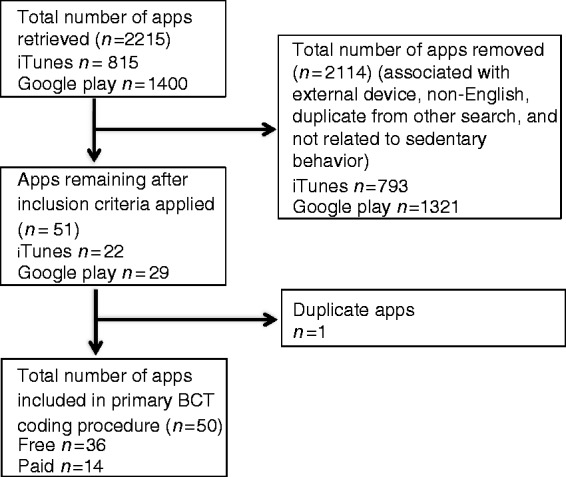
Methods: Systematic searches of the iTunes App and Google Play stores were completed using keyword searches. Two reviewers independently coded free (n = 36) and paid (n = 14) app descriptions using a taxonomy of 93 BCTs (December 2016-January 2017). A subsample (n = 4) of free apps were trialed for one week by the reviewers and coded for the presence of BCTs (February 2017).
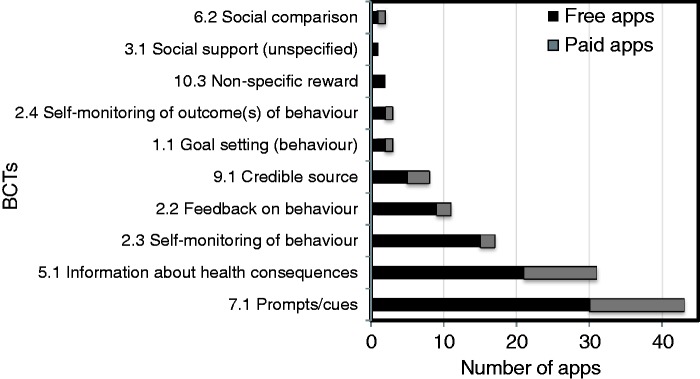
Results: In the free and paid app descriptions, only 10 of 93 BCTs were present with a mean of 2.42 BCTs (range 0-6) per app. The BCTs coded most frequently were "prompts/cues" (n = 43), "information about health consequences" (n = 31), and "self-monitoring of behavior" (n = 17). For the four free apps that were trialed, three additional BCTs were coded that were not coded in the descriptions: "graded tasks," "focus on past successes," and "behavior substitution."
Conclusions: These sedentary behavior apps have fewer BCTs compared with physical activity apps and traditional (i.e., non-app) physical activity and healthy eating interventions. The present study sheds light on the behavior change potential of sedentary behavior apps and provides practical insight about coding for BCTs in apps.
Keywords: Behavior change techniques; mHealth; mobile applications; sedentary behavior; sitting.
Figures
References
-
- Katzmarzyk PT, Church TS, Craig CL, et al. Sitting time and mortality from all causes, cardiovascular disease, and cancer. Med Sci Sports Exerc 2009; 41: 998–1005. - PubMed
-
- Sedentary Behavior Research Network. Standardized use of the terms “sedentary” and “sedentary behaviors”. Appl Physiol Nutr Metab 2012; 37: 540–542. - PubMed
-
- Colley RC, Garriguet D, Janssen I, et al. Physical activity of Canadian adults: accelerometer results from the 2007 to the 2009 Canadian health measures survey. Health Rep 2011; 22: 7–14. - PubMed
LinkOut - more resources
Full Text Sources
Miscellaneous
