


Diffuse intrinsic pontine glioma: molecular landscape and emerging therapeutic targets
- PMID: 31464759
- PMCID: PMC7242222
- DOI: 10.1097/CCO.0000000000000577
Diffuse intrinsic pontine glioma: molecular landscape and emerging therapeutic targets
Abstract
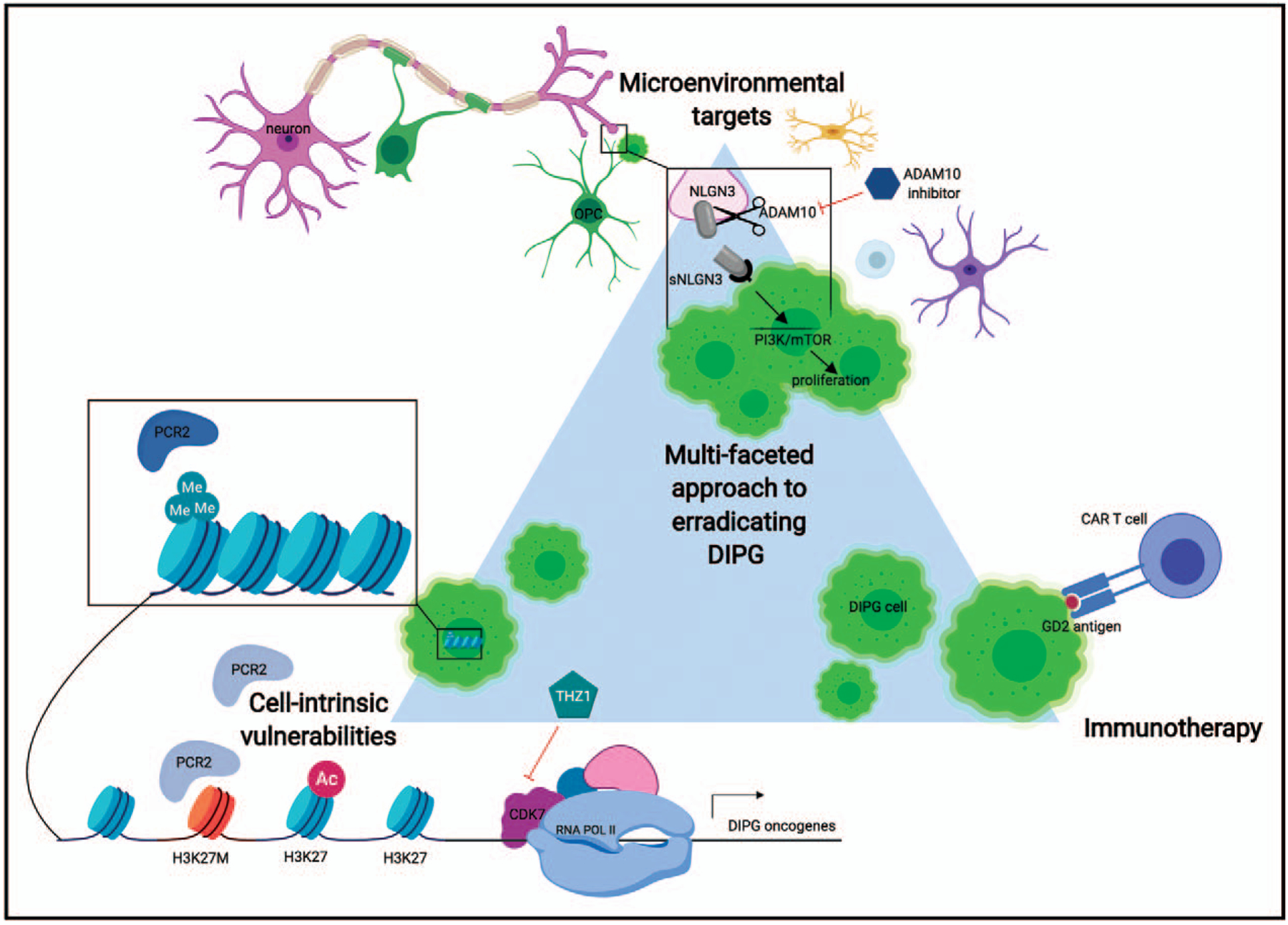
Purpose of review: Diffuse intrinsic pontine glioma (DIPG) is a fatal childhood brainstem malignancy. Despite advances in understanding of the molecular underpinnings of the tumor in the past decade, the dismal prognosis of DIPG has thus far remained unchanged. This review seeks to highlight promising therapeutic targets within three arenas: DIPG cell-intrinsic vulnerabilities, immunotherapeutic approaches to tumor clearance, and microenvironmental dependencies that promote tumor growth.
Recent findings: Promising therapeutic strategies from recent studies include epigenetic modifying agents such as histone deacetylase inhibitors, bromodomain and extra-terminal motif (BET) protein inhibitors, and CDK7 inhibitors. Tumor-specific immunotherapies are emerging. Key interactions between DIPG and normal brain cells are coming to light, and targeting critical microenvironmental mechanisms driving DIPG growth in the developing childhood brain represents a new direction for therapy.
Summary: Several DIPG treatment strategies are being evaluated in early clinical trials. Ultimately, we suspect that a multifaceted therapeutic approach utilizing cell-intrinsic, microenvironmental, and immunotherapeutic targets will be necessary for eradicating DIPG.
Conflict of interest statement
Conflicts of interest
There are no conflicts of interest.
Figures
References
-
- Hoffman LM, Veldhuijzen van Zanten SEM, Colditz N, et al. Clinical, radiologic, pathologic, and molecular characteristics of long-term survivors of diffuse intrinsic pontine glioma (DIPG): a collaborative report from the International and European Society for Pediatric Oncology DIPG Registries. J Clin Oncol 2018; 36:1963–1972. - PMC - PubMed
-
-
Mackay A, Burford A, Carvalho D, et al. Integrated molecular meta-analysis of 1,000 pediatric high-grade and diffuse intrinsic pontine glioma. Cancer Cell 2017; 32:520–537.e5. The analysis of more than 1000 cases of pediatric HGGs and diffuse intrinsic pontine glioma (DIPG) identified distinct mutations and pathway dysfunctions which cosegregate with histone-mutant subgroups.
-
-
-
Qin EY, Cooper DD, Abbott KL, et al. Neural precursor-derived pleiotrophin mediates subventricular zone invasion by glioma. Cell 2017; 170: 845–859.e19. Glioma invasion into the subventricular zone is dependent on pleiotrophin (PTN), a highly enriched growth factor in this region that is secreted by neural precursor cells (NPCs). When NPCs secrete PTN, interaction with HSP90B SPARC/SPARCL1 forms a chemoattractant complex that promotes tumor invasion through the activation of RhoA/ROCK signaling.
-
Publication types
MeSH terms
Grants and funding
LinkOut - more resources
Full Text Sources
Miscellaneous
