


The Role of Extracellular Vesicles in Viral Infection and Transmission
- PMID: 31466253
- PMCID: PMC6789493
- DOI: 10.3390/vaccines7030102
The Role of Extracellular Vesicles in Viral Infection and Transmission
Abstract
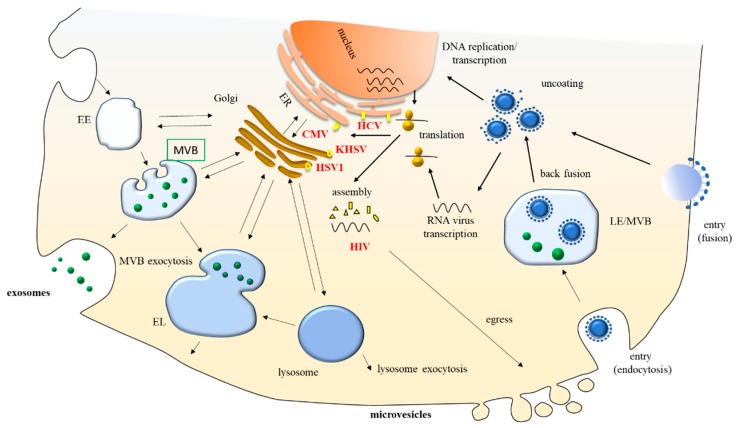
Extracellular vesicles (EVs) have been found to be released by any type of cell and can be retrieved in every circulating body fluid, namely blood (plasma, serum), saliva, milk, and urine. EVs were initially considered a cellular garbage disposal tool, but later it became evident that they are involved in intercellular signaling. There is evidence that viruses can use EV endocytic routes to enter uninfected cells and hijack the EV secretory pathway to exit infected cells, thus illustrating that EVs and viruses share common cell entry and biogenesis mechanisms. Moreover, EVs play a role in immune response against viral pathogens. EVs incorporate and spread both viral and host factors, thereby prompting or inhibiting immune responses towards them via a multiplicity of mechanisms. The involvement of EVs in immune responses, and their potential use as agents modulating viral infection, will be examined. Although further studies are needed, the engineering of EVs could package viral elements or host factors selected for their immunostimulatory properties, to be used as vaccines or tolerogenic tools in autoimmune diseases.
Keywords: Epstein-Barr virus (EBV); HCV; Human Immunodeficiency Virus (HIV); exosomes; extracellular vesicles; mechanisms of viral spreading.
Conflict of interest statement
The authors declare no conflict of interest.
Figures
References
-
- Johnstone R.M., Adam M., Hammond J.R., Orr L., Turbide C. Vesicle formation during reticulocyte maturation. Association of plasma membrane activities with released vesicles (exosomes) J. Biol. Chem. 1987;262:9412–9420. - PubMed
Publication types
LinkOut - more resources
Full Text Sources
