


Efficacy of adaptive e-learning for health professionals and students: a systematic review and meta-analysis
- PMID: 31467045
- PMCID: PMC6719835
- DOI: 10.1136/bmjopen-2018-025252
Efficacy of adaptive e-learning for health professionals and students: a systematic review and meta-analysis
Abstract
Objective: Although adaptive e-learning environments (AEEs) can provide personalised instruction to health professional and students, their efficacy remains unclear. Therefore, this review aimed to identify, appraise and synthesise the evidence regarding the efficacy of AEEs in improving knowledge, skills and clinical behaviour in health professionals and students.
Design: Systematic review and meta-analysis.
Data sources: CINAHL, EMBASE, ERIC, PsycINFO, PubMed and Web of Science from the first year of records to February 2019.
Eligibility criteria: Controlled studies that evaluated the effect of an AEE on knowledge, skills or clinical behaviour in health professionals or students.
Screening, data extraction and synthesis: Two authors screened studies, extracted data, assessed risk of bias and coded quality of evidence independently. AEEs were reviewed with regard to their topic, theoretical framework and adaptivity process. Studies were included in the meta-analysis if they had a non-adaptive e-learning environment control group and had no missing data. Effect sizes (ES) were pooled using a random effects model.
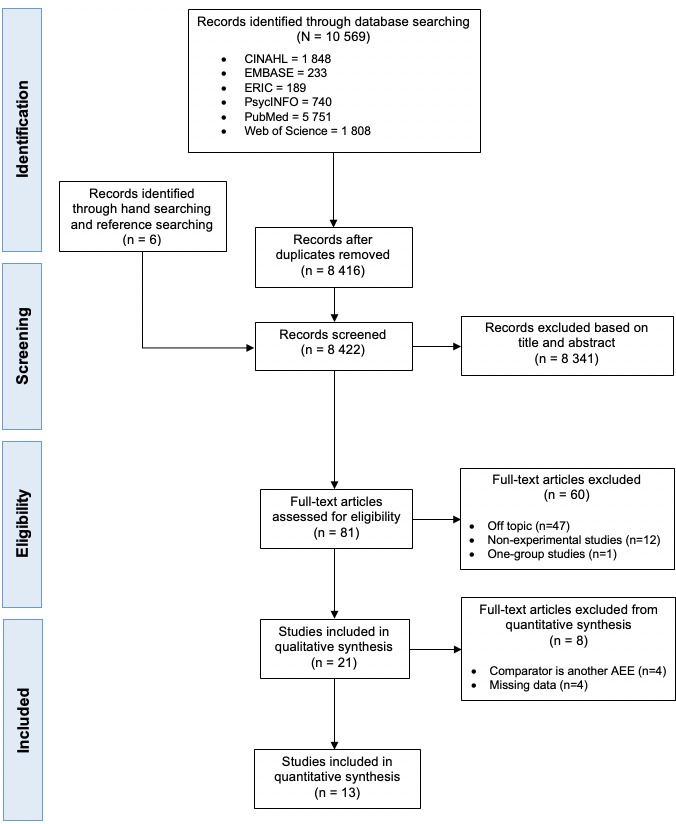
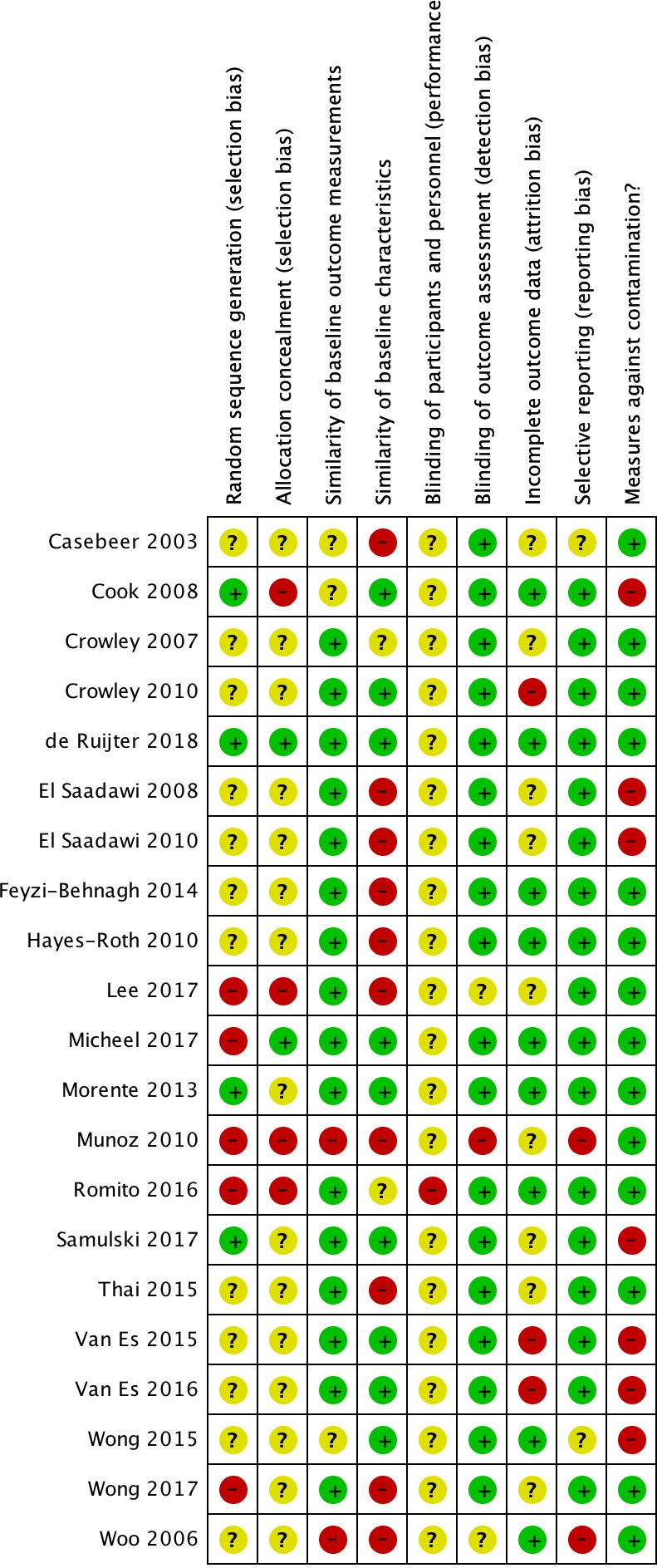
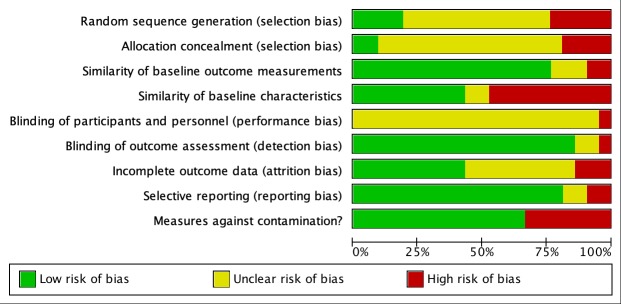
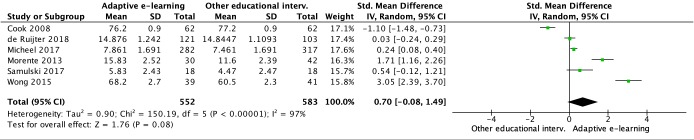
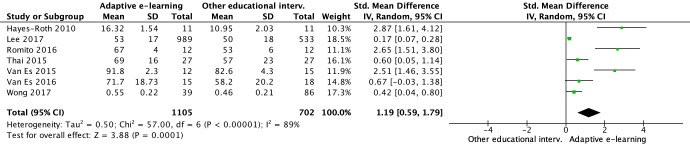
Results: From a pool of 10 569 articles, we included 21 eligible studies enrolling 3684 health professionals and students. Clinical topics were mostly related to diagnostic testing, theoretical frameworks were varied and the adaptivity process was characterised by five subdomains: method, goals, timing, factors and types. The pooled ES was 0.70 for knowledge (95% CI -0.08 to 1.49; p.08) and 1.19 for skills (95% CI 0.59 to 1.79; p<0.00001). Risk of bias was generally high. Heterogeneity was large in all analyses.
Conclusions: AEEs appear particularly effective in improving skills in health professionals and students. The adaptivity process within AEEs may be more beneficial for learning skills rather than factual knowledge, which generates less cognitive load. Future research should report more clearly on the design and adaptivity process of AEEs, and target higher-level outcomes, such as clinical behaviour.
Prospero registration number: CRD42017065585.
Keywords: Computer-assisted instruction; e-learning; medical education; meta-analysis; nursing education.
© Author(s) (or their employer(s)) 2019. Re-use permitted under CC BY-NC. No commercial re-use. See rights and permissions. Published by BMJ.
Conflict of interest statement
Competing interests: None declared.
Figures
References
-
- Clark R, Mayer R. E-Learning and the science of instruction: proven guidelines for consumers and Designers of multimedia learning. 4. Hoboken, NJ: John Wiley & Sons, 2016.
-
- Cheng B, Wang M, Mørch AI, et al. . Research on e-learning in the workplace 2000–2012: a bibliometric analysis of the literature. Educ Res Rev 2014;11:56–72. 10.1016/j.edurev.2014.01.001 - DOI
Publication types
MeSH terms
Grants and funding
LinkOut - more resources
Full Text Sources
