Review
. 2019 Aug 27;8(1):23.
doi: 10.1186/s40169-019-0241-x.

New therapeutic targets for cancer: the interplay between immune and metabolic checkpoints and gut microbiota

Affiliations
Review

New therapeutic targets for cancer: the interplay between immune and metabolic checkpoints and gut microbiota

Babita Agrawal. Clin Transl Med. .

Abstract

Transformation and growth of tumor cells are associated with profound alterations in neighbouring cells and their environment, together forming the tumor microenvironment (TME). The TME provides a conducive but complex milieu for the tumors to thrive while incapacitating the immune cells that home there as part of our natural immunosurveillance mechanism. The orchestration of this successful survival strategy by tumor cells is associated with exploitation of numerous metabolic and immune checkpoints, as well as metabolic reprogramming in the tumor cells. Together these form an intricate network of feedback mechanisms that favor the growing tumor. In addition, an ecosystem of microbiota, proximal or distal to tumors, influences the successful survival or elimination of tumor cells mediated by immune cells. Discovery and clinical application of immune checkpoint inhibitors (ICIs) i.e., monoclonal antibodies (mAbs) blocking specific immune checkpoints CTLA-4 and PD-1/PD-L1, have revolutionized therapy of various cancers. However, they are still associated with limited response rates, severe immune-related adverse events, development of resistance, and more serious exacerbation of cancer progression termed hyper-progressive disease. Checkpoint inhibitors only represent a milestone and not the finish-line in the quest for treating and curing cancer. Efforts are underway to investigate and develop inhibitors of other immune as well as metabolic checkpoint molecules. Future therapy for various cancers is projected to target immune and metabolic checkpoints and the microbiota together.

Keywords: Gut microbiota; Immune checkpoint inhibitors (ICIs); Immune checkpoints; Metabolic checkpoints; Monoclonal antibodies (mAbs); Tumor microenvironment (TME).


Conflict of interest statement

The author declares no competing interests.

Figures
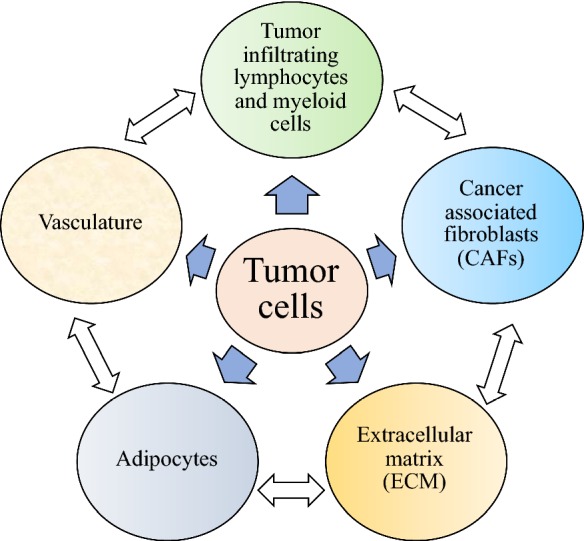
Fig. 1
Fig. 1
Composition of the tumor microenvironment (TME). The tumor microenvironment is composed of tumor cells, cancer-associated fibroblasts (CAFs), the extracellular matrix (ECM), adipocytes, tumor vasculature and tumor-infiltrating lymphocytes and myeloid cells, all of which cross-talk intensively through cell surface molecules and/or soluble mediators to promote tumor growth and protect from host immunity and/or therapeutics
Fig. 2
Fig. 2
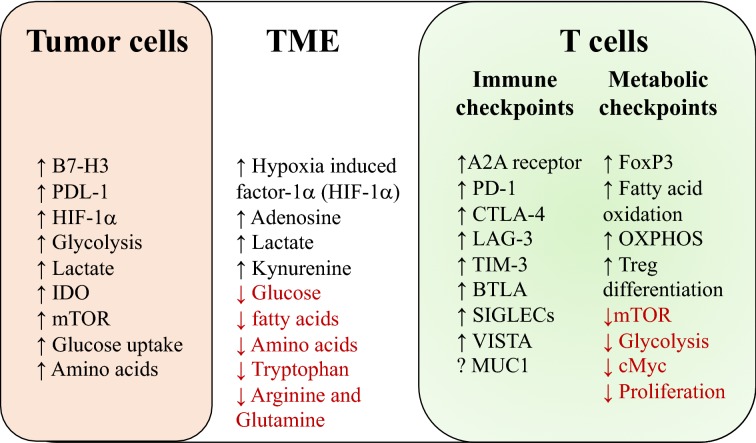
Immune-metabolism in the tumor microenvironment (TME). Fast growing tumor cells, under hypoxic conditions, lead to upregulation of HIF-1α, enhanced consumption of nutrients, increased glycolysis and increased production of adenosine and lactate, all of which in turn produce a microenvironment rich in adenosine, lactate and HIF-1α, but with a scarcity of nutrients for tumor-infiltrating immune cells. This metabolic microenvironment programs the immune cells such that (1) anergic T cells, with inefficient proliferation and effector function, as well as (2) regulatory T cells, are predominant in TME. Furthermore, T cells with increased expression of a number of immune checkpoints and loss of effector functions, a hallmark or exhausted T cells, are characteristics of TME. This figure depicts T cells as an example immune cell type for clarity, but as described in the manuscript text, other lymphoid and myeloid cells are also present in the TME and are intensively involved in tumor progression
Fig. 3
Fig. 3
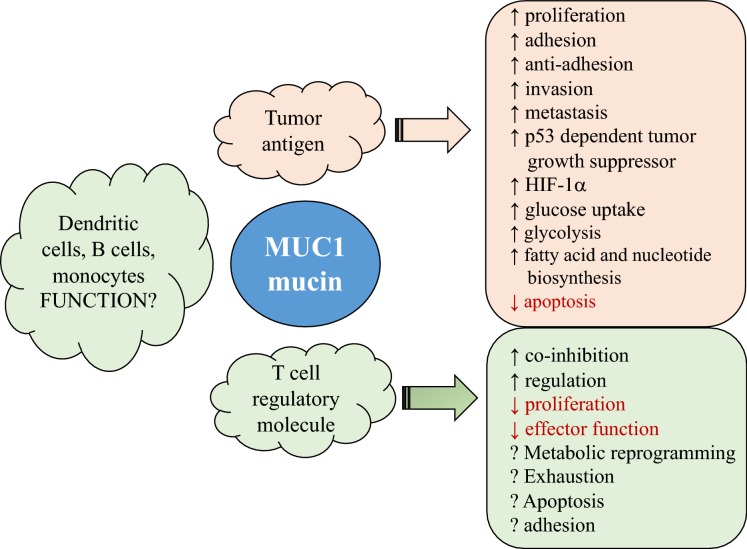
MUC1 mucin: a molecule with complex functions. MUC1 mucin can be characterized as a pan-tumor antigen, associated with adenocarcinomas, lymphomas and leukemias, where it plays a significant role in proliferation, metabolism and metastasis of tumor cells. In addition, MUC1 is also expressed on immune cells such as T cells, B cells, dendritic cells and monocytes. On T cells, MUC1 is putatively a checkpoint molecule and serves as a co-inhibitory molecule. The function of MUC1 on other immune cells is not clear yet. MUC1 mucin exemplifies the level of complexity present within the TME and consequently the development of cancer therapeutics
Fig. 4
Fig. 4
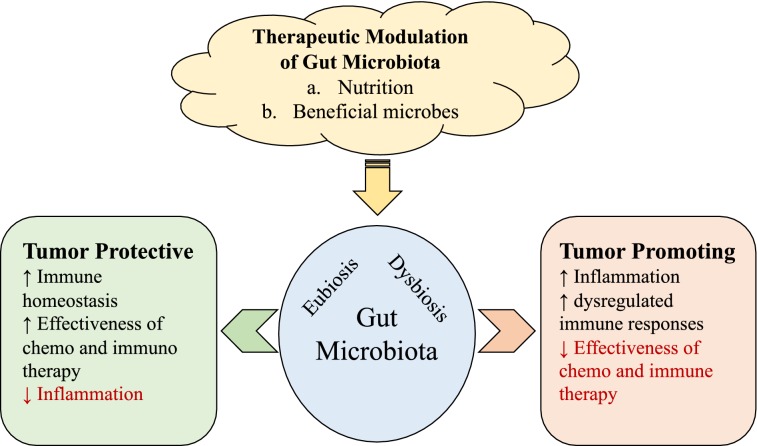
Role of gut microbiota in tumor progression/protection. Gut microbiota affects systemic inflammation, immune homeostasis and immune regulation. Therefore, eubiosis or dysbiosis of gut microbiota plays a significant role in protection from tumor growth or tumor progression, respectively. Furthermore, effectiveness of chemo- and immuno-therapy approaches is also at least partly governed by the state of gut microbiota. Modulation of gut microbiota through nutrition or ingestions of beneficial microbes may serve as important therapeutic modalities for cancer treatment alone or as an adjunct to chemo- and/or immuno-therapy
Fig. 5
Fig. 5
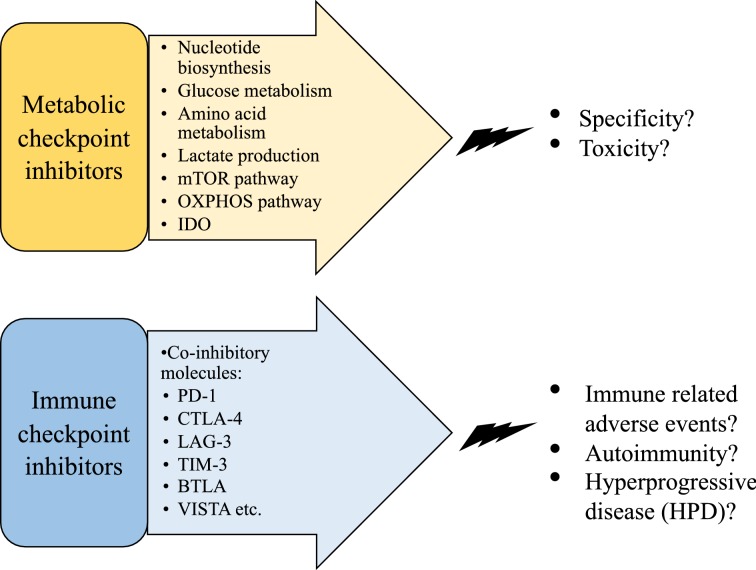
Clinical applications of immune and metabolic checkpoint inhibitors and their limitations. Various metabolic checkpoint inhibitors (top yellow panel) and immune checkpoint inhibitors (bottom blue panel) are being targeted for cancer therapy. However, while metabolic checkpoint inhibitors lack specificity against tumors resulting in toxicity to host cells, immune checkpoint inhibitors are associated with immune-related adverse events and exacerbation of cancer progression in some cases

References

    1. International Agency for Research on Cancer (2018) Latest global cancer data: cancer burden rises to 18.1 million new cases and 9.6 million cancer deaths in 2018. Press Release, pp 1–3. http://gco.iarc.fr/. Accessed 12 Sept 2018
    1. Society AC (2018) Cancer facts and figures 2018. American Cancer Society
    1. Siegel RL, Miller KD, Jemal A. Cancer statistics, 2019. CA Cancer J Clin. 2019;69(1):7–34. - PubMed
    1. La-Beck NM, Jean GW, Huynh C, Alzghari SK, Lowe DB. Immune checkpoint inhibitors: new insights and current place in cancer therapy. Pharmacotherapy. 2015;35(10):963–976. - PubMed
    1. Bodey B, Bodey B, Siegel SE, Kaiser HE. Failure of cancer vaccines: the significant limitations of this approach to immunotherapy. Anticancer Res. 2000;20(4):2665–2667. - PubMed