


Physical Performance Measures Correlate with Head Impact Exposure in Youth Football
- PMID: 31469712
- PMCID: PMC6962548
- DOI: 10.1249/MSS.0000000000002144
Physical Performance Measures Correlate with Head Impact Exposure in Youth Football
Abstract
Purpose: Head impact exposure (HIE) (i.e., magnitude and frequency of impacts) can vary considerably among individuals within a single football team. To better understand individual-specific factors that may explain variation in head impact biomechanics, this study aimed to evaluate the relationship between physical performance measures and HIE metrics in youth football players.
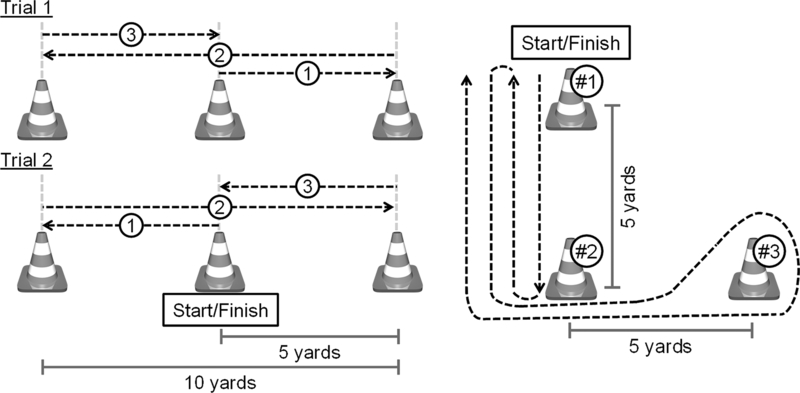
Methods: Head impact data were collected from youth football players using the Head Impact Telemetry System. Head impact exposure was quantified in terms of impact frequency, linear and rotational head acceleration, and risk-weighted cumulative exposure metrics (RWELinear, RWERotational, and RWECP). Study participants completed four physical performance tests: vertical jump, shuttle run, three-cone, and 40-yard sprint. The relationships between performance measures, and HIE metrics were evaluated using linear regression analyses.
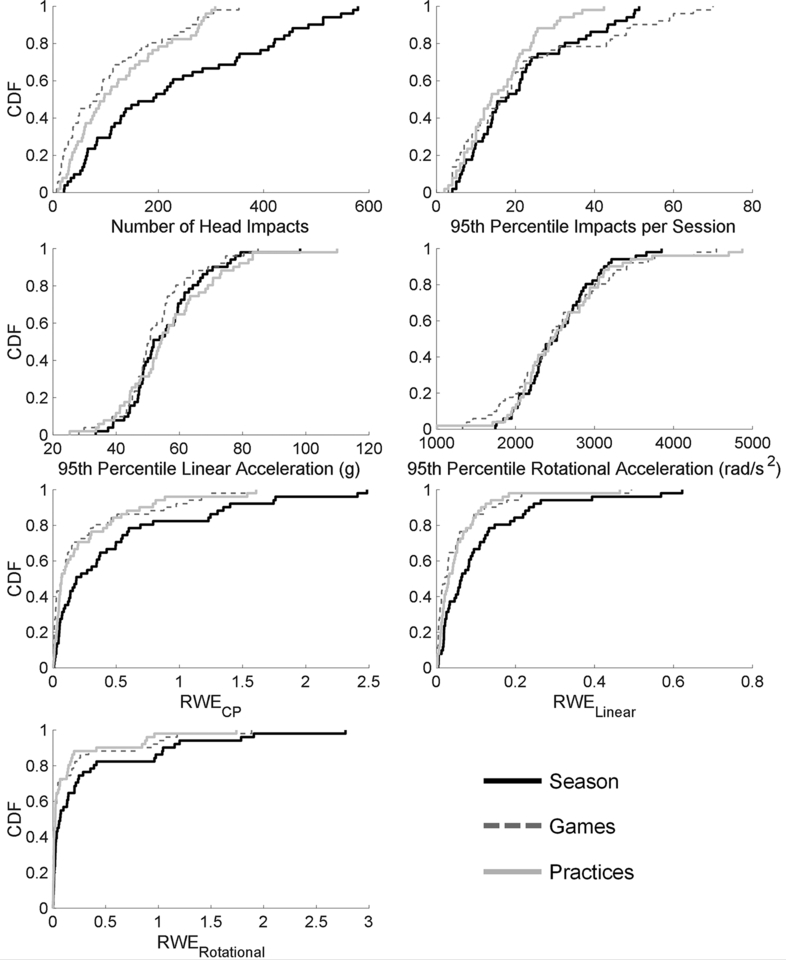
Results: A total of 51 youth football athletes (ages, 9-13 yr) completed performance testing and received combined 13,770 head impacts measured with the Head Impact Telemetry System for a full season. All performance measures were significantly correlated with total number of impacts in a season, RWELinear-Season, and all RWE-Game metrics. The strongest relationships were between 40-yard sprint speed and all RWE-Game metrics (all P ≤ 0.0001 and partial R > 0.3). The only significant relationships among HIE metrics in practice were between shuttle run speed and total practice impacts and RWELinear-Practices, 40 yard sprint speed and total number of practice impacts, and three-cone speed and 95th percentile number of impacts/practice.
Conclusions: Generally, higher vertical jump height and faster times in speed and agility drills were associated with higher HIE, especially in games. Physical performance explained less variation in HIE in practices, where drills and other factors, such as coaching style, may have a larger influence on HIE.
Conflict of interest statement
The authors report no conflict of interest concerning the materials or methods used in this study or the findings specified in this paper. The results of the present study do not constitute endorsement by ACSM. The results of the study are presented clearly, honestly, and without fabrication, falsification, or inappropriate data manipulation.
Figures
References
Publication types
MeSH terms
Grants and funding
LinkOut - more resources
Full Text Sources
