


Matched Cohort Comparison Indicates Superiority of Precurved Electrode Arrays
- PMID: 31469799
- PMCID: PMC6999087
- DOI: 10.1097/MAO.0000000000002366
Matched Cohort Comparison Indicates Superiority of Precurved Electrode Arrays
Abstract
Objective: Characterize differences in adult cochlear implant outcomes and programming parameters for a straight (CI422/522) and a precurved (CI532) electrode array.
Setting: Cochlear implant (CI) program at a tertiary otologic center.
Patients: Fifty-eight adults were included in the study; 29 were implanted with CI422 or CI522 and 29 were implanted with CI532. Each CI532 recipient was matched to a CI422/522 recipient in terms of age and preoperative hearing thresholds for comparison purposes.
Main outcome measures: Consonant-Nucleus-Consonant (CNC) words, AzBio sentences, residual audiometric thresholds, and Speech Spatial Qualities (SSQ) questionnaire collected 6 months postoperatively were used to characterize outcomes. Pulse duration, maxima, impedances, and overall charge measurements were used to characterize programming parameters.
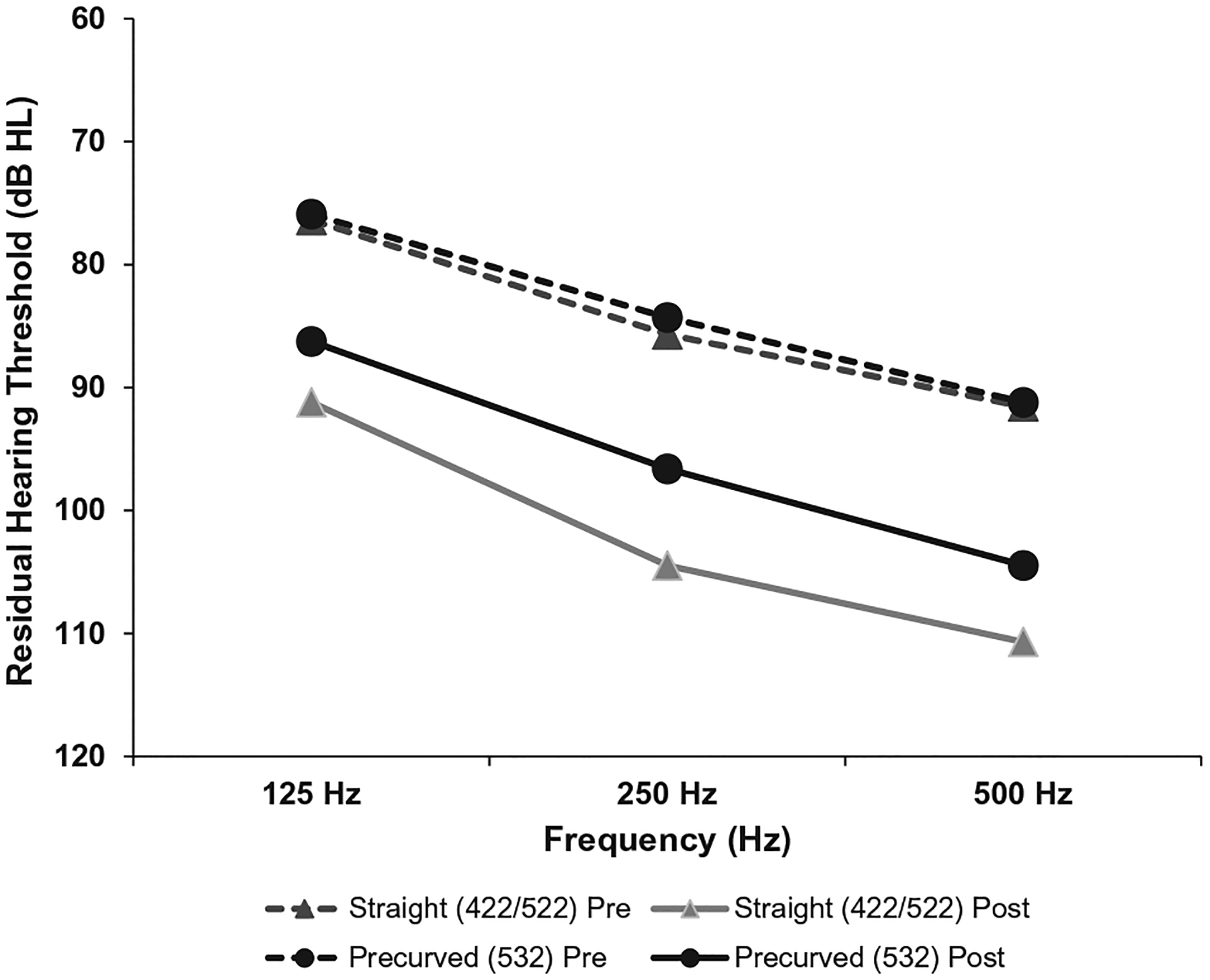
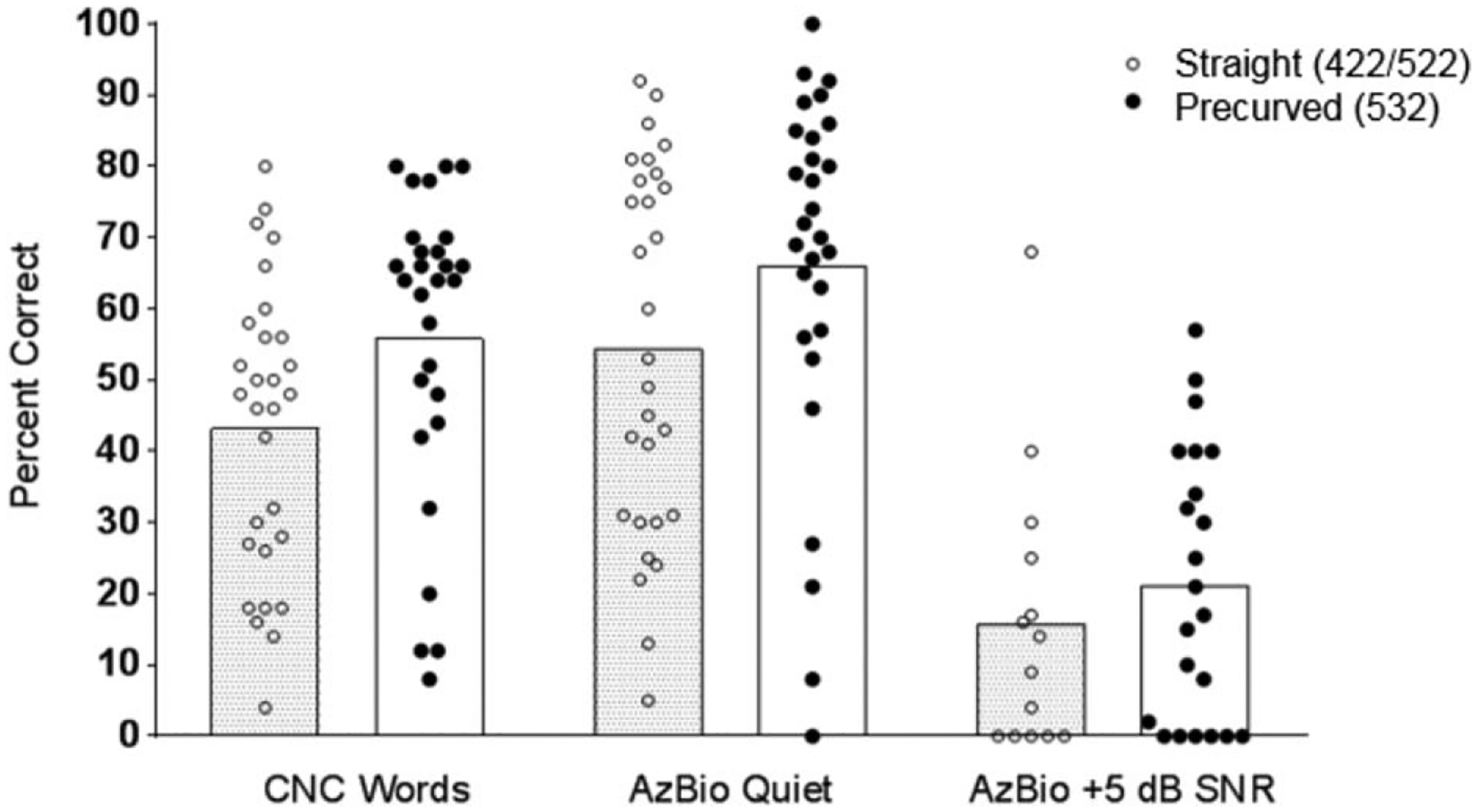
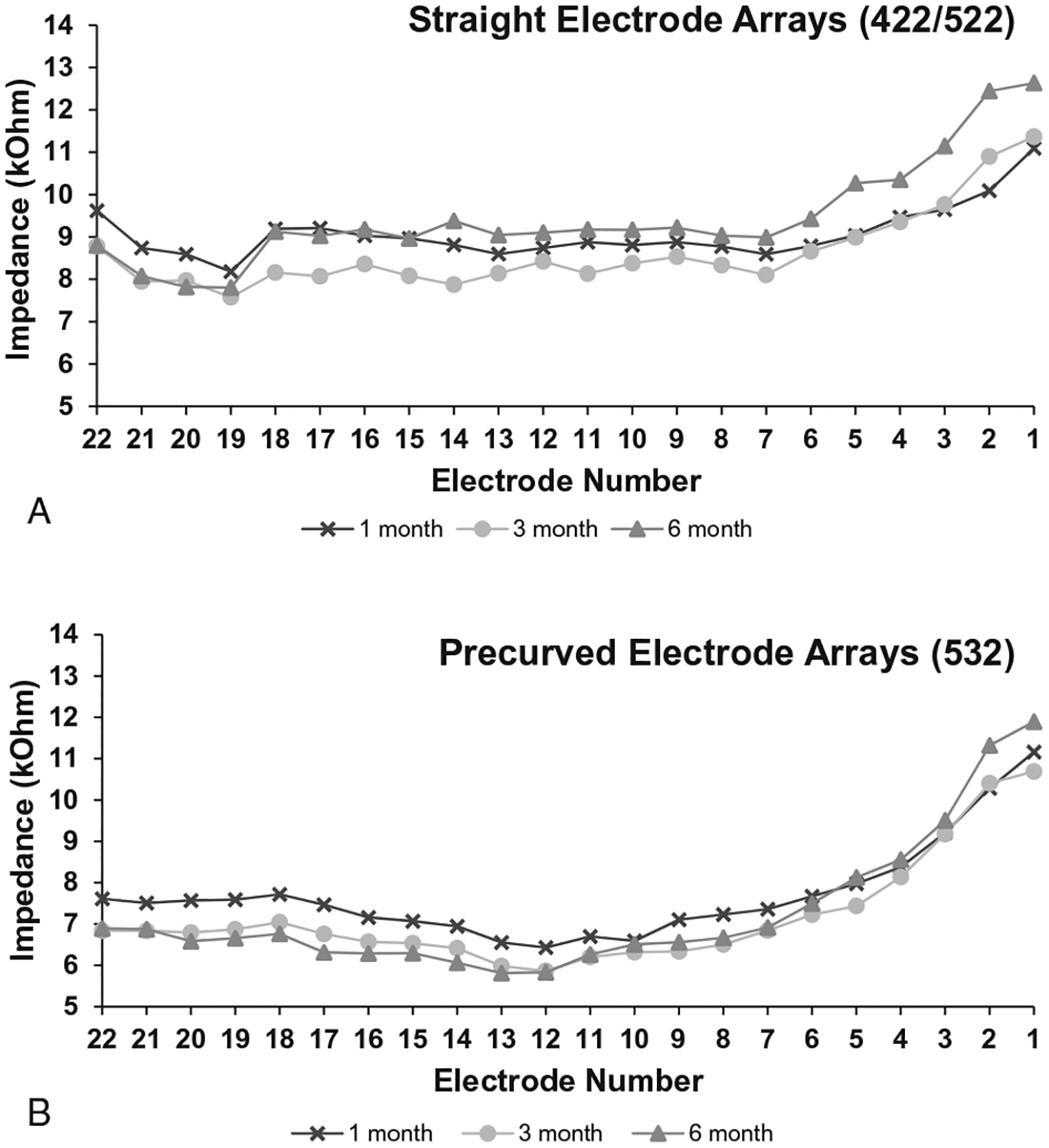
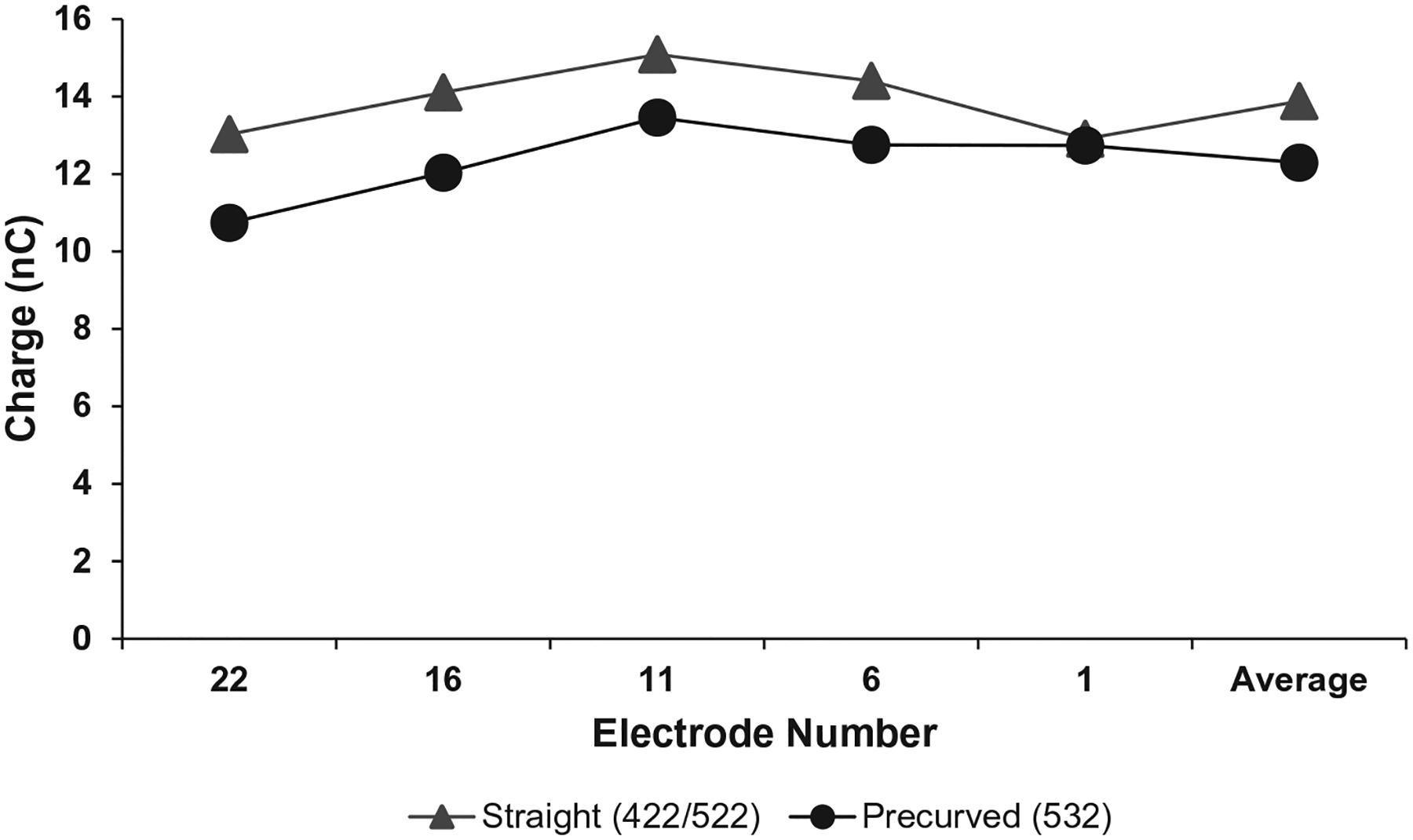
Results: Postoperative unaided low frequency pure-tone average (LFPTA) was significantly better for the CI532 group. CNC scores were significantly better for the CI532 group. Impedances and pulse duration were significantly lower for the CI532 group, but there was no difference in overall charge between the groups.
Conclusion: The CI532 group showed either similar or statistically superior results on all measures when compared with the CI422/522 suggesting that the CI532 electrode may be an advantageous substitute for the CI522.
Figures
References
-
- Tong YC, Busby PA, Clark GM. Perceptual studies on cochlear implant patients with early onset of profound hearing impairment prior to normal development of auditory, speech, and language skills. J Acoust Soc Am 1988;84:951–62. - PubMed
-
- Rubinstein JT, Parkinson WS, Tyler RS, Gantz BJ. Residual speech recognition and cochlear implant performance: effects of implantation criteria. Am J Otol 1999;20:445–52. - PubMed
Publication types
MeSH terms
Grants and funding
LinkOut - more resources
Full Text Sources
Medical
