


The effects of action observation training on improving upper limb motor functions in people with stroke: A systematic review and meta-analysis
- PMID: 31469840
- PMCID: PMC6716645
- DOI: 10.1371/journal.pone.0221166
The effects of action observation training on improving upper limb motor functions in people with stroke: A systematic review and meta-analysis
Abstract
Background and objective: Action observation training (AOT) has been used as a new intervention for improving upper limb motor functions in people with stroke. This systematic review and meta-analysis aims to investigate the effects of AOT on improving upper limb motor functions in people with stroke.
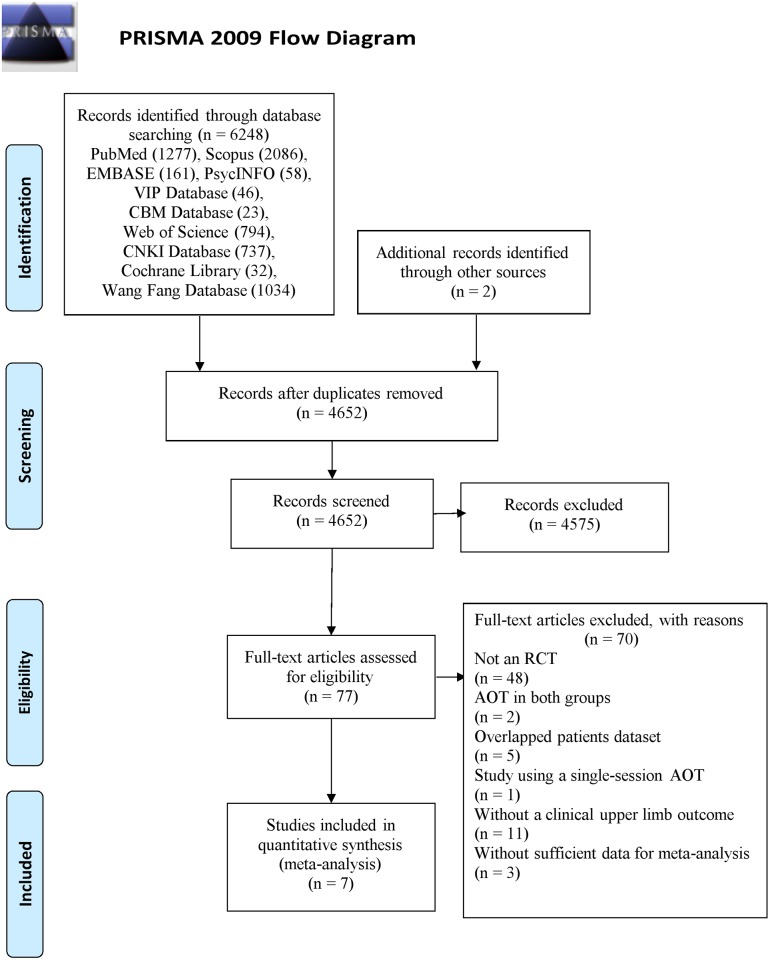
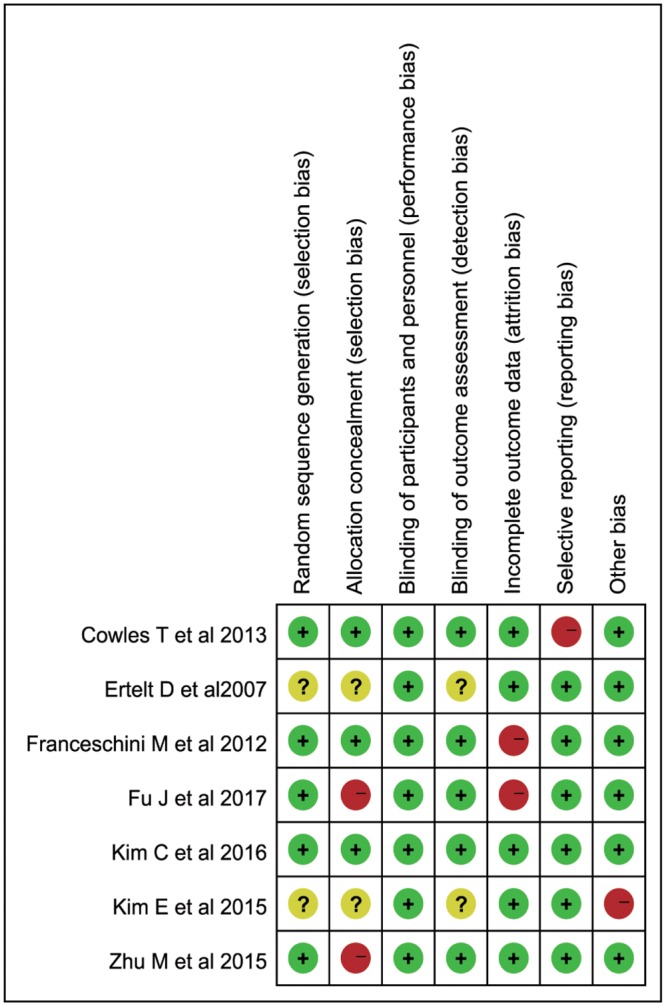
Methods: We searched ten electronic databases to identify randomized controlled trials (RCTs) about the effects of AOT on upper limb motor functions in stroke survivors. Methodological quality of included studies was assessed by the Risk of Bias Tool in the Cochrane Handbook for Systematic Reviews of Interventions. A random-effects meta-analysis was performed by pooling the standardized mean difference (SMD) of upper limb motor outcomes.
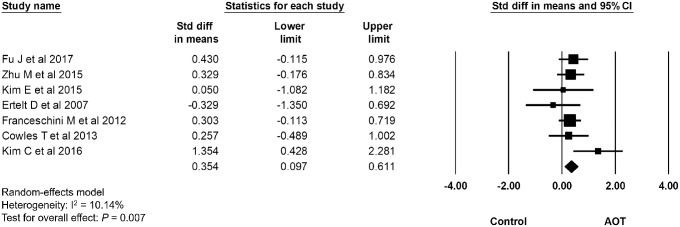
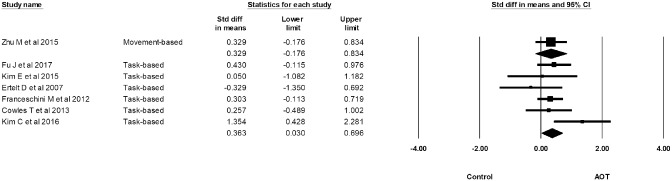
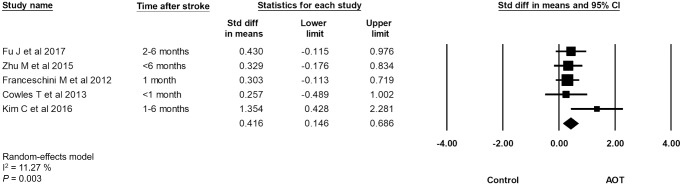
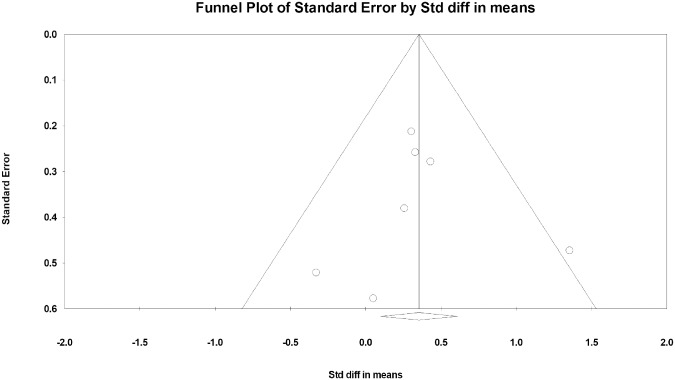
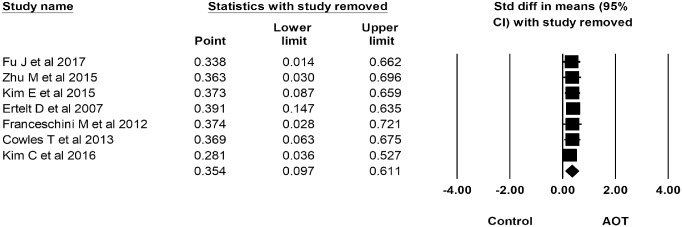
Results: Seven studies of 276 participants with stroke were included. Meta-analysis showed a significant effect favoring AOT on improving upper limb motor functions in patients with stroke [SMD = 0.35, 95% confidence interval [CI], 0.10 to 0.61, I2 = 10.14%, p = 0.007].
Conclusions: AOT appears to be an effective intervention for improving the upper limb motor functions in people after stroke. Further studies need to investigate the neural mechanism underlying the effects of AOT.
Conflict of interest statement
The authors have declared that no competing interests exist.
Figures
References
-
- Kwakkel G, Kollen BJ, van der Grond J, Prevo AJ. Probability of regaining dexterity in the flaccid upper limb: impact of severity of paresis and time since onset in acute stroke. Stroke. 2003;34(9):2181–6. Epub 2003/08/09. 10.1161/01.STR.0000087172.16305.CD . - DOI - PubMed
-
- Broeks JG, Lankhorst GJ, Rumping K, Prevo AJ. The long-term outcome of arm function after stroke: results of a follow-up study. Disabil Rehabil. 1999;21(8):357–64. Epub 1999/09/30. . - PubMed
Publication types
MeSH terms
LinkOut - more resources
Full Text Sources
Medical
