A Case of Conjunctival Bee Sting Injury with Review of the Literature on Ocular Bee Stings
- PMID: 31471535
- PMCID: PMC6735618
- DOI: 10.12659/AJCR.917592
A Case of Conjunctival Bee Sting Injury with Review of the Literature on Ocular Bee Stings
Abstract
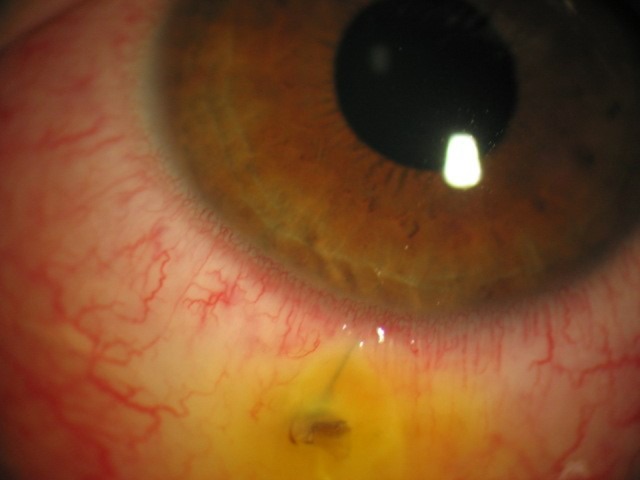
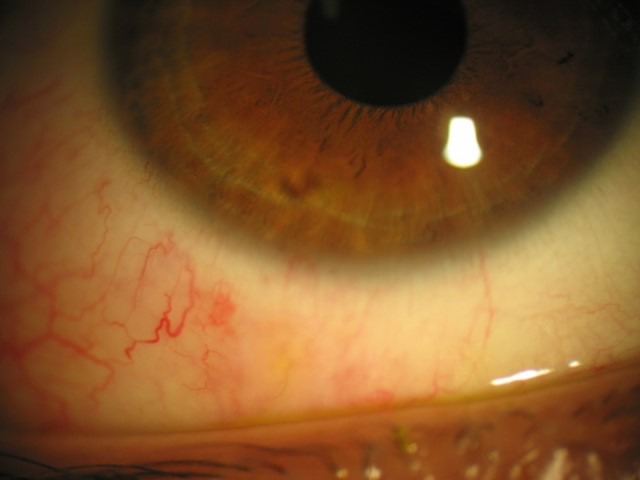
BACKGROUND Ocular bee stings have been rarely described in the literature, and their management is controversial. A case of conjunctival bee sting with retention of the stinger for 48 hours is presented with a review of the literature on the complications and management of ocular bee sting injury. CASE REPORT A 22-year-old beekeeper presented to the Emergency Department with mild symptoms from a conjunctival bee sting that he had received 48 hours previously. The stinger was removed in the Emergency Department, and topical antibiotic and anti-inflammatory treatment with corticosteroid were given. There were no complications in this case. However, review of the literature has shown that although the outcome from ocular bee stings can be mild, as in this case, ocular bee stings can result in severe visual symptoms that require amniotic membrane transplant (AMT). Management commonly includes removal of the stinger and both topical and systemic treatment with corticosteroids. The main complications include cataracts, inflammation of the anterior chamber, optic neuropathies, and changes in ocular pressure. CONCLUSIONS Ocular bee stings have been rarely described in the literature, and the management remains controversial. As this case has shown, removal of the stinger and the use of topical treatment with antibiotics and corticosteroids can prevent potentially serious complications that may affect vision. Early and regular follow-up with ocular imaging may be required when symptoms persist.
Conflict of interest statement
None.
Figures
References
-
- Mingomataj EÇ. Unusual reactions to hymenoptera stings: What should we keep in mind? Clin Rev Allergy Immunol. 2014;1:91–99. - PubMed
-
- Choi MY, Cho SH. Optic neuritis after bee sting. Korean J Ophthalmol. 2000;14:49–52. - PubMed
-
- Szeghy G, Pápai IC, Vas Z. [To note the eye injury caused by bee sting] Ophthalmologica. 1963;146:74–82. [in German] - PubMed
Publication types
MeSH terms
Substances
LinkOut - more resources
Full Text Sources
Medical
Research Materials