


Retronasal olfactory function in patients with smell loss but subjectively normal flavor perception
- PMID: 31471971
- PMCID: PMC7318622
- DOI: 10.1002/lary.28258
Retronasal olfactory function in patients with smell loss but subjectively normal flavor perception
Abstract
Objectives: The human sense of smell constitutes the main part of flavor perception. Typically, patients with loss of olfactory function complain of diminished perception during eating and drinking. However, some patients with smell loss still report normal enjoyment of foods. The aim of the present study was to compare orthonasal and retronasal olfactory function in patients with non-sinonasal smell loss and subjectively normal flavor perception.
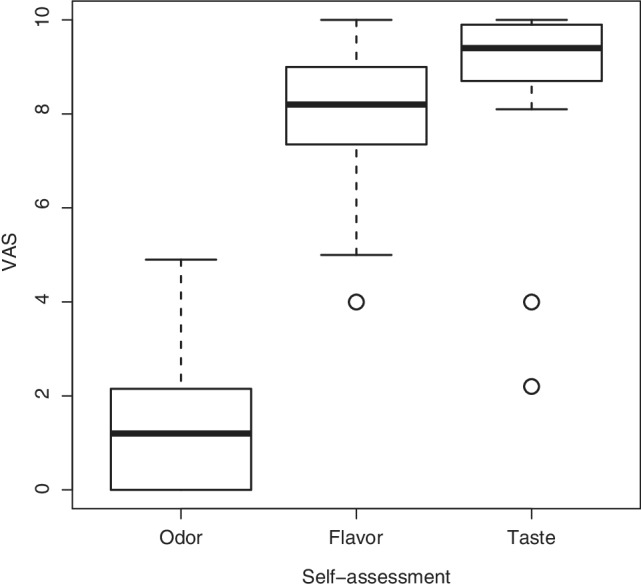
Methods: Nineteen patients (mean age [range] 52.0 [8-83 years]) with self-reported olfactory impairment but subjective normal flavor perception were included. Olfactory performance was assessed using the Sniffin' Sticks (TDI) for orthonasal and the Candy Smell Test (CST) for retronasal function. Visual analogue scales were used for self-assessment of odor (SOP), taste (STP), and flavor perception (SFP), ranging from 0 (no perception) to 10 (excellent perception).
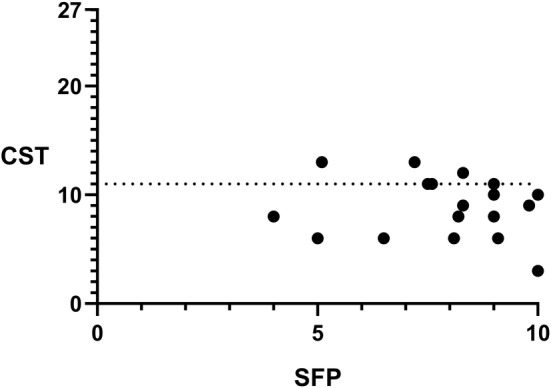
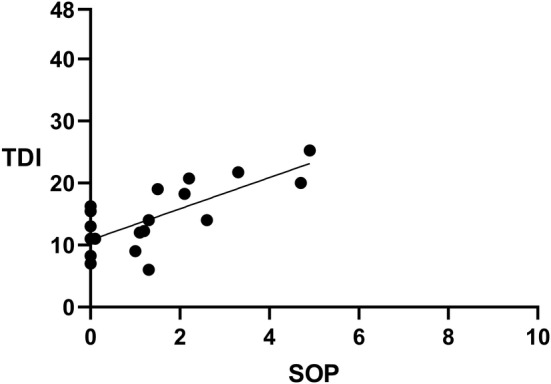
Results: Mean (SD) SFP was 8.0 (1.8). Mean (SD) orthonasal TDI-score of all patients was 14.4 (5.3, range 6-25.3) with 11 patients classified as anosmic and eight as hyposmic. Mean/SD retronasal CST-score was 8.8 (2.7, range 3-13) within the range of anosmia/hyposmia. No correlation was found between SFP and the CST (P = .62).
Conclusion: The present results showed that despite claiming normal flavor perception, our patients were ortho- and retronasally dysosmic using standard tests for olfactory function. Although other explanations could be possible, we suggest that this subjective flavor perception might be due to unconscious memory recall from previously experienced cross-modal sensory interactions.
Level of evidence: 4 Laryngoscope, 130:1629-1633, 2020.
Keywords: Olfactory dysfunction; anosmia; flavor perception; flavor templates; retronasal olfactory function.
© 2019 The Authors. The Laryngoscope published by Wiley Periodicals, Inc. on behalf of The American Laryngological, Rhinological and Otological Society, Inc.
Figures
References
-
- Clark JE. Taste and flavour: their importance in food choice and acceptance. Proc Nutr Soc 1998;57(04):639–643. - PubMed
-
- Stevenson RJ. An initial evaluation of the functions of human olfaction. Chem Senses 2010;35:3–20. - PubMed
-
- Brämerson A, Johansson L, Ek L, et al. Prevalence of olfactory dysfunction: the skovde population‐based study. Laryngoscope 2004;114:733–737. - PubMed
-
- Murphy C, Schubert CR, Cruickshanks KJ, Klein BEK, Klein R, Nondahl DM. Prevalence of olfactory impairment in older adults. J Am Med Assoc 2002;288:2307–2312. - PubMed
MeSH terms
Substances
LinkOut - more resources
Full Text Sources
Medical
Research Materials
