


Autophagy as a mechanism for anti-angiogenic therapy resistance
- PMID: 31472232
- PMCID: PMC7047534
- DOI: 10.1016/j.semcancer.2019.08.031
Autophagy as a mechanism for anti-angiogenic therapy resistance
Abstract
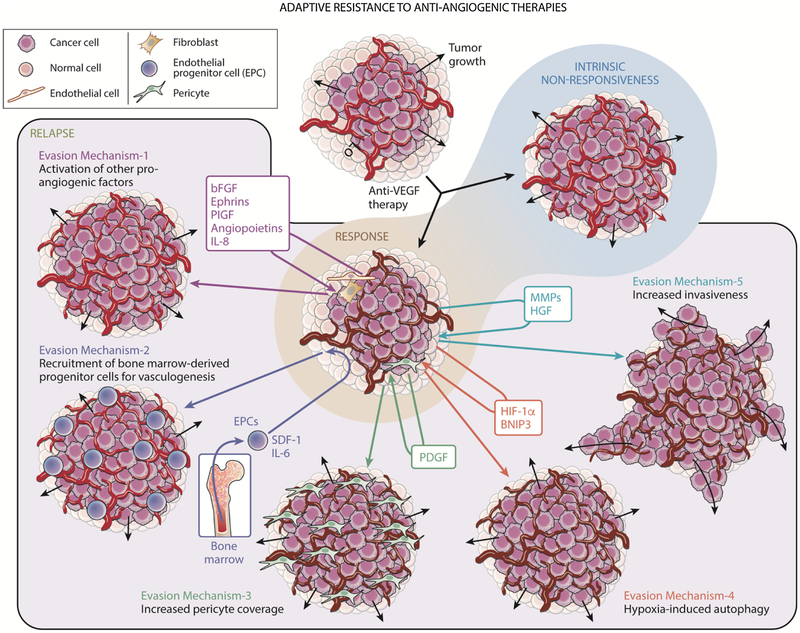
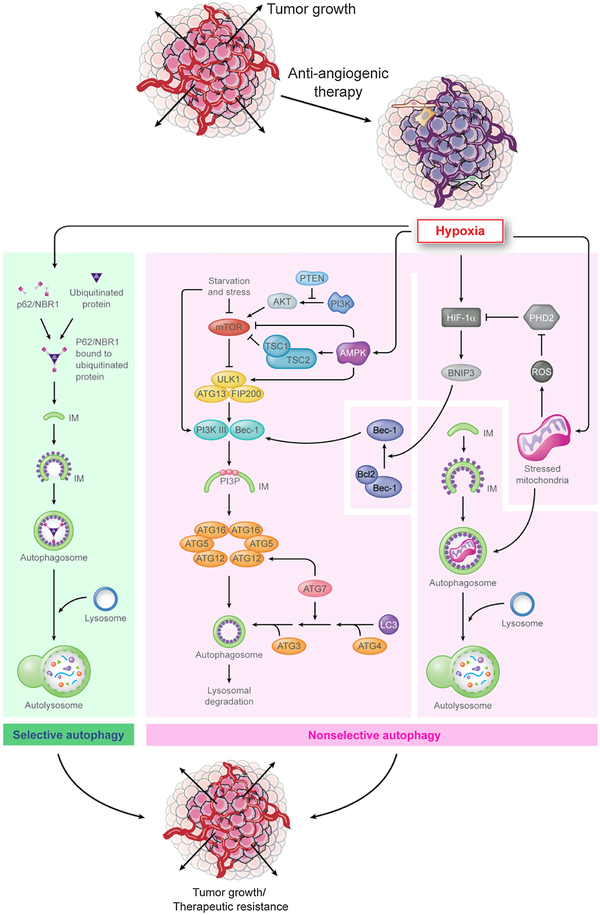
Autophagy is a lysosomal-dependent degradation process that is highly conserved and maintains cellular homeostasis by sequestering cytosolic material for degradation either non-specifically by non-selective autophagy, or targeting specific proteins aggregates by selective autophagy. Autophagy serves as a protective mechanism defending the cell from stressors and also plays an important role in enabling tumor cells to overcome harsh conditions arising in their microenvironment during growth as well as oxidative and non-oxidative injuries secondary to therapeutic stressors. Recently, autophagy has been implicated to cause tumor resistance to anti-angiogenic therapy, joining an existing literature implicating autophagy in cancer resistance to conventional DNA damaging chemotherapy and ionizing radiation. In this review, we discuss the role of angiogenesis in malignancy, mechanisms of resistance to anti-angiogenic therapy in general, the role of autophagy in driving malignancy, and the current literature in autophagy-mediated anti-angiogenic therapy resistance. Finally, we provide future insight into the current challenges of using autophagy inhibitors in the clinic and provides tips for future studies to focus on to effectively target autophagy in overcoming resistance to anti-angiogenic therapy.
Keywords: Angiogenesis; Anti-angiogenesis; Autophagy; Cancer; Drug resistance; VEGF.
Copyright © 2019 Elsevier Ltd. All rights reserved.
Conflict of interest statement
Declaration of Competing Interest
None.
Figures
References
-
- Adair TH, Montani J-P, Angiogenesis, Angiogenesis, (2010).
-
- Hanahan D, Weinberg RA, Hallmarks of cancer: the next generation, Cell 144 (2011) 646–674. - PubMed
