


Trends and Disparities in Asthma Biologic Use in the United States
- PMID: 31472294
- PMCID: PMC7012665
- DOI: 10.1016/j.jaip.2019.08.024
Trends and Disparities in Asthma Biologic Use in the United States
Abstract
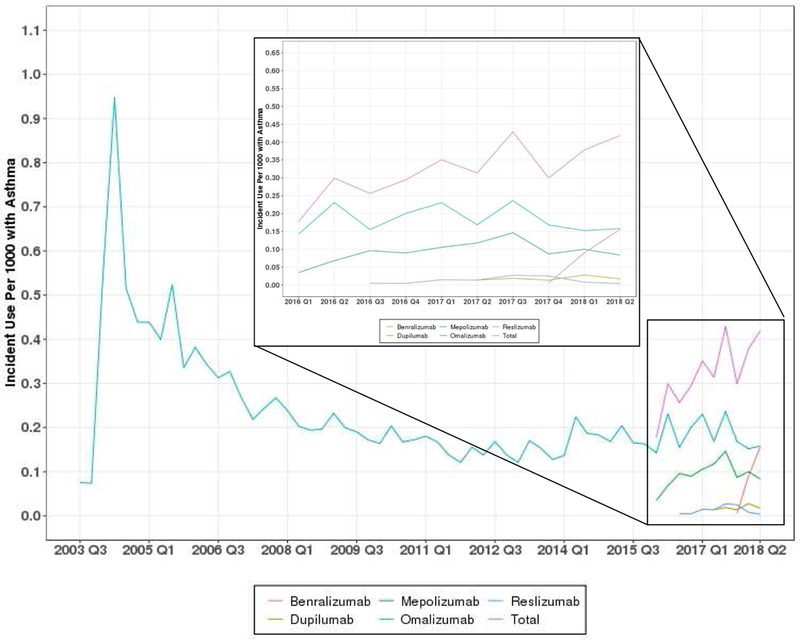
Background: From 2003 to 2015, only 1 biologic was approved for the treatment of moderate to severe asthma in the United States. Since 2015, 4 new asthma biologics were approved by the US Food and Drug Administration.
Objective: To describe trends and disparities of asthma biologic use in the United States from 2003 to 2018.
Methods: We conducted a retrospective analysis using a cohort developed from the OptumLabs Data Warehouse. Prevalent and incident asthma biologic users were identified, and characteristics of users and nonusers were analyzed using regression analysis. Clinician prescribing behavior was described.
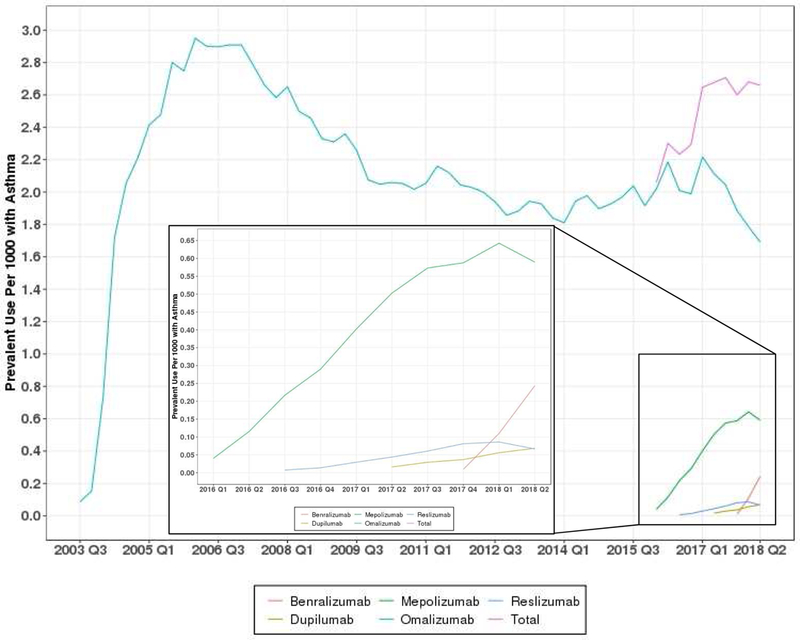
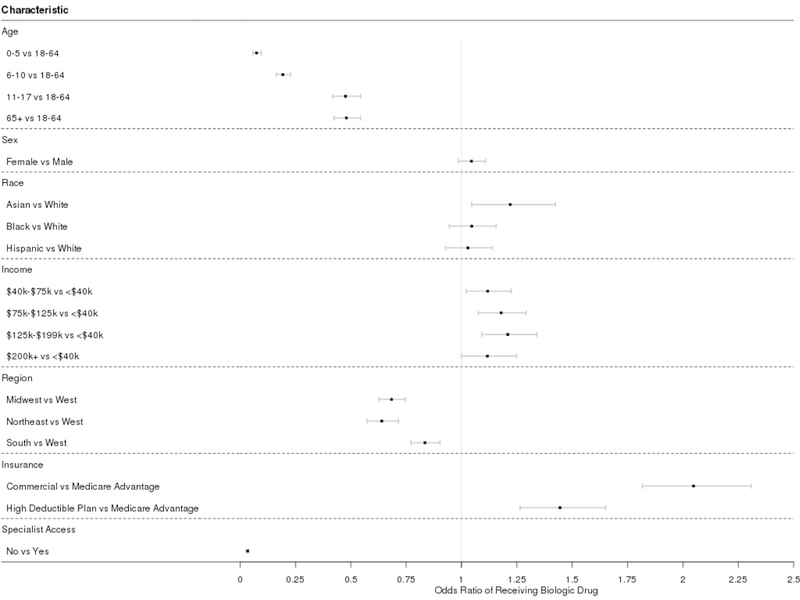
Results: Use of biologic medications remains uncommon among individuals with asthma, with prevalence peaking in 2006 at 3 in 1000 individuals with asthma. Several factors are associated with a higher likelihood of asthma biologic use: middle age, higher income, commercial insurance, and access to a specialist. Most clinicians (65%) in the cohort prescribed only 1 biologic.
Conclusions: We report low overall use of asthma biologics and evidence of disparities in access to asthma biologics.
Keywords: Adherence; Asthma; Asthma biologics; Disparities; Trends; Utilization.
Copyright © 2019 American Academy of Allergy, Asthma & Immunology. Published by Elsevier Inc. All rights reserved.
Conflict of interest statement
Conflict of Interest Statement: No authors have any disclosures to make.
Figures
References
-
- Jones K. Asthma and Injustice on Chicago’s Southeast Side. Health Aff (Millwood) 2016;35(5):928–31. - PubMed
-
- Global Initiative for Asthma. https://ginasthma.org/ Accessed March 25, 2019.
-
- Biologic Therapies for Treatment of Asthma Associated with Type 2 Inflammation: Effectiveness, Value, and Value-Based Price Benchmarks https://icer-review.org/wp-content/uploads/2018/04/ICER_Asthma_Final_Rep... Accessed March 26, 2019.
-
- Jeffery MM, Shah ND, Karaca-Mandic P, Ross JS, Rank MA. Trends in omalizumab utilization for asthma: Evidence of suboptimal patient selection. J Allergy Clin Immunol Pract 2018;6(5):1568–1577. - PubMed
-
- Wallace PJ, Shah ND, Dennen T, Bleicher PA, Crown WH. Optum Labs: building a novel node in the learning health system. Health Aff (Millwood) 2014;33:1187–94. - PubMed
