Review
. 2019 Oct;51(6):563-569.
doi: 10.1016/j.pathol.2019.07.005. Epub 2019 Aug 28.

Ductal carcinoma in situ of breast: update 2019

Affiliations
Review

Ductal carcinoma in situ of breast: update 2019

Sunil S Badve et al. Pathology. 2019 Oct.

Abstract

Ductal carcinoma in situ is a non-invasive form of breast cancer. Its incidence is increasing due to widespread use of mammographic screening. It presents several diagnostic and management challenges in part due to its relatively indolent behaviour. Most series analysing biomarkers in these lesions are small (<100 patients) and large clinical trials have not been frequent. Herein, we review the recent progress made in understanding the biology of this entity and the tools available for prognostication.

Keywords: Breast cancer; DCIS; ductal carcinoma in situ; molecular features; pathology.


Figures

Fig. 1
Fig. 1
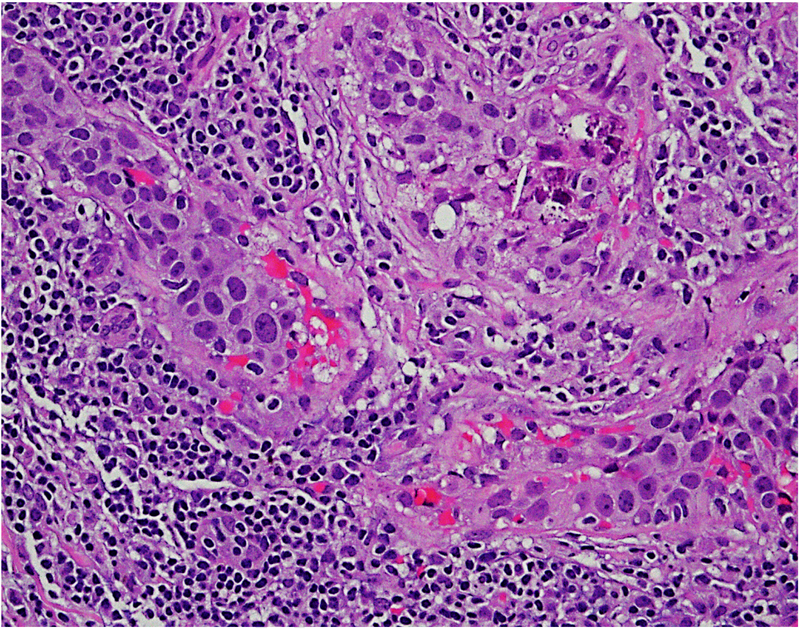
Focal infiltration by immune cells in ductal carcinoma in situ (DCIS) (20× objective using a Nikon DP27 camera using CellSens software).
Fig. 2
Fig. 2
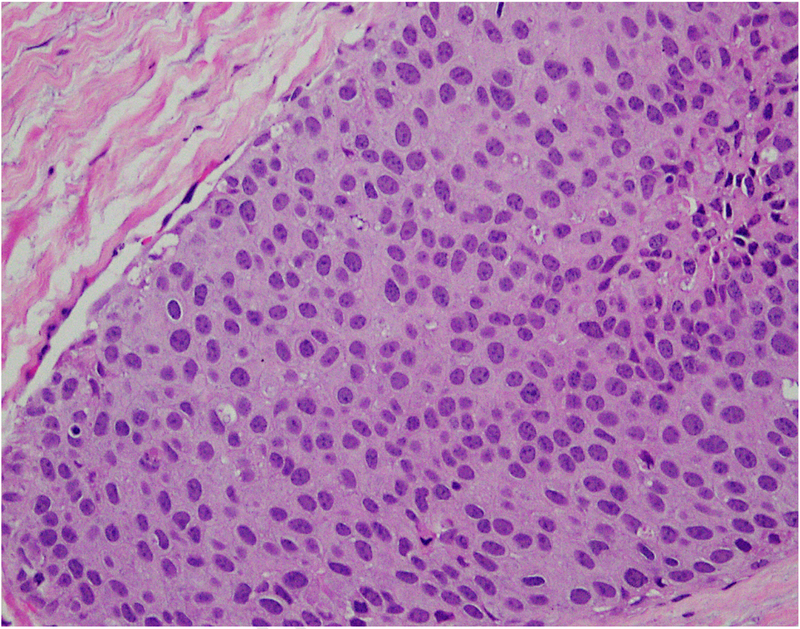
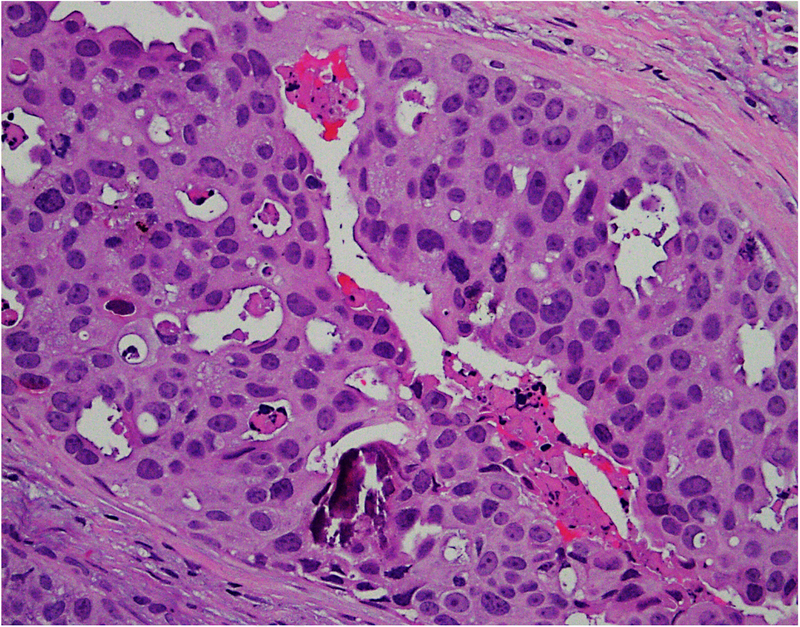
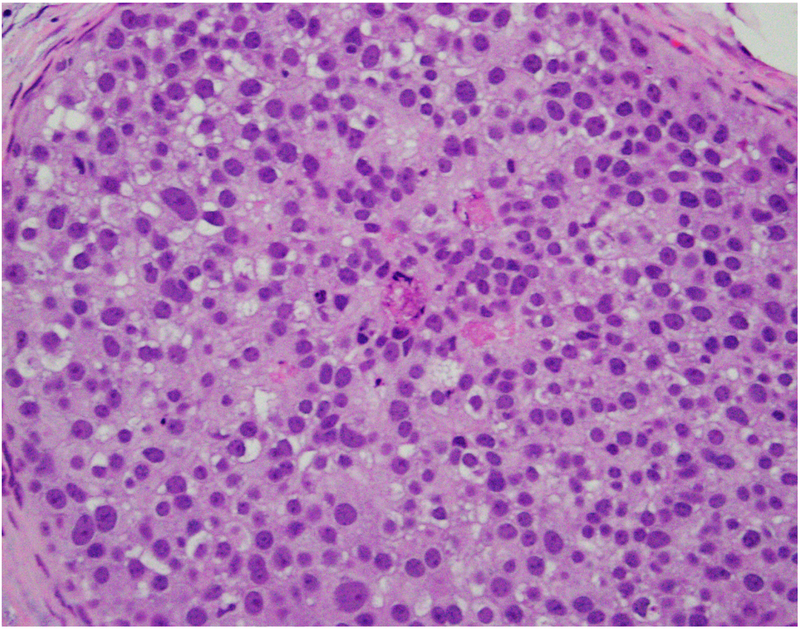
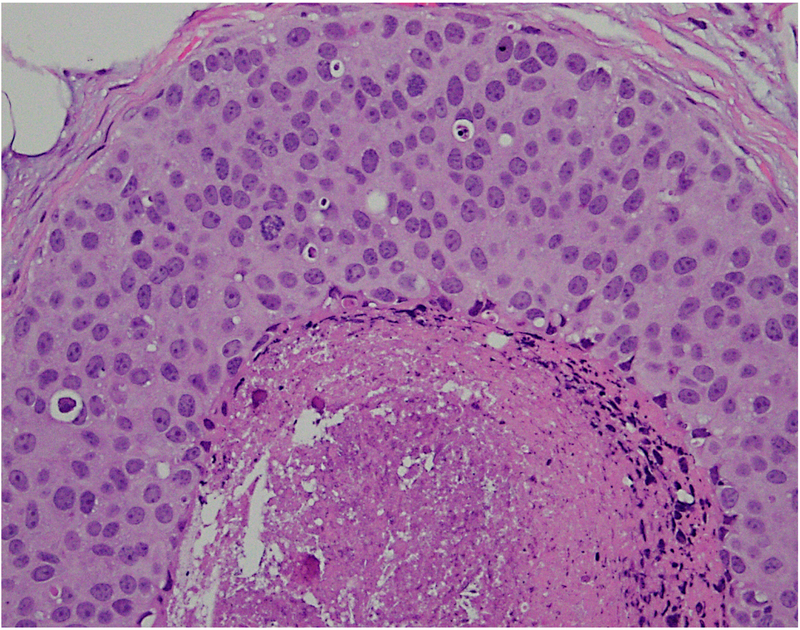
(A–D) Heterogeneity in the morphological patterns of ductal carcinoma in situ (DCIS). Images are taken from a needle biopsy of a single patient with DCIS (same patient as Fig. 1; 20× objective using a Nikon DP27 camera using CellSens software). Note the range of architectural patterns ranging from solid to cribriform as well as the variable amounts of necrosis in the ducts.
Fig. 2
Fig. 2
(A–D) Heterogeneity in the morphological patterns of ductal carcinoma in situ (DCIS). Images are taken from a needle biopsy of a single patient with DCIS (same patient as Fig. 1; 20× objective using a Nikon DP27 camera using CellSens software). Note the range of architectural patterns ranging from solid to cribriform as well as the variable amounts of necrosis in the ducts.
Fig. 2
Fig. 2
(A–D) Heterogeneity in the morphological patterns of ductal carcinoma in situ (DCIS). Images are taken from a needle biopsy of a single patient with DCIS (same patient as Fig. 1; 20× objective using a Nikon DP27 camera using CellSens software). Note the range of architectural patterns ranging from solid to cribriform as well as the variable amounts of necrosis in the ducts.
Fig. 2
Fig. 2
(A–D) Heterogeneity in the morphological patterns of ductal carcinoma in situ (DCIS). Images are taken from a needle biopsy of a single patient with DCIS (same patient as Fig. 1; 20× objective using a Nikon DP27 camera using CellSens software). Note the range of architectural patterns ranging from solid to cribriform as well as the variable amounts of necrosis in the ducts.

References

    1. DeSantis CE, Ma J, Goding Sauer A, Newman LA, Jemal A. Breast cancer statistics, 2017, racial disparity in mortality by state. CA Cancer J Clin 2017; 67: 439–48. - PubMed
    1. DeSantis C, Siegel R, Bandi P, Jemal A. Breast cancer statistics, 2011. CA Cancer J Clin 2011; 61: 409–18. - PubMed
    1. Allegra CJ, Aberle DR, Ganschow P, et al. National Institutes of Health State-of-the-Science Conference statement: Diagnosis and Management of Ductal Carcinoma In Situ September 22–24, 2009. J Natl Cancer Inst 2010; 102: 161–9. - PubMed
    1. Esserman LJ, Thompson IM, Reid B, et al. Addressing overdiagnosis and overtreatment in cancer: a prescription for change. Lancet Oncol 2014; 15: e234–42. - PMC - PubMed
    1. Lester SC, Connolly JL, Amin MB. College of American Pathologists protocol for the reporting of ductal carcinoma in situ. Arch Pathol Lab Med 2009; 133: 13–4. - PubMed

MeSH terms