


Problematic driving in former service members: An evaluation of the Driving Behavior Survey in veterans with posttraumatic stress disorder
- PMID: 31473554
- PMCID: PMC7047667
- DOI: 10.1016/j.janxdis.2019.102134
Problematic driving in former service members: An evaluation of the Driving Behavior Survey in veterans with posttraumatic stress disorder
Abstract
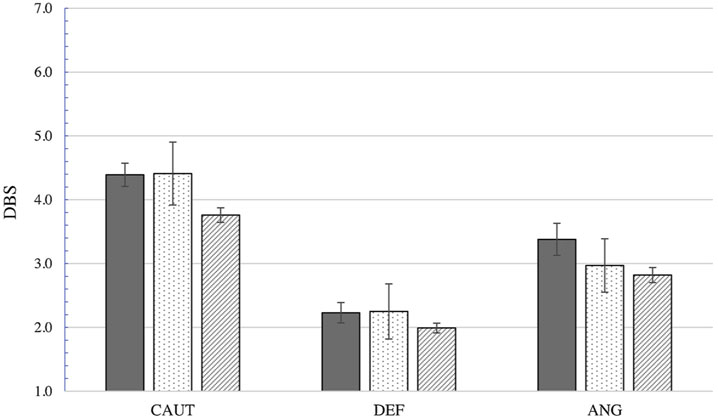
Despite high levels of traffic-related mortality, injury, and impairment among former service members, measures validated to assess problematic driving in this population remain limited. The current study examined characteristics of the Driving Behavior Survey (DBS) in male veterans (76.3% White; age: M = 56.4, SD = 12.3) meeting criteria for PTSD. Confirmatory factor analyses indicated acceptable fit of a 3-factor model specifying dimensions of anxiety-based performance deficits, exaggerated safety/caution, and hostile/aggressive driving behavior. Concurrent associations with indices of anxiety, depression, trauma history, and clinician-rated PTSD were consistent with small (r = .10-.29) to medium (r = .30-.49) effects. Discriminative validity was noted through elevations in performance deficit (d = .26), safety/caution (d = .50), and hostile/aggressive (d = .39) scales relative to published data from student drivers. Scores comparable to civilian motorists with accident-related PTSD help to qualify the severity of problematic driving behavior in trauma-exposed veterans.
Keywords: Assessment; Driving anxiety; Driving behavior; Military veterans; Posttraumatic stress disorder.
Copyright © 2019 Elsevier Ltd. All rights reserved.
Figures
References
-
- Antony MM, Craske MG, & Barlow DH (2006). Mastery of your specific phobia: Client workbook (2nd ed.). New York: Oxford University Press.
-
- American Psychiatric Association (1994). Diagnostic and statistical manual of mental disorders (4th ed.). Washington DC: Author.
MeSH terms
Grants and funding
LinkOut - more resources
Full Text Sources
Medical
