


A clinical study to evaluate the efficacy of Herbal Formulation for Obesity (HFO-02) in overweight individuals
- PMID: 31474325
- PMCID: PMC7329718
- DOI: 10.1016/j.jaim.2019.05.003
A clinical study to evaluate the efficacy of Herbal Formulation for Obesity (HFO-02) in overweight individuals
Abstract
Background: Ayurveda, the Indian system of medicine offers many herbs and formulations for management of obesity. Baidyanath Bhawan Pvt. Ltd has designed a formulation, HFO-02, based on Ayurvedic literature.
Objective: To evaluate the efficacy of Herbal Formulation for Obesity (HFO-02) in overweight individuals.
Materials & methods: With approval from the Institutional Ethics Committee, a proof of concept study was carried out in overweight individuals (Body Mass Index, BMI ≥25.0 and ≤ 30.0 kg/m2), devoid of any endocrinological disorders. Tablet HFO-02 (500 mg) was administered to these individuals twice daily for 90 days, during which they were called at study site fortnightly. After stopping the treatment, they were further followed up for 30 days off-medication and the last follow up was scheduled on day 120. Anthropometric parameters were assessed at every visit, while biochemical parameters viz. lipid profile, blood sugar & insulin levels (both fasting and post prandial), C- reactive protein and adipocytokines (leptin & adiponectin) were estimated monthly.
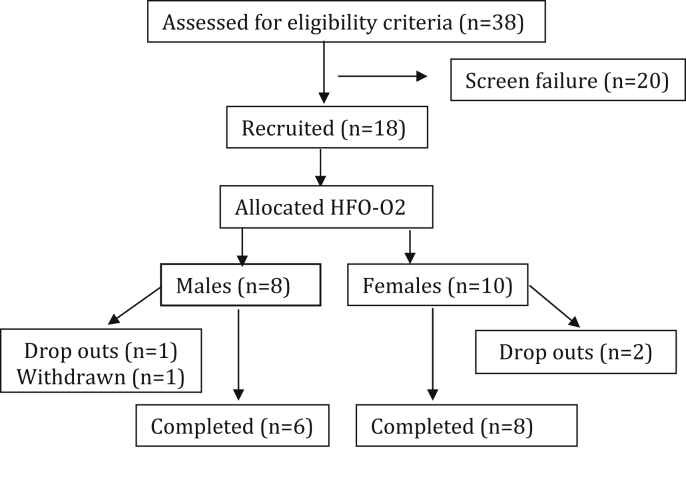
Results: Of the 18 participants recruited in the study; 14 completed the study. HFO-02 did not show reduction in weight, however a significant decrease in the body circumference and skin fold was demonstrated. This decrease was maintained till day 120. The levels of all biochemical parameters were maintained and no adverse events were reported throughout the study.
Conclusion: Tablet HFO-02 reduced body circumferences and skinfold thickness indicating its potential for obesity management.
Clinical trial registration number: CTRI/2016/07/007067.
Keywords: Circumferences; Obesity; Overweight; Skinfolds.
Copyright © 2020 The Authors. Published by Elsevier B.V. All rights reserved.
References
-
- Forhan M., Gill S.V. Obesity, functional mobility and quality of life. Best Pract Res Clin Endocrinol Metabol. 2013;27:129–137. - PubMed
-
- Singh R., Singh B., Kumar N., Arora S. Antioxidant activity of triphala a combination of Terminalia chebula, Terminalia bellerica and emblica officinalis. J Food Biochem. 2010;34(1):222–232.
-
- Perera M.G., Soysa S.S., Abeytunga D.T., Ramesh R. Antioxidant and cytotoxic properties of three traditional decoctions used for the treatment of cancer in Sri Lanka. Pharmacogn Mag. 2008;4(15):172–181.
-
- Pfundstein B., El Desouky S.K., Hull W.E., Haubner R. Polyphenolic compounds in the fruits of Egyptian medicinal plants (Terminalia bellerica, Terminalia chebula and Terminalia horrida): characterization, quantitation and determination of antioxidant capacities. Phytochemistry (Oxf) 2010;71(10):1132–1148. - PubMed
LinkOut - more resources
Full Text Sources
Research Materials
