


Early Adolescent Skills for Emotions (EASE) intervention for the treatment of psychological distress in adolescents: study protocol for randomised controlled trials in Lebanon and Jordan
- PMID: 31477178
- PMCID: PMC6721330
- DOI: 10.1186/s13063-019-3654-3
Early Adolescent Skills for Emotions (EASE) intervention for the treatment of psychological distress in adolescents: study protocol for randomised controlled trials in Lebanon and Jordan
Erratum in
-
Correction to: Early Adolescent Skills for Emotions (EASE) intervention for the treatment of psychological distress in adolescents: study protocol for randomised controlled trials in Lebanon and Jordan.Trials. 2019 Oct 29;20(1):617. doi: 10.1186/s13063-019-3717-5. Trials. 2019. PMID: 31665074 Free PMC article.
Abstract
Background: There are significant barriers to providing accessible, quality mental health care for young adolescents affected by adversity. In an attempt to overcome this, the World Health Organization (WHO) has developed the Early Adolescent Skills for Emotions (EASE) psychological intervention for young adolescents with internalising problems. EASE is group-based (seven sessions for adolescents, three sessions for their caregivers) and can be delivered by non-specialist providers. This paper outlines the study protocols for two trials of EASE in the Middle East - one in Lebanon and one in Jordan.
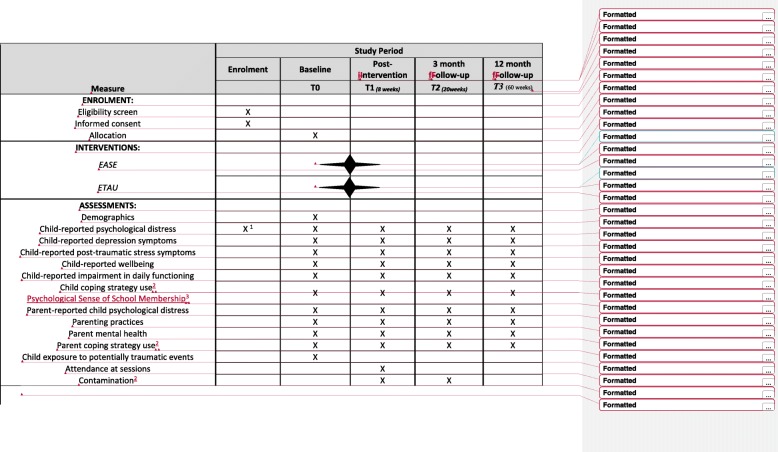
Methods: We will conduct two, single-blind, two-arm, individually randomised group treatment trials in Lebanon and Jordan, with at least 445 young adolescents per trial. Adolescents will be screened eligible for the trial if they demonstrate levels of psychological distress indicative of internalizing problems requiring treatment. Participants will be randomly assigned to receive the EASE intervention, or enhanced usual care (one home-visit psychoeducation session). The primary outcome is reduction in overall child-reported psychological distress over time, with 3 months post-treatment as the primary end point. Secondary child-reported outcomes include post-traumatic stress symptoms, depression symptoms, daily functioning, and wellbeing. Secondary caregiver-reported outcomes include parenting style, overall child distress, and caregiver psychological distress. Coping strategy use will be explored as a mediator of treatment effects in Lebanon, and relevant moderators of treatment effects will be explored.
Discussion: These trials will provide the first assessments of the effectiveness of the EASE intervention for use in the Middle East, with important implications for the use of low-intensity, non-specialist interventions for this age range.
Trial registration: Lebanon: ISRCTN75375136 . Registered on 11 March 2019. Jordan: Australia New Zealand Clinical Trials Registry, ACTRN12619000341123. Registered on 5 March 2019 ( https://www.anzctr.org.au/ ).
Keywords: Adolescents; Armed conflict; Humanitarian emergencies; Low and middle income countries; Psychological intervention; Randomised controlled trial; Study protocol.
Conflict of interest statement
The authors declare that they have no competing interests.
Figures
References
-
- United Nations High Commissioner for Refugees (UNHCR) Global trends: forced displacement in 2017. Geneva: UNHCR; 2018. p. 76.
-
- Fazel M, Wheeler J, Danesh J. Prevalence of serious mental disorder in 7000 refugees resettled in western countries: a systematic review. Lancet. 2005;365(9467):1309–1314. - PubMed
-
- Bronstein I, Montgomery P. Psychological distress in refugee children: a systematic review. Clin Child Fam Psychol Rev. 2011;14(1):44–56. - PubMed
-
- Fazel M, Reed RV, Panter-Brick C, Stein A. Mental health of displaced and refugee children resettled in high-income countries: risk and protective factors. Lancet. 2012;379(9812):266–282. - PubMed
-
- World Health Organization (WHO) Sustainable mental health care after emergencies. Geneva: WHO; 2013. p. 108.
Publication types
MeSH terms
Grants and funding
LinkOut - more resources
Full Text Sources
