Randomized Controlled Trial
. 2019 Sep 3;322(9):834-842.
doi: 10.1001/jama.2019.12085.

Effect of Low-Intensity vs Standard-Intensity Warfarin Prophylaxis on Venous Thromboembolism or Death Among Patients Undergoing Hip or Knee Arthroplasty: A Randomized Clinical Trial

Affiliations
Randomized Controlled Trial

Effect of Low-Intensity vs Standard-Intensity Warfarin Prophylaxis on Venous Thromboembolism or Death Among Patients Undergoing Hip or Knee Arthroplasty: A Randomized Clinical Trial

Brian F Gage et al. JAMA. .

Abstract

Importance: The optimal international normalized ratio (INR) to prevent venous thromboembolism (VTE) in warfarin-treated patients with recent arthroplasty is unknown.

Objective: To determine the safety and efficacy of a target INR of 1.8 vs 2.5 for VTE prophylaxis after orthopedic surgery.

Design, setting, and participants: The randomized Genetic Informatics Trial (GIFT) of Warfarin to Prevent Deep Vein Thrombosis enrolled 1650 patients aged 65 years or older initiating warfarin for elective hip or knee arthroplasty at 6 US medical centers. Enrollment began in April 2011 and follow-up concluded in October 2016.

Interventions: In a 2 × 2 factorial design, participants were randomized to a target INR of 1.8 (n = 823) or 2.5 (n = 827) and to either genotype-guided or clinically guided warfarin dosing. For the first 11 days of therapy, open-label warfarin dosing was guided by a web application.

Main outcomes and measures: The primary outcome was the composite of VTE (within 60 days) or death (within 30 days). Participants underwent screening duplex ultrasound postoperatively. The hypothesis was that an INR target of 1.8 would be noninferior to an INR target of 2.5, using a noninferiority margin of 3% for the absolute risk of VTE. Secondary end points were bleeding and INR values of 4 or more.

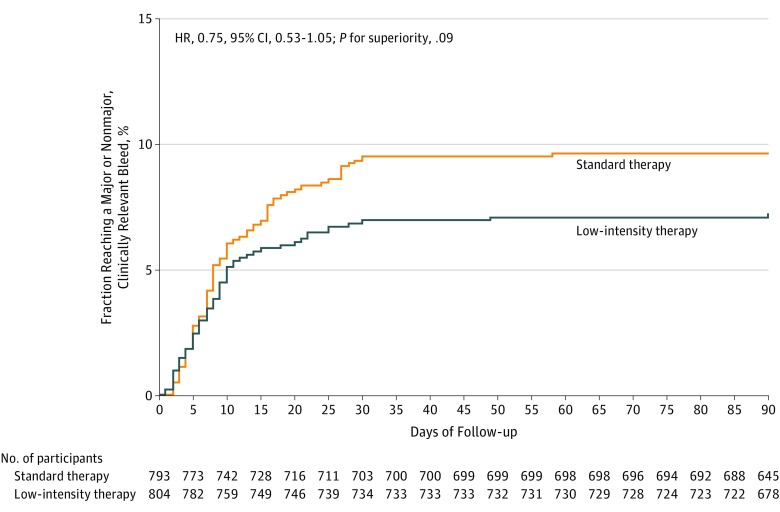
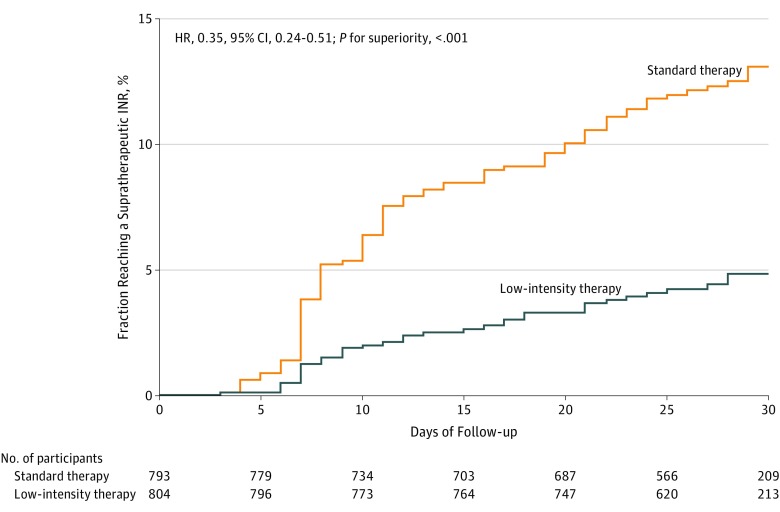
Results: Among 1650 patients who were randomized (mean age, 72.1 years; 1049 women [63.6%]; 1502 white [91.0%]), 1597 (96.8%) received at least 1 dose of warfarin and were included in the primary analysis. The rate of the primary composite outcome of VTE or death was 5.1% (41 of 804) in the low-intensity-warfarin group (INR target, 1.8) vs 3.8% (30 of 793) in the standard-treatment-warfarin group (INR target, 2.5), for a difference of 1.3% (1-sided 95% CI, -∞ to 3.05%, P = .06 for noninferiority). Major bleeding occurred in 0.4% of patients in the low-intensity group and 0.9% of patients in the standard-intensity group, for a difference of -0.5% (95% CI, -1.6% to 0.4%). The INR values of 4 or more occurred in 4.5% of patients in the low-intensity group and 12.2% of the standard-intensity group, for a difference of -7.8% (95% CI, -10.5% to -5.1%).

Conclusions and relevance: Among older patients undergoing hip or knee arthroplasty and receiving warfarin prophylaxis, an international normalized ratio goal of 1.8 compared with 2.5 did not meet the criterion for noninferiority for risk of the composite outcome of VTE or death. However, the trial may have been underpowered to meet this criterion and further research may be warranted.

Trial registration: ClinicalTrials.gov Identifier: NCT01006733.


Conflict of interest statement

Conflict of Interest Disclosures: Dr Bass reported serving on the National Quality Forum VTE project technical advisory panel. Dr Woller reported receiving grants from Bristol-Myers-Squibb and Pfizer and serving as co–chair of the for the American College of Chest Physician CHEST Guideline: Antithrombotic therapy for VTE disease. Dr Stevens reported receiving support from Bristol-Myers-Squibb and Pfizer and serving as co–chair of a CHEST guidelines panel on venous thrombosis. Dr Jaffer reported receiving personal fees from Bristol-Myers-Squibb, Boehringer Ingelheim, and Daiichi Sankyo. Ms Whipple reported receiving grants from the NHLBI. Dr Nunley reported receiving grants and personal fees from Stryker, support from Microport, DePuy, and Mirus. Dr Eby reported receiving support from the Centers for Medicare & Medicaid Services (CMS). No other disclosures were reported.

Figures

Figure 1.
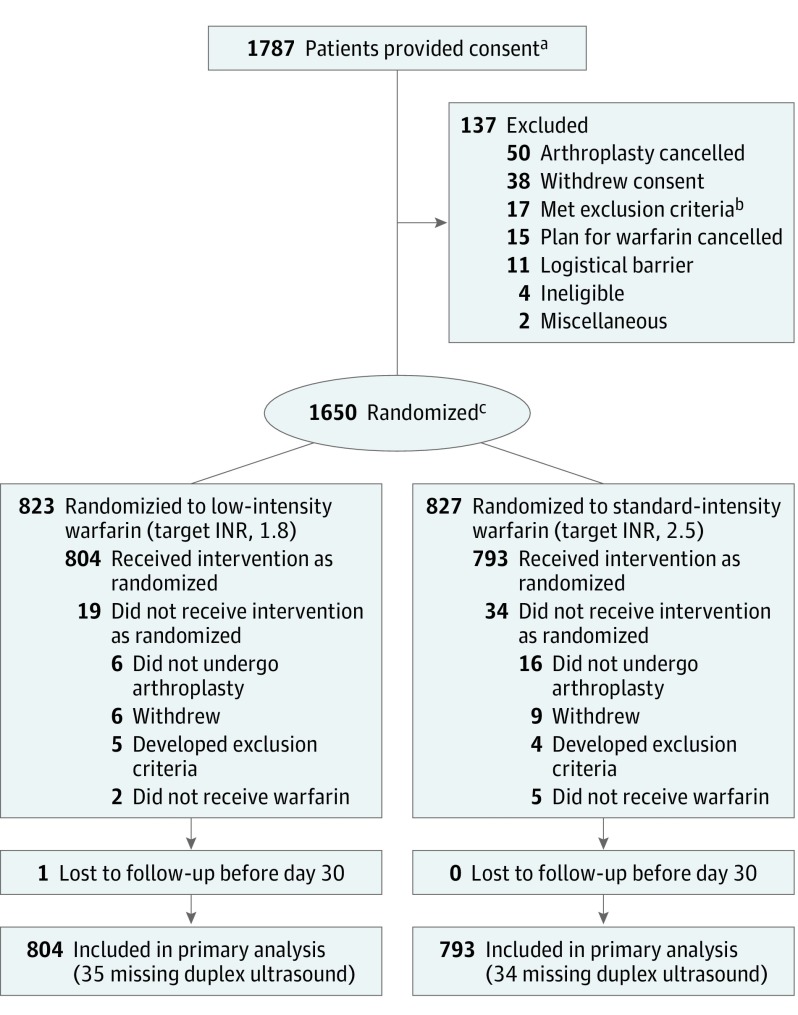
Figure 1.. Consent, Randomization, and Follow-up of Participants
aThe number of patients screened for eligibility is not known. bA list of the exclusion criteria appears in the Methods section. cHalf of participants in each group were simultaneously randomized to clinical vs genetic dosing, as previously detailed.
Figure 2.
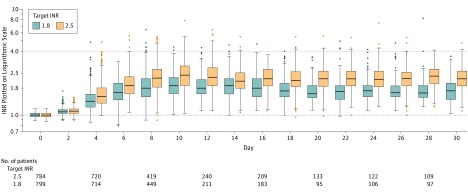
Figure 2.. International Normalized Ratio Values Stratified by Target Values
Box plot lines correspond from bottom of box to top: 25th percentile, median percentile, 75th percentile. Whiskers are 1.5 times the interquartile ranges. Circles are extreme values. International normalized ratio (INR) values are shown on a logarithmic scale on even-numbered days of therapy.
Figure 3.
Figure 3.. Time to Major or Nonmajor Clinically Relevant Bleed
Hazard ratio (HR) based on Cox regression analyses in patients treated with at least 1 dose of warfarin. Median observation time was 90 days (interquartile range [IQR], 90-90) for low-intensity and 90 days (IQR, 90-90) for standard therapy.
Figure 4.
Figure 4.. Time to Supratherapeutic International Normalized Ratio
Kaplan-Meier plot of the time to international normalized ratio (INR) value 4 or more among patients treated with at least 1 dose of warfarin. Median observation time was 28 days (interquartile range [IQR], 25-30 days) for low-intensity and 28 days (IQR, 24-30 days) for standard therapy.
Figure 5.
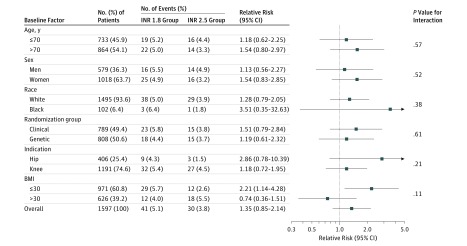
Figure 5.. Relative Risk of Primary End Point Within Trial Subgroups
The P value is the test for interaction from a logistic regression model. BMI indicates body mass index, calculated as weight in kilograms divided by height in meters squared and INR, international normalized ratio.

References

    1. Shehab N, Lovegrove MC, Geller AI, Rose KO, Weidle NJ, Budnitz DS. US emergency department visits for outpatient adverse drug events, 2013-2014. JAMA. 2016;316(20):2115-2125. doi:10.1001/jama.2016.16201 - DOI - PMC - PubMed
    1. Venker BT, Ganti BR, Lin H, Lee ED, Nunley RM, Gage BF. Safety and efficacy of new anticoagulants for the prevention of venous thromboembolism after hip and knee arthroplasty: a meta-analysis. J Arthroplasty. 2017;32(2):645-652. doi:10.1016/j.arth.2016.09.033 - DOI - PMC - PubMed
    1. Cieri NE, Kusmierski K, Lackie C, Van Opdorp A, Hassan AK. Retrospective evaluation of postoperative adverse drug events in patients receiving rivaroxaban after major orthopedic surgery compared with standard therapy in a community hospital. Pharmacotherapy. 2017;37(2):170-176. doi:10.1002/phar.1888 - DOI - PubMed
    1. Jensen CD, Steval A, Partington PF, Reed MR, Muller SD. Return to theatre following total hip and knee replacement, before and after the introduction of rivaroxaban: a retrospective cohort study. J Bone Joint Surg Br. 2011;93(1):91-95. doi:10.1302/0301-620X.93B1.24987 - DOI - PubMed
    1. Nam D, Nunley RM, Johnson SR, Keeney JA, Clohisy JC, Barrack RL. The effectiveness of a risk stratification protocol for thromboembolism prophylaxis after hip and knee arthroplasty. J Arthroplasty. 2016;31(6):1299-1306. doi:10.1016/j.arth.2015.12.007 - DOI - PubMed

Publication types

Associated data