


The Use of Waste from the Production of Rapeseed Oil for Obtaining of New Polyurethane Composites
- PMID: 31480439
- PMCID: PMC6780192
- DOI: 10.3390/polym11091431
The Use of Waste from the Production of Rapeseed Oil for Obtaining of New Polyurethane Composites
Abstract
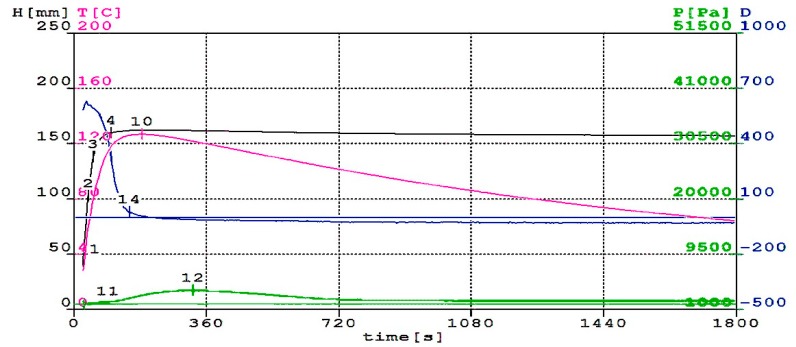
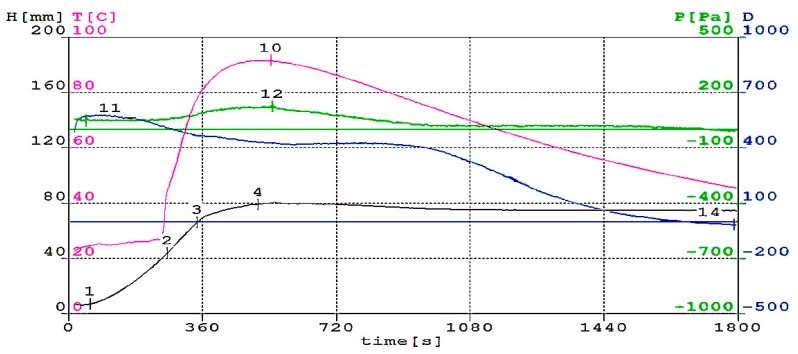
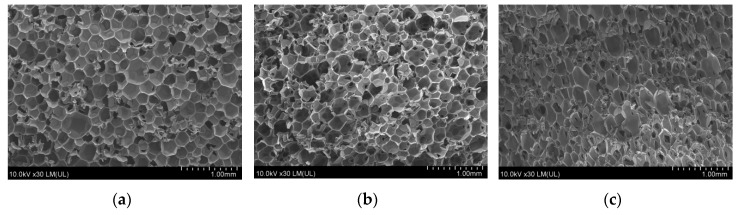
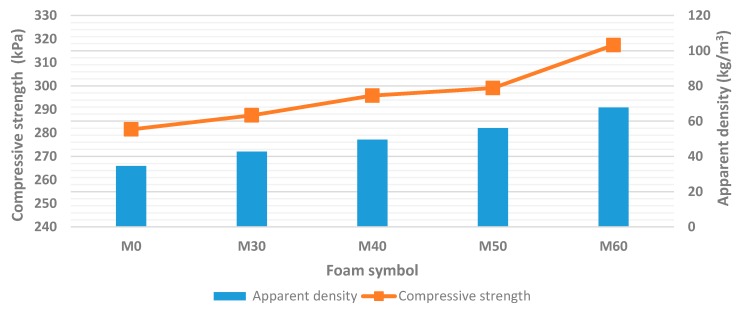
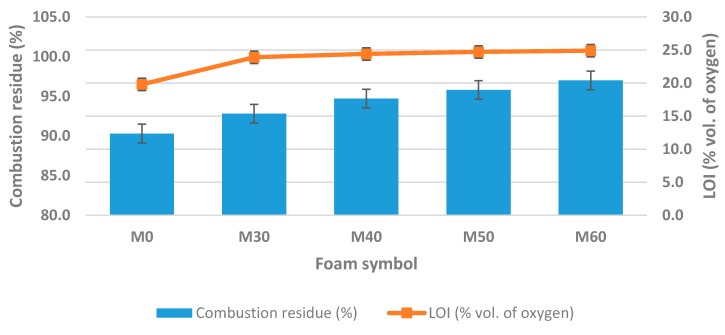
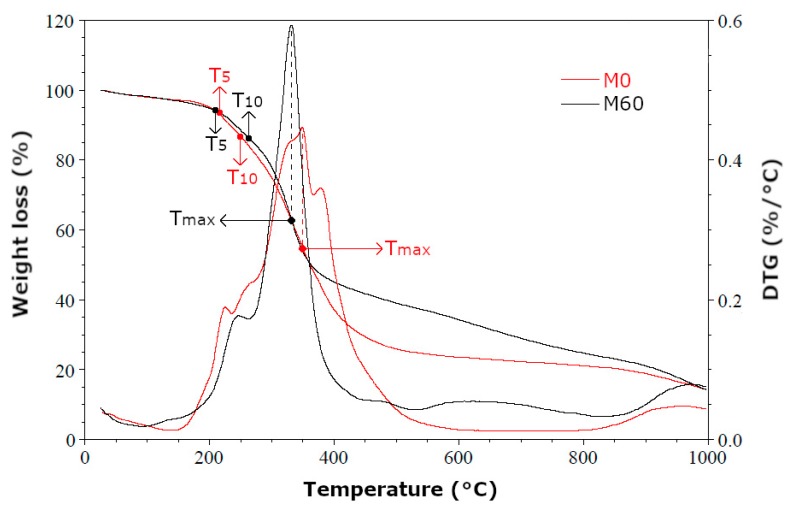
This article presents the results of research on obtaining new polyurethane materials modified by a by-product from vegetable oils industry-rapeseed cake. The chemical composition of rapeseed cake was examined. Rigid polyurethane-polyisocyanurate (RPU/PIR) foams containing a milled rapeseed cake in their composition were obtained as part of the conducted research. Biofiller was added in amount of 30 wt.% up to 60 wt.%. Effects of rapeseed cake on the foaming process, cell structure and selected properties of foams, such as apparent density, compressive strength, brittleness, flammability, absorbability, water absorption, thermal resistance and thermal conductivity are described. The foaming process of RPU/PIR foams modified by rapeseed cake was characterized by a lower reactivity, lower foaming temperature and decrease in dielectric polarization. This resulted in a slowed formation of the polyurethane matrix. Apparent density of RPU/PIR foams with biofiller was higher than in unmodified foam. Addition of rapeseed cake did not have a significant influence on the thermal conductivity of obtained materials. However, we observed a tendency for opening the cells of modified foams and obtaining a smaller cross-sectional area of cells. This led to an increase of absorbability and water absorption of obtained materials. However, an advantageous effect of using rapeseed cake in polyurethane formulations was noted. Modified RPU/PIR foams had higher compressive strength, lower brittleness and lower flammability than reference foam.
Keywords: biofiller; polyurethane properties; rapeseed cake; rigid polyurethane-polyisocyanurate foams.
Conflict of interest statement
The authors declare no conflict of interest.
Figures


References
-
- Svärd A., Brännvall E., Edlund U. Rapeseed straw polymeric hemicelluloses obtained by extraction methods based on severity factor. Ind. Crop Prod. 2017;95:305–315. doi: 10.1016/j.indcrop.2016.10.038. - DOI
-
- Carré P., Pouzet A. Rapeseed market, worldwide and in Europe. OCL Oilseeds Fats Crops Lipids. 2014:21. doi: 10.1051/ocl/2013054. - DOI
-
- Schober S., Mittelbach M. The impact of antioxidants on biodiesel oxidation stability. Eur. J. Lipid. Sci. Technol. 2004;106:382–389. doi: 10.1002/ejlt.200400954. - DOI
-
- Ma H., Li S., Wang B., Wang R., Tian S. Transesterification of rapeseed oil for synthesizing biodiesel by K/KOH/γ-Al2O3 as heterogeneous base catalyst. J. Am. Oil Chem. Soc. 2008;85:263–270. doi: 10.1007/s11746-007-1188-4. - DOI
-
- Angelovičová A., Angelovič M. Rapeseed cakes as an important feed raw material for laying hens. Sci. Pap. Anim. Sci. Biotechnol. 2013;46:335–338.
LinkOut - more resources
Full Text Sources
