


Carbapenemases in Enterobacteriaceae: Detection and Antimicrobial Therapy
- PMID: 31481937
- PMCID: PMC6710837
- DOI: 10.3389/fmicb.2019.01823
Carbapenemases in Enterobacteriaceae: Detection and Antimicrobial Therapy
Abstract
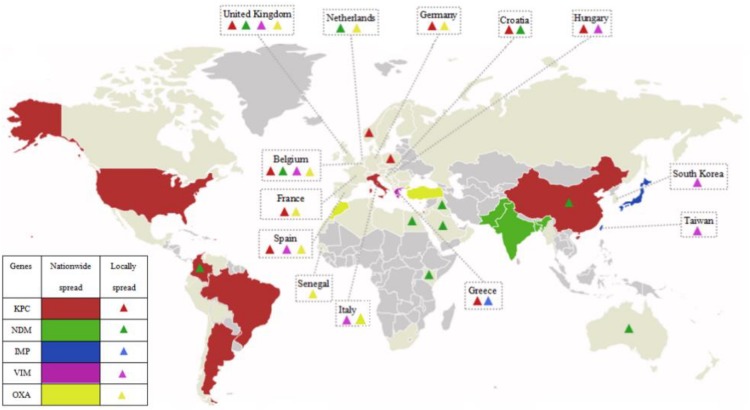
Carbapenem-resistant Enterobacteriaceae (CRE) have spread rapidly around the world in the past few years, posing great challenges to human health. The plasmid-mediated horizontal transmission of carbapenem-resistance genes is the main cause of the surge in the prevalence of CRE. Therefore, the timely and accurate detection of CRE, especially carbapenemase-producing Enterobacteriaceae, is very important for the clinical prevention and treatment of these infections. A variety of methods for the rapid detection of CRE phenotypes and genotypes have been developed for use in clinical microbiology laboratories. To overcome the lack of efficient antibiotics, CRE infections are often treated with combination therapies. Moreover, novel drugs and emerging strategies appeared successively and in various stages of development. In this article, we summarized the global distribution of various carbapenemases. And we focused on summarizing and comparing the advantages and limitations of the detection methods and the therapeutic strategies of CRE primarily.
Keywords: CRE; carbapenem-resistant Enterobacteriaceae; prevalence; rapid detection; treatment.
Figures
References
-
- Ambler R. P. (1980). The structure of beta-lactamases. Philos. Trans. R. Soc. Lond. B Biol. Sci. 289 321–331. - PubMed
-
- Barnes M. D., Taracila M. A., Good C. E., Bajaksouzian S., Rojas L. J., van Duin D., et al. (2019). Nacubactam enhances meropenem activity against carbapenem-resistant Klebsiella pneumoniae producing Klebsiella pneumoniae carbapenemases (KPC). Antimicrob. Agents Chemother. 10.1128/AAC.00432-19 [Epub ahead of print]. - DOI - PMC - PubMed
Publication types
LinkOut - more resources
Full Text Sources
Miscellaneous
