Stunting Is Preceded by Intestinal Mucosal Damage and Microbiome Changes and Is Associated with Systemic Inflammation in a Cohort of Peruvian Infants
- PMID: 31482782
- PMCID: PMC6838574
- DOI: 10.4269/ajtmh.18-0975
Stunting Is Preceded by Intestinal Mucosal Damage and Microbiome Changes and Is Associated with Systemic Inflammation in a Cohort of Peruvian Infants
Abstract
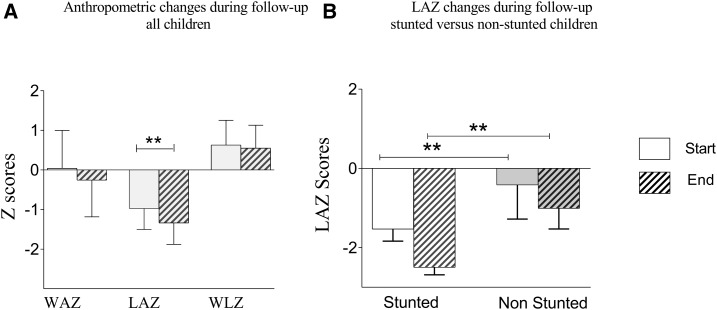
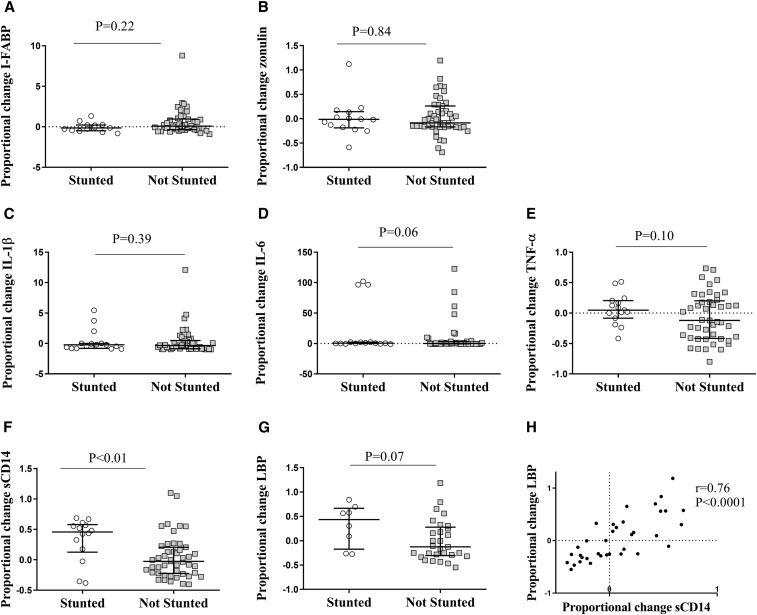
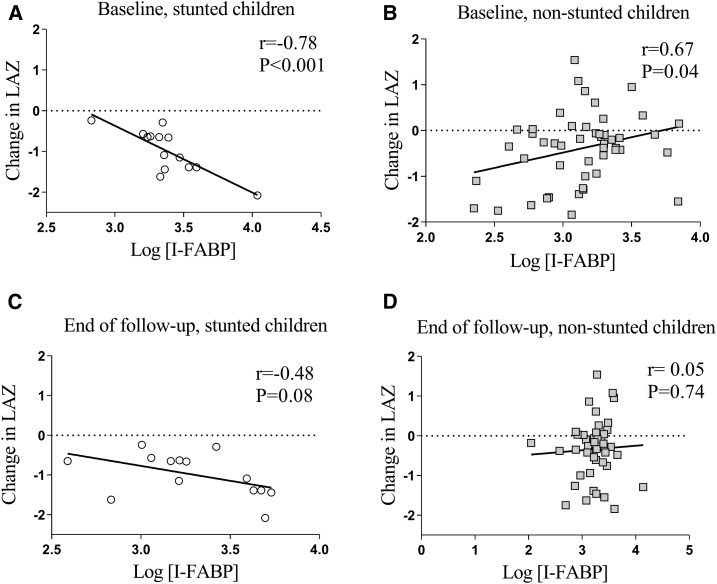
Stunting, defined as height-for-age Z score equal to or lower than -2, is associated with increased childhood mortality, cognitive impairment, and chronic diseases. The aim of the study was to investigate the relationship between linear growth, intestinal damage, and systemic inflammation in infants at risk of stunting. We followed up 78 infants aged 5-12 months living in rural areas of Peru for 6 months. Blood samples for biomarkers of intestinal damage (intestinal fatty-acid-binding protein [I-FABP] and zonulin) and systemic inflammation (interleukin-1β, interleukin-6, tumor necrosis factor α [TNF-α], soluble CD14, and lipopolysaccharide-binding protein [LBP]) and fecal samples for microbiome analysis were collected at baseline and closure of the study. The children's growth and health status were monitored through biweekly home visits by trained staff. Twenty-one percent of the children became stunted: compared with non-stunted children, they had worse nutritional parameters and higher levels of serum I-FABP at baseline. The likelihood of becoming stunted was strongly associated with an increase in sCD14 over time; LBP and TNF-α showed a trend toward increase in stunted children but not in controls. The fecal microbiota composition of stunted children had an increased beta diversity compared with that of healthy controls throughout the study. The relative abundance of Ruminococcus 1 and 2, Clostridium sensu stricto, and Collinsella increased in children becoming stunted but not in controls, whereas Providencia abundance decreased. In conclusion, stunting in our population was preceded by an increase in markers of enterocyte turnover and differences in the fecal microbiota and was associated with increasing levels of systemic inflammation markers.
Figures


References
-
- WHO, World Bank, UNICEF , 2017. Joint Child Malnutrition Estimates New York, NY: United Nations Children’s Fund, the World Health Organization, the World Bank Group.
-
- Campbell DI, Elia M, Lunn PG, 2003. Growth faltering in rural Gambian infants is associated with impaired small intestinal barrier function, leading to endotoxemia and systemic inflammation. J Nutr 133: 1332–1338. - PubMed
Publication types
MeSH terms
Substances
LinkOut - more resources
Full Text Sources
Medical
Research Materials
Miscellaneous