Comment
. 2019 Oct 1;129(10):4080-4082.
doi: 10.1172/JCI131649.

Fighting infant infections with myeloid-derived suppressor cells

Comment

Fighting infant infections with myeloid-derived suppressor cells

Rebekka Weber et al. J Clin Invest. .

Abstract

Recent work demonstrated a role for myeloid-derived suppressor cells (MDSCs) in the antimicrobial response in newborns, but the signals guiding their differentiation remained unknown. In this issue of the JCI, Liu et al. demonstrate that lactoferrin (LF) converts newborn neutrophils and monocytes to MDSCs via the low-density lipoprotein receptor-related protein-2 (LRP2) receptor and NF-κB activation. Due to their strong antimicrobial activity, adoptive transfer of MDSCs generated by in vitro culture with LF prolonged the survival of newborn mice with necrotizing enterocolitis, a severe pathology in preterm infants. These findings indicate a surprising protective role of MDSCs in newborns and demonstrate the potential of MDSC therapy for the treatment of infants with diseases associated with deregulated inflammation.


Conflict of interest statement

Conflict of interest: The authors have declared that no conflict of interest exists.

Figures

Figure 1
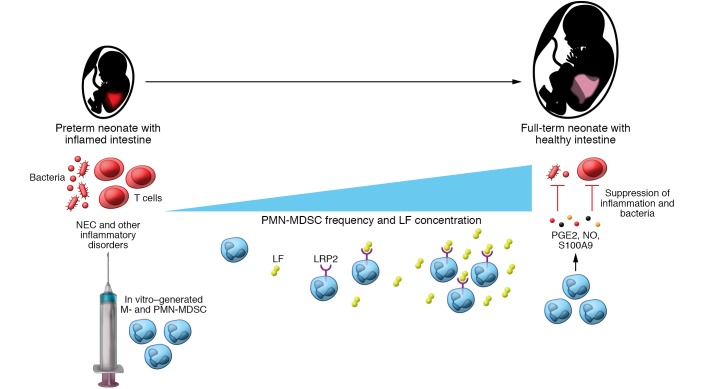
Figure 1. MDSCs protect newborns from inflammatory disorders.
Preterm neonates show a lower abundance of PMN-MDSCs and LF as compared with full-term neonates. The amount of PMN-MDSCs and LF is further decreased in preterm neonates with NEC as compared with those without this disease. PMN-MDSCs in healthy newborns produce NO, PGE2, and S100A9, suppressing T cell activities and exerting simultaneously antibacterial properties. MDSCs could be generated in vitro from newborn (but not adult) monocytes and neutrophils via the binding of LF to its receptor LRP2 on these cells. Mice with different pathological inflammatory conditions were successfully treated with in vitro–generated MDSCs, suggesting that such cell therapy could be efficient in newborns with NEC and other inflammatory disorders.

Comment on

References

    1. Bronte V, et al. Recommendations for myeloid-derived suppressor cell nomenclature and characterization standards. Nat Commun. 2016;7:12150. - PMC - PubMed
    1. Veglia F, Perego M, Gabrilovich D. Myeloid-derived suppressor cells coming of age. Nat Immunol. 2018;19(2):108–119. doi: 10.1038/s41590-017-0022-x. - DOI - PMC - PubMed
    1. Ben-Meir K, Twaik N, Baniyash M. Plasticity and biological diversity of myeloid derived suppressor cells. Curr Opin Immunol. 2018;51:154–161. doi: 10.1016/j.coi.2018.03.015. - DOI - PubMed
    1. Huber V, et al. Tumor-derived microRNAs induce myeloid suppressor cells and predict immunotherapy resistance in melanoma. J Clin Invest. 2018;128(12):5505–5516. doi: 10.1172/JCI98060. - DOI - PMC - PubMed
    1. Fleming V, et al. Melanoma extracellular vesicles generate immunosuppressive myeloid cells by PD-L1 upregulation via TLR4 signaling. Cancer Res. doi: 10.1158/0008-5472.CAN-19-0053. - DOI - PubMed

Publication types