


Editorial
doi: 10.3390/nu11092078.
You'd Better Zinc-Trace Element Homeostasis in Infection and Inflammation
Affiliations
- PMID: 31484386
- PMCID: PMC6770902
- DOI: 10.3390/nu11092078
Item in Clipboard
Editorial
You'd Better Zinc-Trace Element Homeostasis in Infection and Inflammation
Nutrients.
.
Abstract
During recent years, we have witnessed a growing appreciation of several micronutrients in the immune response, including vitamins and minerals [...].
Conflict of interest statement
H.H. declares no conflict of interest. L.S. holds shares in selenOmed GmbH, a company involved in selenium status assessment and supplementation. The funders stated above had no role in the design of the study; in the collection, analyses, or interpretation of data; in the writing of the manuscript, or in the decision to publish the results.
Figures
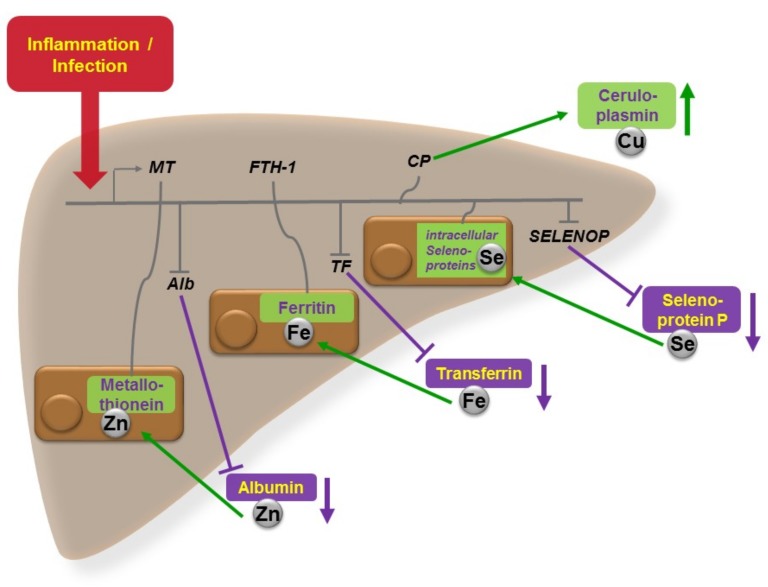
Central role of liver in acute phase regulation of circulating trace elements. In response to infection or inflammation, and the associated increase in pro-inflammatory cytokines, hepatocytes modify trace element metabolism, in order to deprive invading pathogens from supply with essential growth factors, and at the same time, improving the host’s anti-inflammatory response. The figure depicts schematically the effects on the distribution of copper (Cu), iron (Fe), selenium (Se), and zinc (Zn) between blood and liver. Serum Cu levels increase in response to inflammation mainly via up-regulated ceruloplasmin (CP) biosynthesis and secretion into blood. The hepatic hormone hepcidin diminishes Fe supply to the circulation and at the same time, transferrin concentrations decline, while intrahepatic ferritin (FTH-1) increases, collectively reducing circulating Fe levels (anaemia of inflammation). Hepatic selenoprotein biosynthesis becomes redirected in favor of certain intracellular selenoproteins and at the expense of the circulating Se-transport protein selenoprotein P (SELENOP). The re-distribution of Zn is more complex, involving all major organs, including immune cells and the gastrointestinal system, and a large number of Zn-dependent proteins [1]. A significant flow of Zn levels takes place from circulating albumin into hepatocytes and toward intracellular metallothioneins (MT).
References
-
- Foster M., Samman S. Vegetarian diets across the lifecycle: Impact on zinc intake and status. Adv. Food Nutr. Res. 2015;74:93–131. - PubMed
Publication types
MeSH terms
Substances
Grants and funding
LinkOut - more resources
Full Text Sources
