. 2019 Sep 4;17(9):520.
doi: 10.3390/md17090520.

N-Terminal Acetylation and C-Terminal Amidation of Spirulina platensis-Derived Hexapeptide: Anti-Photoaging Activity and Proteomic Analysis

Affiliations

N-Terminal Acetylation and C-Terminal Amidation of Spirulina platensis-Derived Hexapeptide: Anti-Photoaging Activity and Proteomic Analysis

Qiaohui Zeng et al. Mar Drugs. .

Abstract

Ultraviolet (UV) irradiation is a potent inducer for skin photoaging. This paper investigated the anti-photoaging effects of the acetylated and amidated hexapeptide (AAH), originally identified from Spirulina platensis, in (Ultraviolet B) UVB-irradiated Human immortalized keratinocytes (Hacats) and mice. The results demonstrated that AAH had much lower toxicity on Hacats than the positive matrixyl (81.52% vs. 5.32%). Moreover, AAH reduced MDA content by 49%; increased SOD, CAT, and GSH-Px activities by 103%, 49%, and 116%, respectively; decreased MMP-1 and MMP-3 expressions by 27% and 29%, respectively, compared to UVB-irradiated mice. Employing isobaric tags for relative and absolute quantitation (iTRAQ)-based proteomics, 60 differential proteins were identified, and major metabolic pathways were determined. Network analysis indicated that these differential proteins were mapped into an interaction network composed of two core sub-networks. Collectively, AAH is protective against UVB-induced skin photoaging and has potential application in skin care cosmetics.

Keywords: acetylation; amidation; hexapeptide; photoaging; proteomics.


Conflict of interest statement

The authors declare no conflict of interest.

Figures
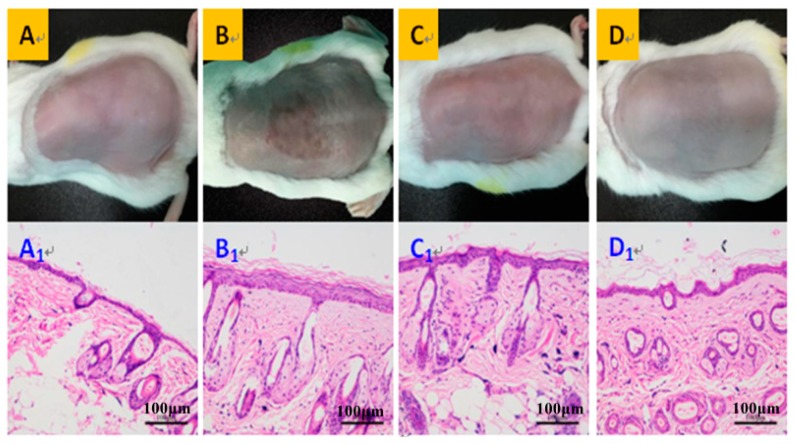
Figure 1
Figure 1
Morphological features (AD) and histological examination (A1D1, 200×) of the dorsal skin of mice. Normal control (A,A1), UVB irradiation group (B,B1), positive control matrixyl group (C,C1), and the acetylated and amidated hexapeptide group (D,D1).
Figure 2
Figure 2
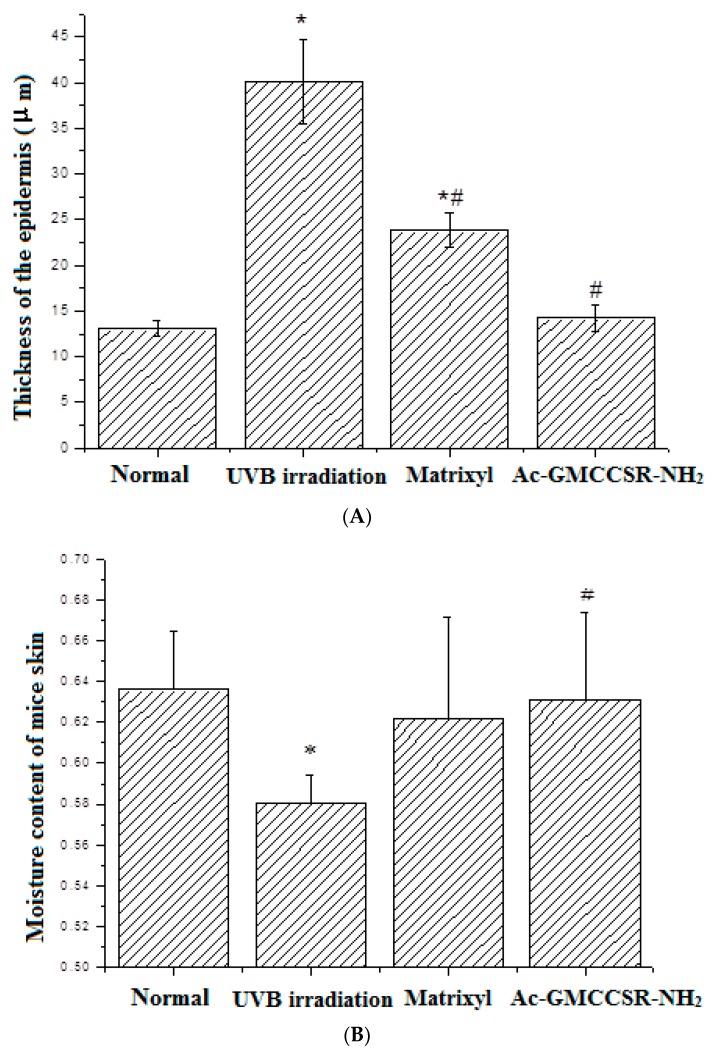
Thickness (A) and moisture content (B) of the dorsal skin of mice. Normal control, UVB irradiation group, positive control matrixyl group, the acetylated and amidated hexapeptide group (Ac-GMCCSR-NH2). * significant compared to normal group, # significant compared to UVB irradiation group.
Figure 3
Figure 3
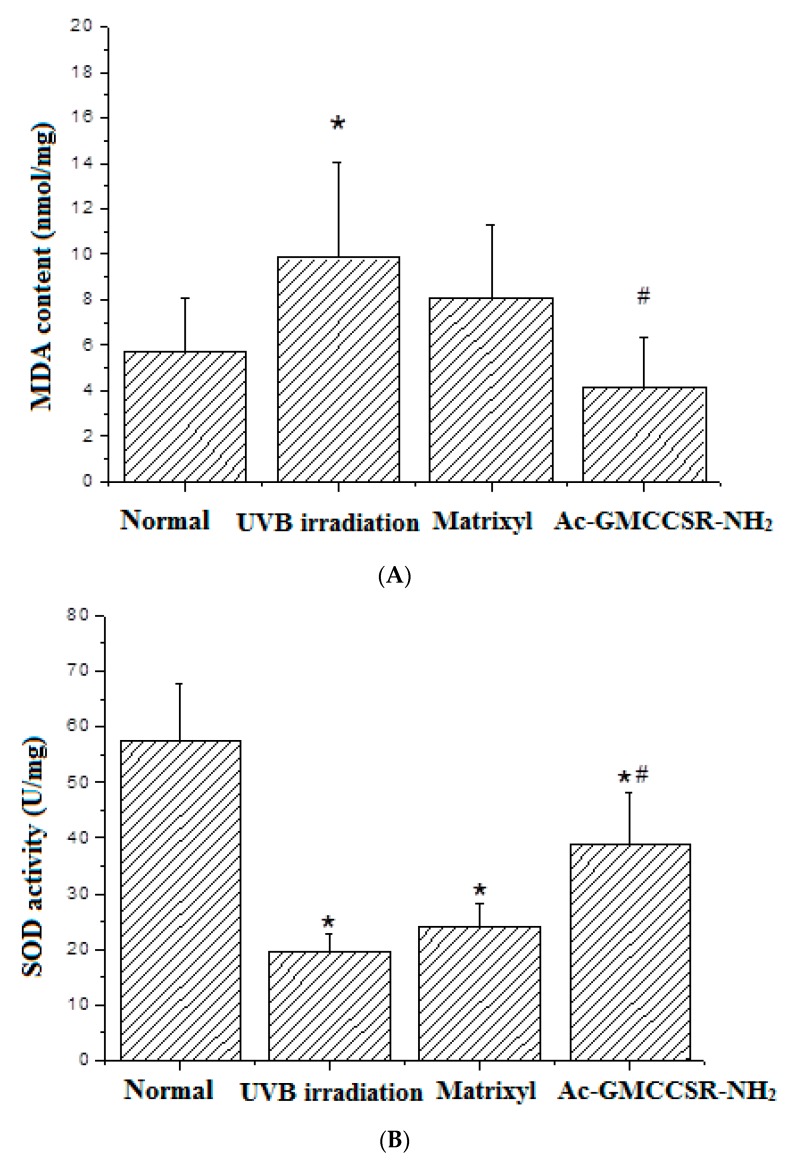
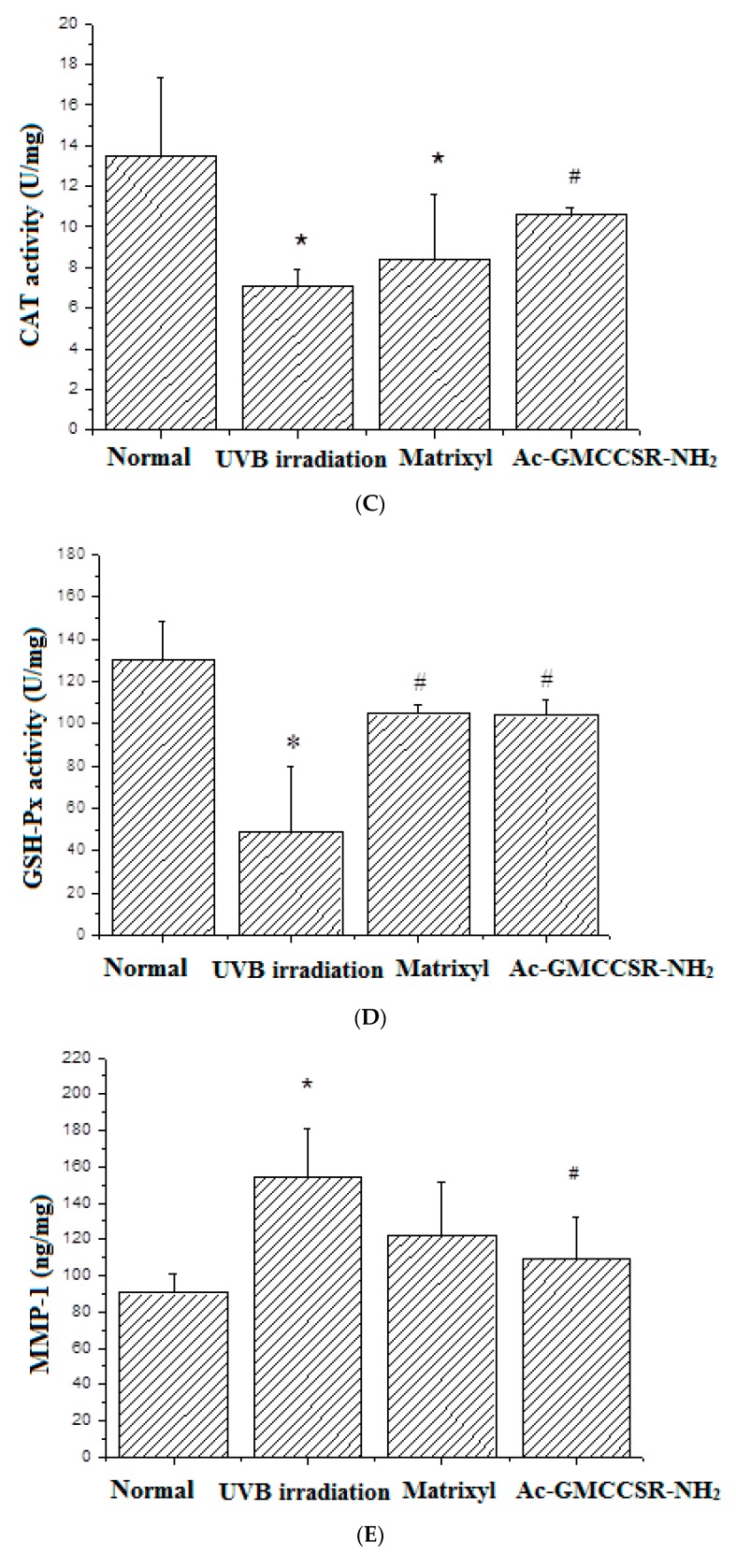
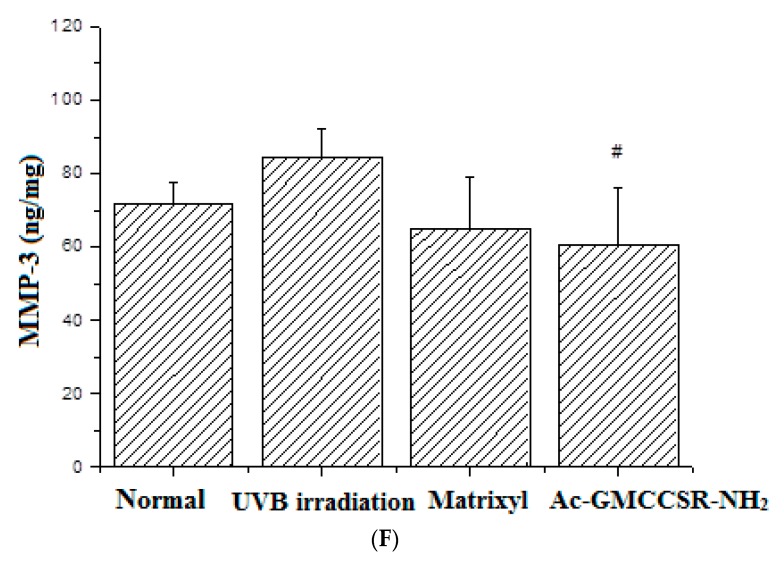
Effects on MDA (A), SOD (B), CAT (C), GSH-Px (D), MMP-1 (E), and MMP-3 (F) in skin tissue of mice. Normal control, UVB irradiation group, positive control matrixyl group, and the acetylated and amidated hexapeptide group (Ac-GMCCSR-NH2). * significant compared to normal group, # significant compared to UVB irradiation group.
Figure 3
Figure 3
Effects on MDA (A), SOD (B), CAT (C), GSH-Px (D), MMP-1 (E), and MMP-3 (F) in skin tissue of mice. Normal control, UVB irradiation group, positive control matrixyl group, and the acetylated and amidated hexapeptide group (Ac-GMCCSR-NH2). * significant compared to normal group, # significant compared to UVB irradiation group.
Figure 3
Figure 3
Effects on MDA (A), SOD (B), CAT (C), GSH-Px (D), MMP-1 (E), and MMP-3 (F) in skin tissue of mice. Normal control, UVB irradiation group, positive control matrixyl group, and the acetylated and amidated hexapeptide group (Ac-GMCCSR-NH2). * significant compared to normal group, # significant compared to UVB irradiation group.
Figure 4
Figure 4
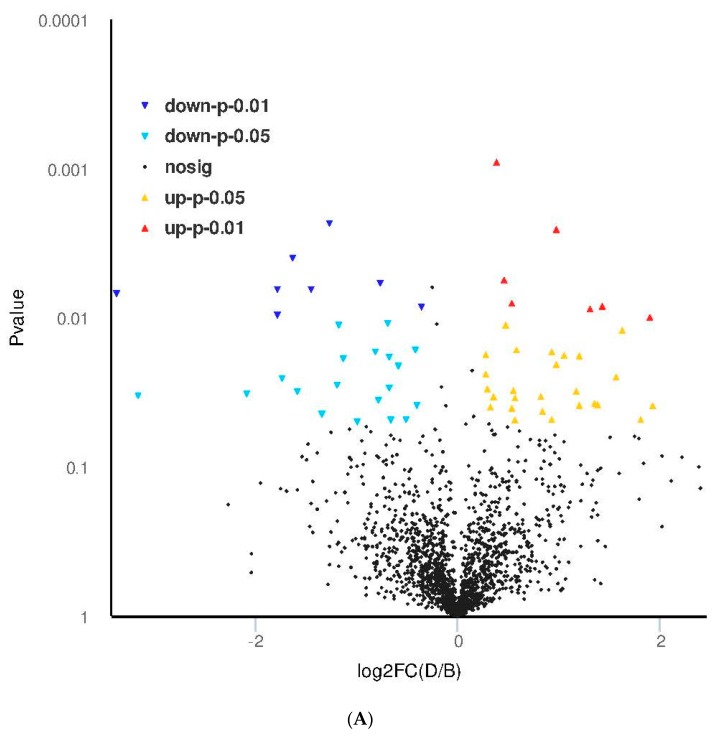
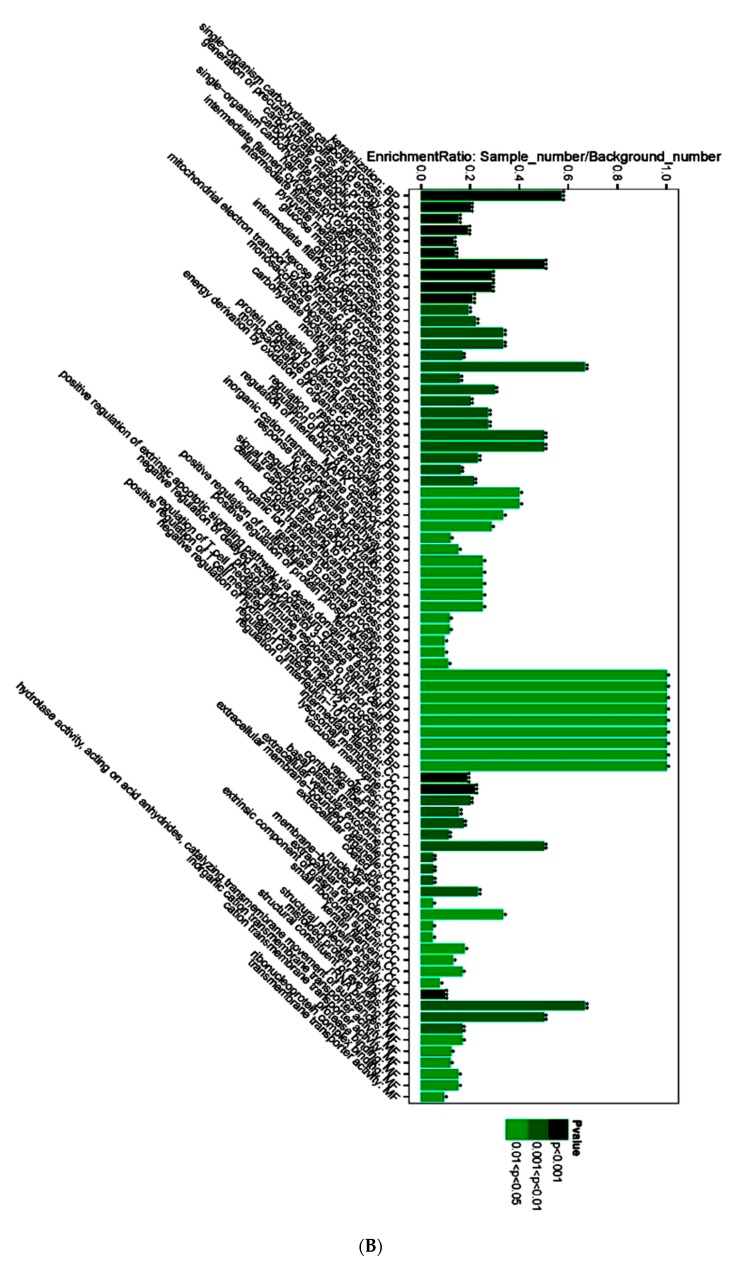
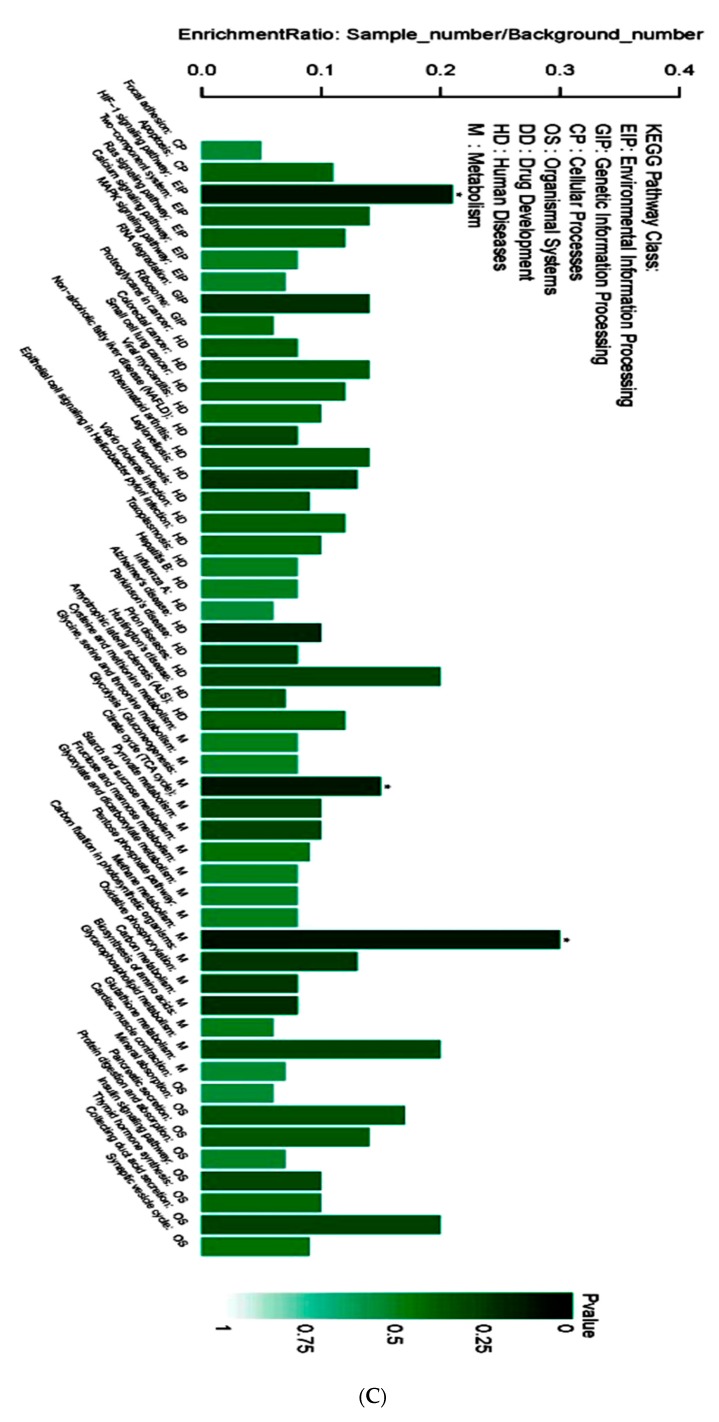
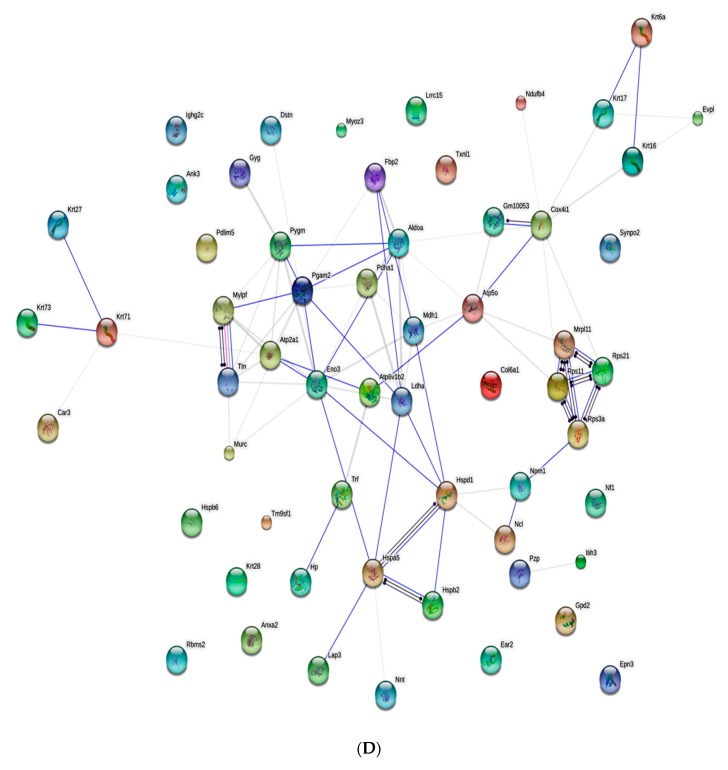
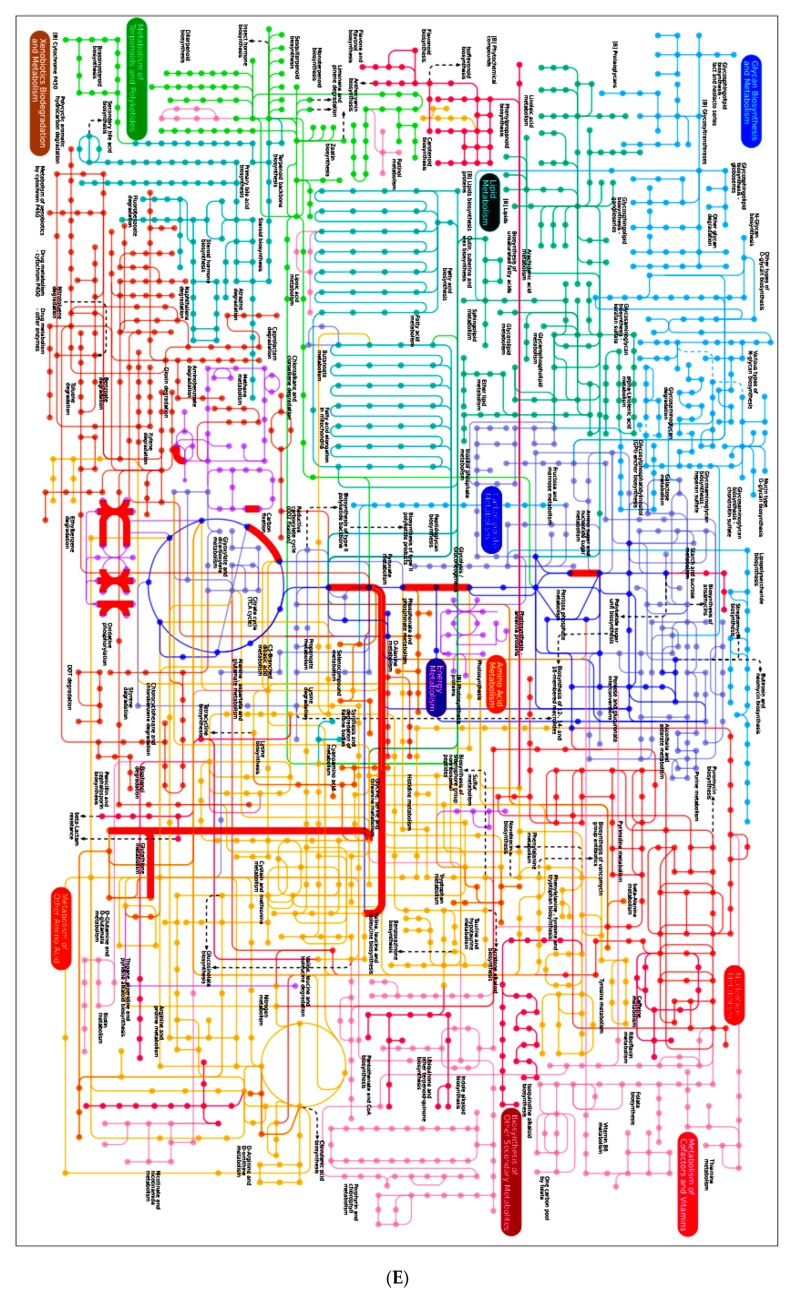
Volcano diagram (A), GO enrichment analysis. 1 keratinization: BP; 2 single-organism carbohydrate catabolic process: BP; 3 generation of precursor metabolites and energy: BP; 4 carbohydrate catabolic process: BP; 5 carbohydrate metabolic process: BP; 6 single-organism carbohydrate metabolic process: BP; 7 hair follicle morphogenesis: BP; 8 intermediate filament cytoskeleton organization: BP; 9 intermediate filament-based process: BP; 10 pyruvate metabolic process: BP; 11 glucose metabolic process: BP; 12 glycolytic process: BP; 13 intermediate filament organization: BP; 14 gluconeogenesis: BP; 15 hexose metabolic process: BP; 16 mitochondrial electron transport, cytochrome c to oxygen: BP; 17 monosaccharide metabolic process: BP; 18 hexose biosynthetic process: BP; 19 carbohydrate biosynthetic process: BP; 20 molting cycle process: BP; 21 hair cycle process: BP; 22 regulation of bone resorption: BP; 23 protein targeting to plasma membrane: BP; 24 monosaccharide biosynthetic process: BP; 25 energy derivation by oxidation of organic compounds: BP; 26 response to heat: BP; 27 regulation of nuclease activity: BP; 28 regulation of bone remodeling: BP; 29 regulation of interleukin-6 production: BP; 30 MAPK cascade: BP; 31 inorganic cation transmembrane transport: BP; 32 response to temperature stimulus: BP; 33 Notch signaling pathway: BP; 34 regulation of tissue remodeling: BP; 35 signal transduction by phosphorylation: BP; 36 cellular carbohydrate catabolic process: BP; 37 protein targeting to membrane: BP; 38 cation transmembrane transport: BP; 39 inorganic ion transmembrane transport: BP; 40 response to oxidative stress: BP; 41 positive regulation of multicellular organismal process: BP; 42 positive regulation of protein phosphorylation: BP; 43 fermentation: BP; 44 positive regulation of extrinsic apoptotic signaling pathway via death domain receptors: BP; 45 negative regulation of delayed rectifier potassium channel activity: BP; 46 phosphatidylinositol 3-kinase signaling: BP; 47 regulation of T cell mediated immune response to tumor cell: BP; 48 positive regulation of T cell mediated immune response to tumor cell: BP; 49 negative regulation of hydrogen peroxide metabolic process: BP; 50 regulation of interleukin-12 production: BP; 51 regulation of interleukin-10 production: BP; 52 intermediate filament: CC; 53 lysosomal membrane: CC; 54 vacuolar membrane: CC; 55 Z disc: CC; 56 vacuolar part: CC; 57 contractile fiber part: CC; 58 basal plasma membrane: CC; 59 extracellular vesicular exosome: CC; 60 extracellular membrane-bounded organelle: CC; 61 extracellular organelle: CC; 62 coated pit: CC; 63 vesicle: CC; 64 nucleolar part: CC; 65 membrane-bounded vesicle: CC; 66 extracellular region part: CC; 67 extrinsic component of plasma membrane: CC; 68 small ribosomal subunit: CC; 69 keratin filament: CC; 70 myelin sheath: CC; 71 structural molecule activity: MF; 72 misfolded protein binding: MF; 73 structural constituent of eye lens: MF; 74 rRNA binding: MF; 75 hydrolase activity, acting on acid anhydrides, catalyzing transmembrane movement of substances: MF; 76 inorganic cation transmembrane transporter activity: MF; 77 cation transmembrane transporter activity: MF; 78 protease binding: MF; 79 ribonucleoprotein complex binding: MF; 80 transmembrane transporter activity: MF (B). KEGG metabolic pathways. 1 Focal adhesion: CP; 2 Apoptosis: CP; 3 HIF-1 signaling pathway: EIP; 4 Two-component system: EIP; 5 Ras signaling pathway: EIP; 6 Calcium signaling pathway: EIP; 7 MAPK signaling pathway: EIP; 8 RNA degradation: GIP; 9 Ribosome: GIP; 10 Proteoglycans in cancer: HD; 11 Colorectal cancer: HD; 12 Small cell lung cancer: HD; 13 Viral myocarditis: HD; 14 Non-alcoholic fatty liver disease (NAFLD): HD; 15 Rheumatoid arthritis: HD; 16 Legionellosis: HD; 17 Tuberculosis: HD; 18 Vibrio cholerae infection: HD; 19 Epithelial cell signaling in Helicobacter pylori infection: HD; 20 Toxoplasmosis: HD; 21 Hepatitis B: HD; 22 Influenza A: HD; 23 Alzheimer’s disease: HD; 24 Parkinson’s disease: HD; 25 Prion diseases: HD; 26 Huntington’s disease: HD; 27 Amyotrophic lateral sclerosis (ALS): HD; 28 Cysteine and methionine metabolism: M; 29 Glycine, serine and threonine metabolism: M; 30 Glycolysis/Gluconeogenesis: M; 31 Citrate cycle (TCA cycle): M; 32 Pyruvate metabolism: M; 33 Starch and sucrose metabolism: M; 34 Fructose and mannose metabolism: M; 35 Glyoxylate and dicarboxylate metabolism: M; 36 Pentose phosphate pathway: M; 37 Methane metabolism: M; 38 Carbon fixation in photosynthetic organisms: M; 39 Oxidative phosphorylation: M; 40 Carbon metabolism: M; 41 Biosynthesis of amino acids: M; 42 Glycerophospholipid metabolism: M; 43 Glutathione metabolism: M; 44 Cardiac muscle contraction: OS; 45 Mineral absorption: OS; 46 Pancreatic secretion: OS; 47 Protein digestion and absorption: OS; 48 Insulin signaling pathway: OS; 49 Thyroid hormone synthesis: OS; 50 Collecting duct acid secretion: OS; 51 Synaptic vesicle cycle: OS (C). Interaction network identified by STRING (D) and by IPATH (E) for differential proteins related to the protection effect of the acetylated and amidated hexapeptide.
Figure 4
Figure 4
Volcano diagram (A), GO enrichment analysis. 1 keratinization: BP; 2 single-organism carbohydrate catabolic process: BP; 3 generation of precursor metabolites and energy: BP; 4 carbohydrate catabolic process: BP; 5 carbohydrate metabolic process: BP; 6 single-organism carbohydrate metabolic process: BP; 7 hair follicle morphogenesis: BP; 8 intermediate filament cytoskeleton organization: BP; 9 intermediate filament-based process: BP; 10 pyruvate metabolic process: BP; 11 glucose metabolic process: BP; 12 glycolytic process: BP; 13 intermediate filament organization: BP; 14 gluconeogenesis: BP; 15 hexose metabolic process: BP; 16 mitochondrial electron transport, cytochrome c to oxygen: BP; 17 monosaccharide metabolic process: BP; 18 hexose biosynthetic process: BP; 19 carbohydrate biosynthetic process: BP; 20 molting cycle process: BP; 21 hair cycle process: BP; 22 regulation of bone resorption: BP; 23 protein targeting to plasma membrane: BP; 24 monosaccharide biosynthetic process: BP; 25 energy derivation by oxidation of organic compounds: BP; 26 response to heat: BP; 27 regulation of nuclease activity: BP; 28 regulation of bone remodeling: BP; 29 regulation of interleukin-6 production: BP; 30 MAPK cascade: BP; 31 inorganic cation transmembrane transport: BP; 32 response to temperature stimulus: BP; 33 Notch signaling pathway: BP; 34 regulation of tissue remodeling: BP; 35 signal transduction by phosphorylation: BP; 36 cellular carbohydrate catabolic process: BP; 37 protein targeting to membrane: BP; 38 cation transmembrane transport: BP; 39 inorganic ion transmembrane transport: BP; 40 response to oxidative stress: BP; 41 positive regulation of multicellular organismal process: BP; 42 positive regulation of protein phosphorylation: BP; 43 fermentation: BP; 44 positive regulation of extrinsic apoptotic signaling pathway via death domain receptors: BP; 45 negative regulation of delayed rectifier potassium channel activity: BP; 46 phosphatidylinositol 3-kinase signaling: BP; 47 regulation of T cell mediated immune response to tumor cell: BP; 48 positive regulation of T cell mediated immune response to tumor cell: BP; 49 negative regulation of hydrogen peroxide metabolic process: BP; 50 regulation of interleukin-12 production: BP; 51 regulation of interleukin-10 production: BP; 52 intermediate filament: CC; 53 lysosomal membrane: CC; 54 vacuolar membrane: CC; 55 Z disc: CC; 56 vacuolar part: CC; 57 contractile fiber part: CC; 58 basal plasma membrane: CC; 59 extracellular vesicular exosome: CC; 60 extracellular membrane-bounded organelle: CC; 61 extracellular organelle: CC; 62 coated pit: CC; 63 vesicle: CC; 64 nucleolar part: CC; 65 membrane-bounded vesicle: CC; 66 extracellular region part: CC; 67 extrinsic component of plasma membrane: CC; 68 small ribosomal subunit: CC; 69 keratin filament: CC; 70 myelin sheath: CC; 71 structural molecule activity: MF; 72 misfolded protein binding: MF; 73 structural constituent of eye lens: MF; 74 rRNA binding: MF; 75 hydrolase activity, acting on acid anhydrides, catalyzing transmembrane movement of substances: MF; 76 inorganic cation transmembrane transporter activity: MF; 77 cation transmembrane transporter activity: MF; 78 protease binding: MF; 79 ribonucleoprotein complex binding: MF; 80 transmembrane transporter activity: MF (B). KEGG metabolic pathways. 1 Focal adhesion: CP; 2 Apoptosis: CP; 3 HIF-1 signaling pathway: EIP; 4 Two-component system: EIP; 5 Ras signaling pathway: EIP; 6 Calcium signaling pathway: EIP; 7 MAPK signaling pathway: EIP; 8 RNA degradation: GIP; 9 Ribosome: GIP; 10 Proteoglycans in cancer: HD; 11 Colorectal cancer: HD; 12 Small cell lung cancer: HD; 13 Viral myocarditis: HD; 14 Non-alcoholic fatty liver disease (NAFLD): HD; 15 Rheumatoid arthritis: HD; 16 Legionellosis: HD; 17 Tuberculosis: HD; 18 Vibrio cholerae infection: HD; 19 Epithelial cell signaling in Helicobacter pylori infection: HD; 20 Toxoplasmosis: HD; 21 Hepatitis B: HD; 22 Influenza A: HD; 23 Alzheimer’s disease: HD; 24 Parkinson’s disease: HD; 25 Prion diseases: HD; 26 Huntington’s disease: HD; 27 Amyotrophic lateral sclerosis (ALS): HD; 28 Cysteine and methionine metabolism: M; 29 Glycine, serine and threonine metabolism: M; 30 Glycolysis/Gluconeogenesis: M; 31 Citrate cycle (TCA cycle): M; 32 Pyruvate metabolism: M; 33 Starch and sucrose metabolism: M; 34 Fructose and mannose metabolism: M; 35 Glyoxylate and dicarboxylate metabolism: M; 36 Pentose phosphate pathway: M; 37 Methane metabolism: M; 38 Carbon fixation in photosynthetic organisms: M; 39 Oxidative phosphorylation: M; 40 Carbon metabolism: M; 41 Biosynthesis of amino acids: M; 42 Glycerophospholipid metabolism: M; 43 Glutathione metabolism: M; 44 Cardiac muscle contraction: OS; 45 Mineral absorption: OS; 46 Pancreatic secretion: OS; 47 Protein digestion and absorption: OS; 48 Insulin signaling pathway: OS; 49 Thyroid hormone synthesis: OS; 50 Collecting duct acid secretion: OS; 51 Synaptic vesicle cycle: OS (C). Interaction network identified by STRING (D) and by IPATH (E) for differential proteins related to the protection effect of the acetylated and amidated hexapeptide.
Figure 4
Figure 4
Volcano diagram (A), GO enrichment analysis. 1 keratinization: BP; 2 single-organism carbohydrate catabolic process: BP; 3 generation of precursor metabolites and energy: BP; 4 carbohydrate catabolic process: BP; 5 carbohydrate metabolic process: BP; 6 single-organism carbohydrate metabolic process: BP; 7 hair follicle morphogenesis: BP; 8 intermediate filament cytoskeleton organization: BP; 9 intermediate filament-based process: BP; 10 pyruvate metabolic process: BP; 11 glucose metabolic process: BP; 12 glycolytic process: BP; 13 intermediate filament organization: BP; 14 gluconeogenesis: BP; 15 hexose metabolic process: BP; 16 mitochondrial electron transport, cytochrome c to oxygen: BP; 17 monosaccharide metabolic process: BP; 18 hexose biosynthetic process: BP; 19 carbohydrate biosynthetic process: BP; 20 molting cycle process: BP; 21 hair cycle process: BP; 22 regulation of bone resorption: BP; 23 protein targeting to plasma membrane: BP; 24 monosaccharide biosynthetic process: BP; 25 energy derivation by oxidation of organic compounds: BP; 26 response to heat: BP; 27 regulation of nuclease activity: BP; 28 regulation of bone remodeling: BP; 29 regulation of interleukin-6 production: BP; 30 MAPK cascade: BP; 31 inorganic cation transmembrane transport: BP; 32 response to temperature stimulus: BP; 33 Notch signaling pathway: BP; 34 regulation of tissue remodeling: BP; 35 signal transduction by phosphorylation: BP; 36 cellular carbohydrate catabolic process: BP; 37 protein targeting to membrane: BP; 38 cation transmembrane transport: BP; 39 inorganic ion transmembrane transport: BP; 40 response to oxidative stress: BP; 41 positive regulation of multicellular organismal process: BP; 42 positive regulation of protein phosphorylation: BP; 43 fermentation: BP; 44 positive regulation of extrinsic apoptotic signaling pathway via death domain receptors: BP; 45 negative regulation of delayed rectifier potassium channel activity: BP; 46 phosphatidylinositol 3-kinase signaling: BP; 47 regulation of T cell mediated immune response to tumor cell: BP; 48 positive regulation of T cell mediated immune response to tumor cell: BP; 49 negative regulation of hydrogen peroxide metabolic process: BP; 50 regulation of interleukin-12 production: BP; 51 regulation of interleukin-10 production: BP; 52 intermediate filament: CC; 53 lysosomal membrane: CC; 54 vacuolar membrane: CC; 55 Z disc: CC; 56 vacuolar part: CC; 57 contractile fiber part: CC; 58 basal plasma membrane: CC; 59 extracellular vesicular exosome: CC; 60 extracellular membrane-bounded organelle: CC; 61 extracellular organelle: CC; 62 coated pit: CC; 63 vesicle: CC; 64 nucleolar part: CC; 65 membrane-bounded vesicle: CC; 66 extracellular region part: CC; 67 extrinsic component of plasma membrane: CC; 68 small ribosomal subunit: CC; 69 keratin filament: CC; 70 myelin sheath: CC; 71 structural molecule activity: MF; 72 misfolded protein binding: MF; 73 structural constituent of eye lens: MF; 74 rRNA binding: MF; 75 hydrolase activity, acting on acid anhydrides, catalyzing transmembrane movement of substances: MF; 76 inorganic cation transmembrane transporter activity: MF; 77 cation transmembrane transporter activity: MF; 78 protease binding: MF; 79 ribonucleoprotein complex binding: MF; 80 transmembrane transporter activity: MF (B). KEGG metabolic pathways. 1 Focal adhesion: CP; 2 Apoptosis: CP; 3 HIF-1 signaling pathway: EIP; 4 Two-component system: EIP; 5 Ras signaling pathway: EIP; 6 Calcium signaling pathway: EIP; 7 MAPK signaling pathway: EIP; 8 RNA degradation: GIP; 9 Ribosome: GIP; 10 Proteoglycans in cancer: HD; 11 Colorectal cancer: HD; 12 Small cell lung cancer: HD; 13 Viral myocarditis: HD; 14 Non-alcoholic fatty liver disease (NAFLD): HD; 15 Rheumatoid arthritis: HD; 16 Legionellosis: HD; 17 Tuberculosis: HD; 18 Vibrio cholerae infection: HD; 19 Epithelial cell signaling in Helicobacter pylori infection: HD; 20 Toxoplasmosis: HD; 21 Hepatitis B: HD; 22 Influenza A: HD; 23 Alzheimer’s disease: HD; 24 Parkinson’s disease: HD; 25 Prion diseases: HD; 26 Huntington’s disease: HD; 27 Amyotrophic lateral sclerosis (ALS): HD; 28 Cysteine and methionine metabolism: M; 29 Glycine, serine and threonine metabolism: M; 30 Glycolysis/Gluconeogenesis: M; 31 Citrate cycle (TCA cycle): M; 32 Pyruvate metabolism: M; 33 Starch and sucrose metabolism: M; 34 Fructose and mannose metabolism: M; 35 Glyoxylate and dicarboxylate metabolism: M; 36 Pentose phosphate pathway: M; 37 Methane metabolism: M; 38 Carbon fixation in photosynthetic organisms: M; 39 Oxidative phosphorylation: M; 40 Carbon metabolism: M; 41 Biosynthesis of amino acids: M; 42 Glycerophospholipid metabolism: M; 43 Glutathione metabolism: M; 44 Cardiac muscle contraction: OS; 45 Mineral absorption: OS; 46 Pancreatic secretion: OS; 47 Protein digestion and absorption: OS; 48 Insulin signaling pathway: OS; 49 Thyroid hormone synthesis: OS; 50 Collecting duct acid secretion: OS; 51 Synaptic vesicle cycle: OS (C). Interaction network identified by STRING (D) and by IPATH (E) for differential proteins related to the protection effect of the acetylated and amidated hexapeptide.
Figure 4
Figure 4
Volcano diagram (A), GO enrichment analysis. 1 keratinization: BP; 2 single-organism carbohydrate catabolic process: BP; 3 generation of precursor metabolites and energy: BP; 4 carbohydrate catabolic process: BP; 5 carbohydrate metabolic process: BP; 6 single-organism carbohydrate metabolic process: BP; 7 hair follicle morphogenesis: BP; 8 intermediate filament cytoskeleton organization: BP; 9 intermediate filament-based process: BP; 10 pyruvate metabolic process: BP; 11 glucose metabolic process: BP; 12 glycolytic process: BP; 13 intermediate filament organization: BP; 14 gluconeogenesis: BP; 15 hexose metabolic process: BP; 16 mitochondrial electron transport, cytochrome c to oxygen: BP; 17 monosaccharide metabolic process: BP; 18 hexose biosynthetic process: BP; 19 carbohydrate biosynthetic process: BP; 20 molting cycle process: BP; 21 hair cycle process: BP; 22 regulation of bone resorption: BP; 23 protein targeting to plasma membrane: BP; 24 monosaccharide biosynthetic process: BP; 25 energy derivation by oxidation of organic compounds: BP; 26 response to heat: BP; 27 regulation of nuclease activity: BP; 28 regulation of bone remodeling: BP; 29 regulation of interleukin-6 production: BP; 30 MAPK cascade: BP; 31 inorganic cation transmembrane transport: BP; 32 response to temperature stimulus: BP; 33 Notch signaling pathway: BP; 34 regulation of tissue remodeling: BP; 35 signal transduction by phosphorylation: BP; 36 cellular carbohydrate catabolic process: BP; 37 protein targeting to membrane: BP; 38 cation transmembrane transport: BP; 39 inorganic ion transmembrane transport: BP; 40 response to oxidative stress: BP; 41 positive regulation of multicellular organismal process: BP; 42 positive regulation of protein phosphorylation: BP; 43 fermentation: BP; 44 positive regulation of extrinsic apoptotic signaling pathway via death domain receptors: BP; 45 negative regulation of delayed rectifier potassium channel activity: BP; 46 phosphatidylinositol 3-kinase signaling: BP; 47 regulation of T cell mediated immune response to tumor cell: BP; 48 positive regulation of T cell mediated immune response to tumor cell: BP; 49 negative regulation of hydrogen peroxide metabolic process: BP; 50 regulation of interleukin-12 production: BP; 51 regulation of interleukin-10 production: BP; 52 intermediate filament: CC; 53 lysosomal membrane: CC; 54 vacuolar membrane: CC; 55 Z disc: CC; 56 vacuolar part: CC; 57 contractile fiber part: CC; 58 basal plasma membrane: CC; 59 extracellular vesicular exosome: CC; 60 extracellular membrane-bounded organelle: CC; 61 extracellular organelle: CC; 62 coated pit: CC; 63 vesicle: CC; 64 nucleolar part: CC; 65 membrane-bounded vesicle: CC; 66 extracellular region part: CC; 67 extrinsic component of plasma membrane: CC; 68 small ribosomal subunit: CC; 69 keratin filament: CC; 70 myelin sheath: CC; 71 structural molecule activity: MF; 72 misfolded protein binding: MF; 73 structural constituent of eye lens: MF; 74 rRNA binding: MF; 75 hydrolase activity, acting on acid anhydrides, catalyzing transmembrane movement of substances: MF; 76 inorganic cation transmembrane transporter activity: MF; 77 cation transmembrane transporter activity: MF; 78 protease binding: MF; 79 ribonucleoprotein complex binding: MF; 80 transmembrane transporter activity: MF (B). KEGG metabolic pathways. 1 Focal adhesion: CP; 2 Apoptosis: CP; 3 HIF-1 signaling pathway: EIP; 4 Two-component system: EIP; 5 Ras signaling pathway: EIP; 6 Calcium signaling pathway: EIP; 7 MAPK signaling pathway: EIP; 8 RNA degradation: GIP; 9 Ribosome: GIP; 10 Proteoglycans in cancer: HD; 11 Colorectal cancer: HD; 12 Small cell lung cancer: HD; 13 Viral myocarditis: HD; 14 Non-alcoholic fatty liver disease (NAFLD): HD; 15 Rheumatoid arthritis: HD; 16 Legionellosis: HD; 17 Tuberculosis: HD; 18 Vibrio cholerae infection: HD; 19 Epithelial cell signaling in Helicobacter pylori infection: HD; 20 Toxoplasmosis: HD; 21 Hepatitis B: HD; 22 Influenza A: HD; 23 Alzheimer’s disease: HD; 24 Parkinson’s disease: HD; 25 Prion diseases: HD; 26 Huntington’s disease: HD; 27 Amyotrophic lateral sclerosis (ALS): HD; 28 Cysteine and methionine metabolism: M; 29 Glycine, serine and threonine metabolism: M; 30 Glycolysis/Gluconeogenesis: M; 31 Citrate cycle (TCA cycle): M; 32 Pyruvate metabolism: M; 33 Starch and sucrose metabolism: M; 34 Fructose and mannose metabolism: M; 35 Glyoxylate and dicarboxylate metabolism: M; 36 Pentose phosphate pathway: M; 37 Methane metabolism: M; 38 Carbon fixation in photosynthetic organisms: M; 39 Oxidative phosphorylation: M; 40 Carbon metabolism: M; 41 Biosynthesis of amino acids: M; 42 Glycerophospholipid metabolism: M; 43 Glutathione metabolism: M; 44 Cardiac muscle contraction: OS; 45 Mineral absorption: OS; 46 Pancreatic secretion: OS; 47 Protein digestion and absorption: OS; 48 Insulin signaling pathway: OS; 49 Thyroid hormone synthesis: OS; 50 Collecting duct acid secretion: OS; 51 Synaptic vesicle cycle: OS (C). Interaction network identified by STRING (D) and by IPATH (E) for differential proteins related to the protection effect of the acetylated and amidated hexapeptide.
Figure 4
Figure 4
Volcano diagram (A), GO enrichment analysis. 1 keratinization: BP; 2 single-organism carbohydrate catabolic process: BP; 3 generation of precursor metabolites and energy: BP; 4 carbohydrate catabolic process: BP; 5 carbohydrate metabolic process: BP; 6 single-organism carbohydrate metabolic process: BP; 7 hair follicle morphogenesis: BP; 8 intermediate filament cytoskeleton organization: BP; 9 intermediate filament-based process: BP; 10 pyruvate metabolic process: BP; 11 glucose metabolic process: BP; 12 glycolytic process: BP; 13 intermediate filament organization: BP; 14 gluconeogenesis: BP; 15 hexose metabolic process: BP; 16 mitochondrial electron transport, cytochrome c to oxygen: BP; 17 monosaccharide metabolic process: BP; 18 hexose biosynthetic process: BP; 19 carbohydrate biosynthetic process: BP; 20 molting cycle process: BP; 21 hair cycle process: BP; 22 regulation of bone resorption: BP; 23 protein targeting to plasma membrane: BP; 24 monosaccharide biosynthetic process: BP; 25 energy derivation by oxidation of organic compounds: BP; 26 response to heat: BP; 27 regulation of nuclease activity: BP; 28 regulation of bone remodeling: BP; 29 regulation of interleukin-6 production: BP; 30 MAPK cascade: BP; 31 inorganic cation transmembrane transport: BP; 32 response to temperature stimulus: BP; 33 Notch signaling pathway: BP; 34 regulation of tissue remodeling: BP; 35 signal transduction by phosphorylation: BP; 36 cellular carbohydrate catabolic process: BP; 37 protein targeting to membrane: BP; 38 cation transmembrane transport: BP; 39 inorganic ion transmembrane transport: BP; 40 response to oxidative stress: BP; 41 positive regulation of multicellular organismal process: BP; 42 positive regulation of protein phosphorylation: BP; 43 fermentation: BP; 44 positive regulation of extrinsic apoptotic signaling pathway via death domain receptors: BP; 45 negative regulation of delayed rectifier potassium channel activity: BP; 46 phosphatidylinositol 3-kinase signaling: BP; 47 regulation of T cell mediated immune response to tumor cell: BP; 48 positive regulation of T cell mediated immune response to tumor cell: BP; 49 negative regulation of hydrogen peroxide metabolic process: BP; 50 regulation of interleukin-12 production: BP; 51 regulation of interleukin-10 production: BP; 52 intermediate filament: CC; 53 lysosomal membrane: CC; 54 vacuolar membrane: CC; 55 Z disc: CC; 56 vacuolar part: CC; 57 contractile fiber part: CC; 58 basal plasma membrane: CC; 59 extracellular vesicular exosome: CC; 60 extracellular membrane-bounded organelle: CC; 61 extracellular organelle: CC; 62 coated pit: CC; 63 vesicle: CC; 64 nucleolar part: CC; 65 membrane-bounded vesicle: CC; 66 extracellular region part: CC; 67 extrinsic component of plasma membrane: CC; 68 small ribosomal subunit: CC; 69 keratin filament: CC; 70 myelin sheath: CC; 71 structural molecule activity: MF; 72 misfolded protein binding: MF; 73 structural constituent of eye lens: MF; 74 rRNA binding: MF; 75 hydrolase activity, acting on acid anhydrides, catalyzing transmembrane movement of substances: MF; 76 inorganic cation transmembrane transporter activity: MF; 77 cation transmembrane transporter activity: MF; 78 protease binding: MF; 79 ribonucleoprotein complex binding: MF; 80 transmembrane transporter activity: MF (B). KEGG metabolic pathways. 1 Focal adhesion: CP; 2 Apoptosis: CP; 3 HIF-1 signaling pathway: EIP; 4 Two-component system: EIP; 5 Ras signaling pathway: EIP; 6 Calcium signaling pathway: EIP; 7 MAPK signaling pathway: EIP; 8 RNA degradation: GIP; 9 Ribosome: GIP; 10 Proteoglycans in cancer: HD; 11 Colorectal cancer: HD; 12 Small cell lung cancer: HD; 13 Viral myocarditis: HD; 14 Non-alcoholic fatty liver disease (NAFLD): HD; 15 Rheumatoid arthritis: HD; 16 Legionellosis: HD; 17 Tuberculosis: HD; 18 Vibrio cholerae infection: HD; 19 Epithelial cell signaling in Helicobacter pylori infection: HD; 20 Toxoplasmosis: HD; 21 Hepatitis B: HD; 22 Influenza A: HD; 23 Alzheimer’s disease: HD; 24 Parkinson’s disease: HD; 25 Prion diseases: HD; 26 Huntington’s disease: HD; 27 Amyotrophic lateral sclerosis (ALS): HD; 28 Cysteine and methionine metabolism: M; 29 Glycine, serine and threonine metabolism: M; 30 Glycolysis/Gluconeogenesis: M; 31 Citrate cycle (TCA cycle): M; 32 Pyruvate metabolism: M; 33 Starch and sucrose metabolism: M; 34 Fructose and mannose metabolism: M; 35 Glyoxylate and dicarboxylate metabolism: M; 36 Pentose phosphate pathway: M; 37 Methane metabolism: M; 38 Carbon fixation in photosynthetic organisms: M; 39 Oxidative phosphorylation: M; 40 Carbon metabolism: M; 41 Biosynthesis of amino acids: M; 42 Glycerophospholipid metabolism: M; 43 Glutathione metabolism: M; 44 Cardiac muscle contraction: OS; 45 Mineral absorption: OS; 46 Pancreatic secretion: OS; 47 Protein digestion and absorption: OS; 48 Insulin signaling pathway: OS; 49 Thyroid hormone synthesis: OS; 50 Collecting duct acid secretion: OS; 51 Synaptic vesicle cycle: OS (C). Interaction network identified by STRING (D) and by IPATH (E) for differential proteins related to the protection effect of the acetylated and amidated hexapeptide.
Figure 5
Figure 5
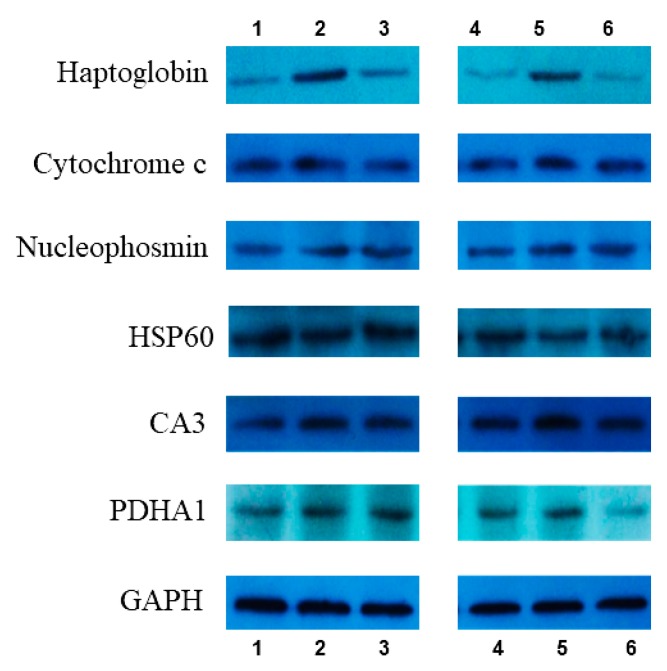
Validation of partly differentially expressed protein by Western blot: 1 and 4 come from the normal group; 2 and 5 come from the model group; 3 and 6 come from the acetylated and amidated hexapeptide group(Ac-GMCCSR-NH2).

References

    1. Na C.R., Wang S., Kirsner R.S., Federman D.G. Elderly adults and skin disorders: Common problems for nondermatologists. South Med. J. 2012;105:600–606. doi: 10.1097/SMJ.0b013e31826f5d17. - DOI - PubMed
    1. Kong S.Z., Shi X.G., Feng X.X., Li W.J., Liu W.H., Chen Z.W., Xie J.H., Lai X.P., Zhang S.X., Zhang X.J., et al. Inhibitory effect of hydroxysafflor yellow a on mouse skin photoaging induced by ultraviolet irradiation. Rejuvenation Res. 2013;16:404–413. doi: 10.1089/rej.2013.1433. - DOI - PMC - PubMed
    1. Brenneisen P., Sies H., Scharffetter-Kochanek K. Ultraviolet-B irradiation and matrix metalloproteinases: From induction via signaling to initial events. Ann. N. Y. Acad. Sci. 2002;973:31–43. doi: 10.1111/j.1749-6632.2002.tb04602.x. - DOI - PubMed
    1. Debacq-Chainiaux F., Borlon C., De Hertogh B., Remacle J., Morvan P.Y., Vallée R., Toussaint O. Identification of potential anti-photoageing algal compounds using an in-vitro model of photoageing. J. Pharm Pharmacol. 2006;58:1577–1583. doi: 10.1211/jpp.58.12.0003. - DOI - PubMed
    1. Neyrinck A.M., Taminiau B., Walgrave H., Daube G., Cani P.D., Bindels L.B., Delzenne N.M. Spirulina Protects against Hepatic Inflammation in Aging: An Effect Related to the Modulation of the Gut Microbiota? Nutrients. 2017;9:633. doi: 10.3390/nu9060633. - DOI - PMC - PubMed