


Cardiac Troponin T in Healthy Full-Term Infants
- PMID: 31489446
- PMCID: PMC6848050
- DOI: 10.1007/s00246-019-02199-9
Cardiac Troponin T in Healthy Full-Term Infants
Abstract
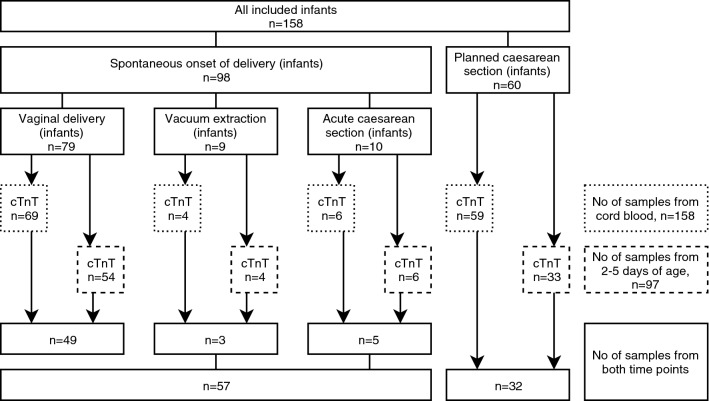
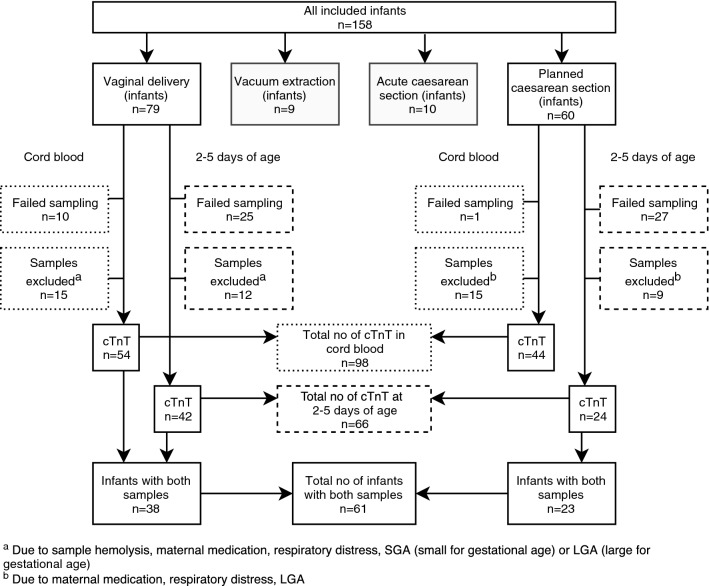
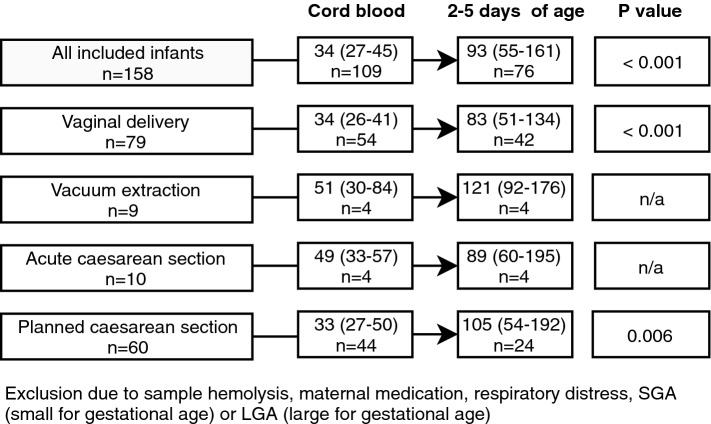
In this prospective cohort study of healthy full-term infants, we hypothesized that high-sensitivity cardiac troponin T (hs-cTnT) would be elevated in cord blood, compared with adult reference values, and that it would further increase over the first days of age. Cardiac troponin T has been shown to be significantly increased in healthy full-term newborns compared with adult reference values, but there is no established reference range. Most studies of cTnT in newborns have been performed before the introduction of high-sensitivity cTnT (hs-cTnT) assay. We conducted a study including 158 full-term newborns, at Stockholm South General Hospital. High-sensitivity cTnT was analyzed in umbilical cord blood and at 2-5 days of age. Median hs-cTnT (interquartile range) in cord blood was 34(26-44) ng/L; 99th percentile 88 ng/L. Median hs-cTnT at 2-5 days of age was 92(54-158) ng/L; 99th percentile 664 ng/L. We conclude that hs-cTnT is elevated in cord blood in healthy, full-term newborn infants compared with adult reference values, and that it increases significantly during the first days of life. Our findings further underline the need of caution when using hs-cTnT as a measurement of cardiac impact in newborns.
Keywords: Cardiac troponin T; High-sensitivity cTnT; Newborn.
Conflict of interest statement
The authors declare that they have no conflict of interest.
Figures
References
MeSH terms
Substances
Grants and funding
LinkOut - more resources
Full Text Sources
Research Materials
Miscellaneous
