


Human Induced Pluripotent Stem-Cell-Derived Cardiomyocytes as Models for Genetic Cardiomyopathies
- PMID: 31489928
- PMCID: PMC6770343
- DOI: 10.3390/ijms20184381
Human Induced Pluripotent Stem-Cell-Derived Cardiomyocytes as Models for Genetic Cardiomyopathies
Abstract
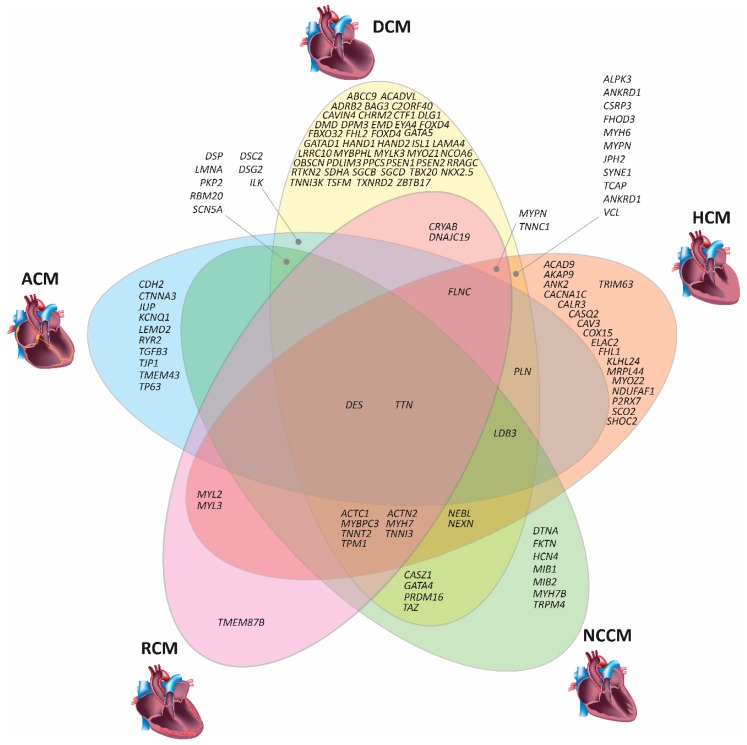
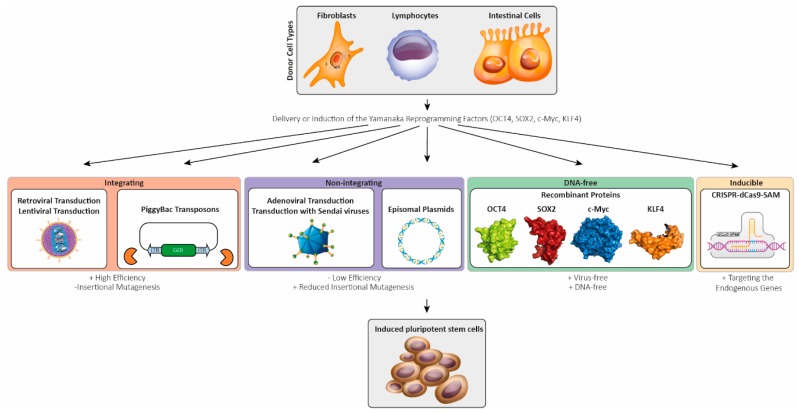
In the last few decades, many pathogenic or likely pathogenic genetic mutations in over hundred different genes have been described for non-ischemic, genetic cardiomyopathies. However, the functional knowledge about most of these mutations is still limited because the generation of adequate animal models is time-consuming and challenging. Therefore, human induced pluripotent stem cells (iPSCs) carrying specific cardiomyopathy-associated mutations are a promising alternative. Since the original discovery that pluripotency can be artificially induced by the expression of different transcription factors, various patient-specific-induced pluripotent stem cell lines have been generated to model non-ischemic, genetic cardiomyopathies in vitro. In this review, we describe the genetic landscape of non-ischemic, genetic cardiomyopathies and give an overview about different human iPSC lines, which have been developed for the disease modeling of inherited cardiomyopathies. We summarize different methods and protocols for the general differentiation of human iPSCs into cardiomyocytes. In addition, we describe methods and technologies to investigate functionally human iPSC-derived cardiomyocytes. Furthermore, we summarize novel genome editing approaches for the genetic manipulation of human iPSCs. This review provides an overview about the genetic landscape of inherited cardiomyopathies with a focus on iPSC technology, which might be of interest for clinicians and basic scientists interested in genetic cardiomyopathies.
Keywords: ARVC; DCM; HCM; LVNC; NCCM; RCM; cardiomyocytes; cardiomyopathies; cardiovascular genetics; induced pluripotent stem cells.
Conflict of interest statement
The authors declare no conflict of interest.
Figures
References
-
- Richards S., Aziz N., Bale S., Bick D., Das S., Gastier-Foster J., Grody W.W., Hegde M., Lyon E., Spector E., et al. Standards and guidelines for the interpretation of sequence variants: A joint consensus recommendation of the American College of Medical Genet. and Genomics and the Association for Molecular Pathology. Genet. Med. 2015;17:405–424. doi: 10.1038/gim.2015.30. - DOI - PMC - PubMed
-
- Maron B.J., Towbin J.A., Thiene G., Antzelevitch C., Corrado D., Arnett D., Moss A.J., Seidman C.E., Young J.B., American Heart A., et al. Contemporary definitions and classification of the cardiomyopathies: An american heart association scientific statement from the council on clinical cardiology, heart failure and transplantation committee; Quality of care and outcomes research and functional genomics and translational biology interdisciplinary working groups; and council on epidemiology and prevention. Circulation. 2006;113:1807–1816. - PubMed
Publication types
MeSH terms
Substances
Grants and funding
LinkOut - more resources
Full Text Sources
Other Literature Sources
Medical
