. 2019 Sep 6;14(9):e0222006.
doi: 10.1371/journal.pone.0222006. eCollection 2019.

Dextranol: An inert xeroprotectant

Affiliations

Dextranol: An inert xeroprotectant

Bryan J Jones et al. PLoS One. .

Abstract

Dextranol, a reduced dextran, prevents damage to stored dry protein samples that unmodified dextran would otherwise cause. Desiccation protectants (xeroprotectants) like the polysaccharide dextran are critical for preserving dried protein samples by forming a rigid glass that protects entrapped protein molecules. Stably dried proteins are important for maintaining critical information in clinical samples like blood serum as well as maintaining activity of biologic drug compounds. However, we found that dextran reacts with both dried serum proteins and lyophilized purified proteins during storage, producing high-molecular weight Amadori-product conjugates. These conjugates appeared in a matter of days or weeks when stored at elevated temperatures (37° or 45°C), but also appeared on a timescale of months when stored at room temperature. We synthesized a less reactive dextranol by reducing dextran's anomeric carbon from an aldehyde to an alcohol. Serum samples dried in a dextranol-based matrix protected the serum proteins from forming high-molecular weight conjugates. The levels of four cancer-related serum biomarkers (prostate specific antigen, neuropilin-1, osteopontin, and matrix-metalloproteinase 7) decreased, as measured by immunoassay, when serum samples were stored for one to two weeks in dextran-based matrix. Switching to a dextranol-based xeroprotection matrix slightly reduced the damage to osteopontin and completely stopped any detectable damage during storage in the other three biomarkers when stored for a period of two weeks at 45°C. We also found that switching from dextran to dextranol in a lyophilization formulation eliminates this unwanted reaction, even at elevated temperatures. Dextranol offers a small and easy modification to dextran that significantly improves the molecule's function as a xeroprotectant by eliminating the potential for damaging protein-polysaccharide conjugation.


Conflict of interest statement

The authors have declared that no competing interests exist.

Figures
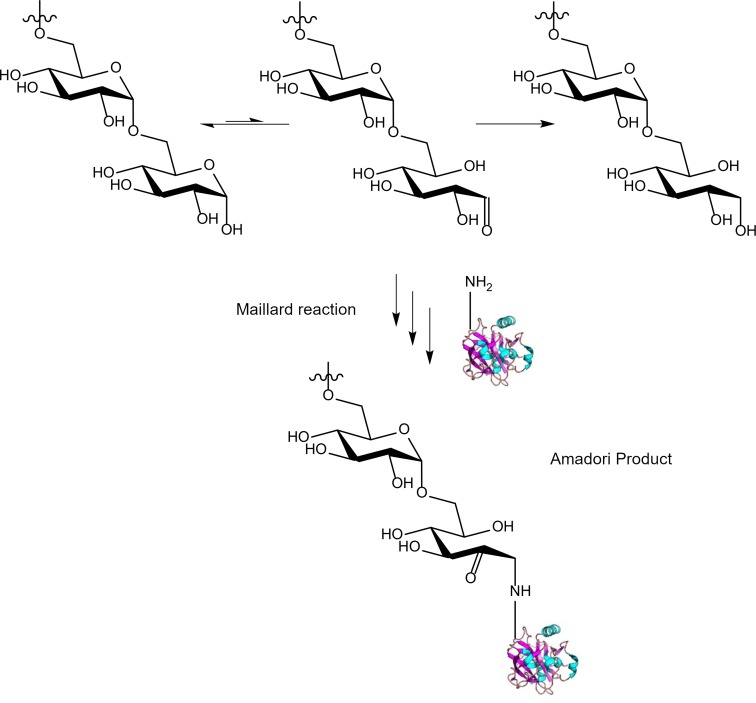
Fig 1
Fig 1. Polysaccharide modification.
The cyclic and aldehyde-containing linear forms of the reducing end of a polysaccharide (e.g. dextran) are in equilibrium. The linear form is able to undergo a Maillard reaction with protein amine groups during prolonged storage or upon the addition of heat forming a glycated protein (Schiff base or Amadori Product). Reduction of the polysaccharide aldehyde to an alcohol prevents the Maillard reaction during long term storage of proteins with the polysaccharide.
Fig 2
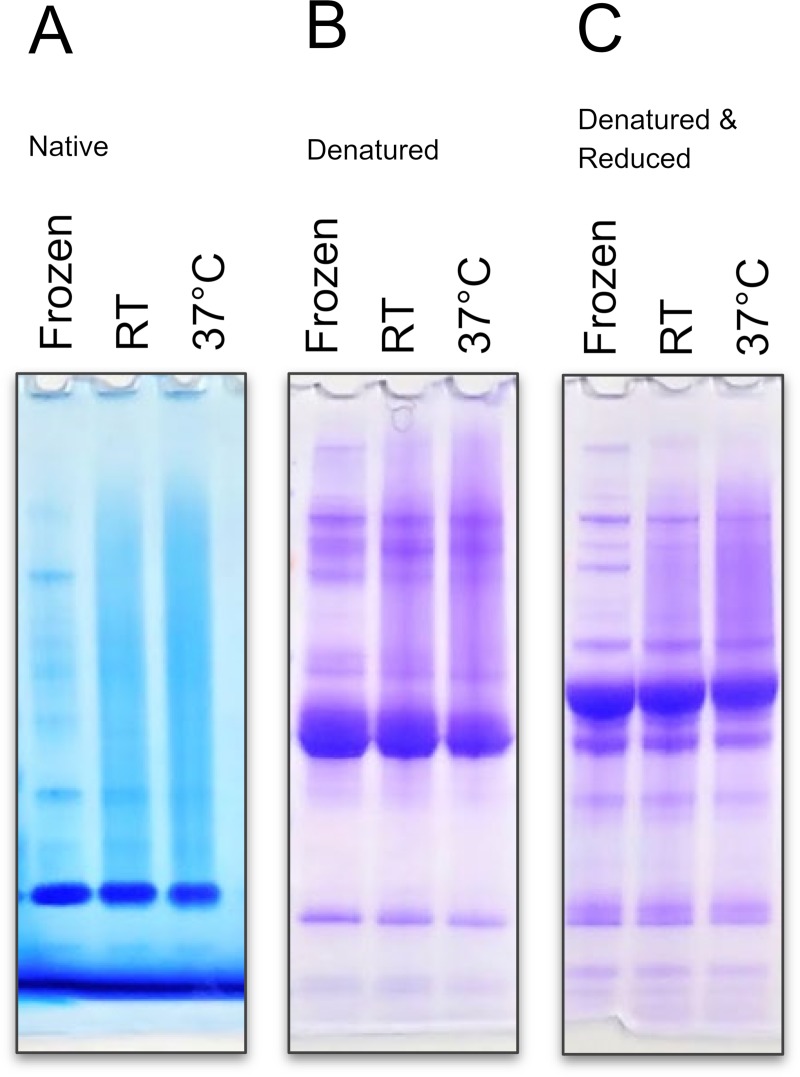
Fig 2. High molecular weight smearing appears in vitrified samples.
Human serum after 16 weeks of storage after isothermal vitrification using dextran-based xeroprotectant matrix show high molecular weight smearing. Vitrified samples were either stored at room temperature (RT) or 37°C and reconstituted in PBS. Frozen samples were kept at -20°C. Gel electrophoresis was carried out using (Panel A) non-denaturing conditions, (Panel B) denaturing conditions, or (Panel C) denatured & reducing conditions. High molecular weight smears were present in all vitrified samples stored for 16 weeks and were more pronounced in samples stored at the higher temperature. Smearing did not disappear upon denaturation or reduction.
Fig 3
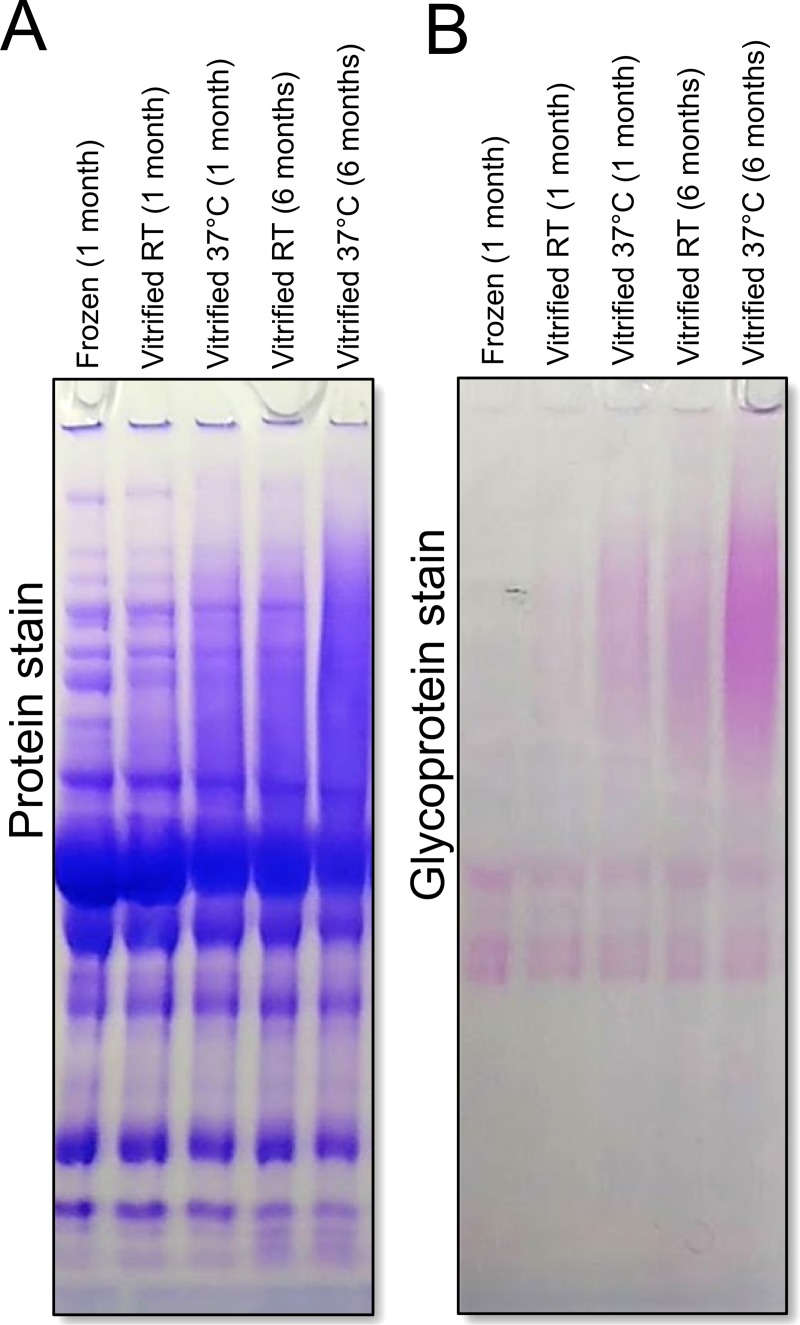
Fig 3. High molecular weight smearing worsens over time and at elevated temperature storage, and stains positive for glycosylation.
Serum samples were vitrified in dextran-based xeroprotectant matrix and stored for 1 or 6 months at either room temperature (RT) or 37°C. Samples were run on SDS-PAGE under denaturing/reducing conditions and stained (Panel A) for total protein or (Panel B) for glycoprotein. Smearing worsened with higher temperature storage and with increased storage time. Glycoprotein stain indicates high-molecular weight smears are glycosylated; suggesting covalent attachment of dextran to proteins.
Fig 4
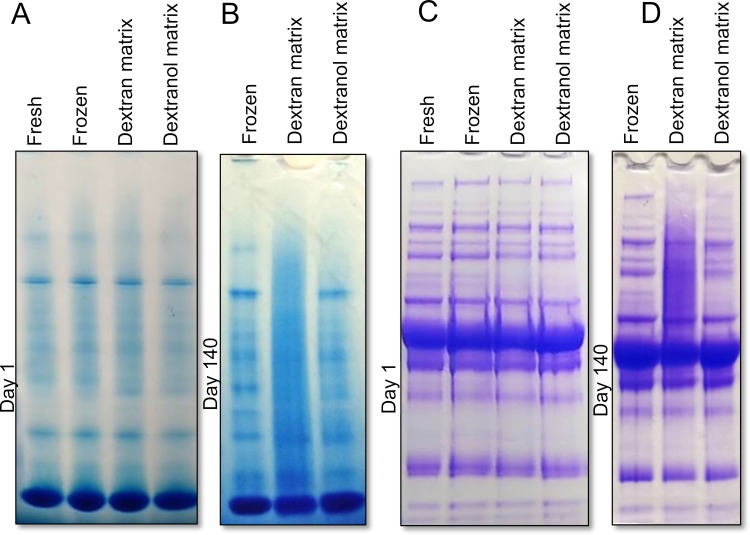
Fig 4. Dextranol-based xeroprotectant matrix preserves proteins and prevents smearing.
Serum samples were either fresh, frozen, or vitrified in either a dextran-based or dextranol-based xeroprotectant matrix. Serum was analyzed (Panel A and C) immediately after vitrification (Day 1) or (Panel B and D) after storage for 140 days at 37°C. Vitrified samples were reconstituted in PBS. Gel electrophoresis was carried out under (Panel A and B) native conditions, and (Panel C and D) denaturing/reducing conditions. After two weeks, smearing was visible in samples preserved in dextran-based matrix, but not in dextranol-based matrix. Gel images obtained on intermediate time points can be found in S4 Fig.
Fig 5
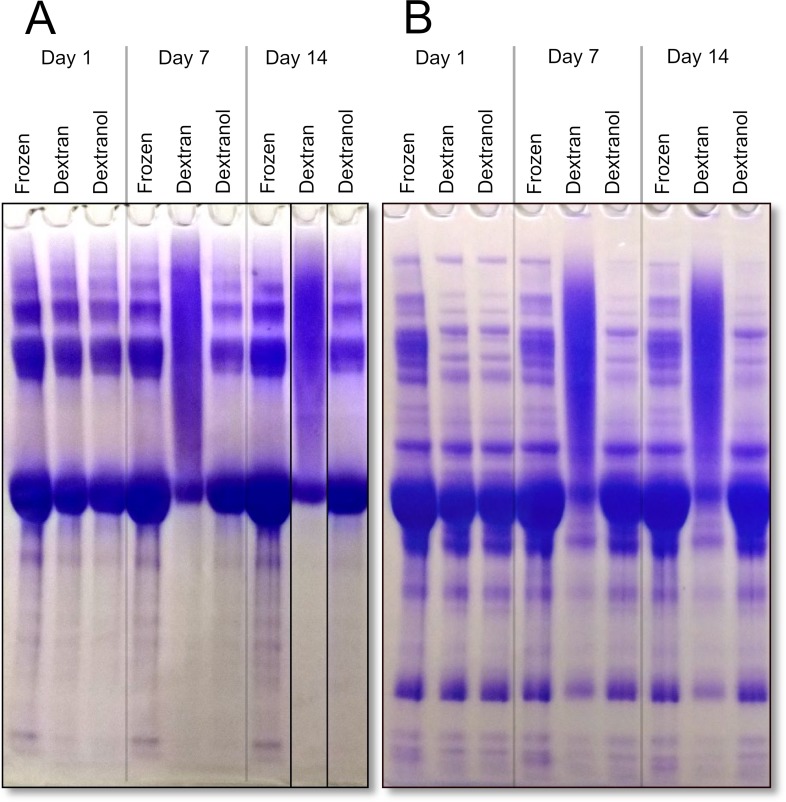
Fig 5. Dextranol-based xeroprotectant matrix protects human serum proteins and BSA when stored at 45°C.
Coomassie stained gel showing results of high temperature storage of (Panel A) BSA (Bovine serum albumin) and (Panel B) human serum. Immediately after vitrification, samples preserved in dextran and dextranol-based xeroprotectant matrices looked similar to frozen sample (left). After 7 days (mid), and 14 days (right) BSA stored in dextran-based matrix was mostly in a high-molecular weight smear. BSA stored in dextranol-based matrix still resembled the frozen sample. Note that it is common to see higher molecular bands in SDS-PAGE of BSA due to irreversible multimer formation [53, 54].

References

    1. Wang W. Advanced protein formulations. Protein science: a publication of the Protein Society. 2015;24(7):1031–9. Epub 2015/04/11. 10.1002/pro.2684 - DOI - PMC - PubMed
    1. Solivio MJ, Less R, Rynes ML, Kramer M, Aksan A. Adsorbing/dissolving Lyoprotectant Matrix Technology for Non-cryogenic Storage of Archival Human Sera. Sci Rep. 2016;6:24186 Epub 2016/04/14. 10.1038/srep24186 - DOI - PMC - PubMed
    1. Boye JI, Barbana C. Protein Processing in Food and Bioproduct Manufacturing and Techniques for Analysis. Food and Industrial Bioproducts and Bioprocessing. 2012. 10.1002/9781119946083.ch3 10.1002/9781119946083.ch3. - DOI
    1. Katdare A, Chaubal M. Excipient Development for Pharmaceutical, Biotechnology, and Drug Delivery Systems: CRC Press; 2006. 474 p.
    1. Liao YH, Brown MB, Quader A, Martin GP. Protective mechanism of stabilizing excipients against dehydration in the freeze-drying of proteins. Pharm Res. 2002;19(12):1854–61. Epub 2003/01/14. 10.1023/a:1021497625645 . - DOI - PubMed

Publication types