


Elimination of Osteosarcoma by Necroptosis with Graphene Oxide-Associated Anti-HER2 Antibodies
- PMID: 31491952
- PMCID: PMC6770144
- DOI: 10.3390/ijms20184360
Elimination of Osteosarcoma by Necroptosis with Graphene Oxide-Associated Anti-HER2 Antibodies
Abstract
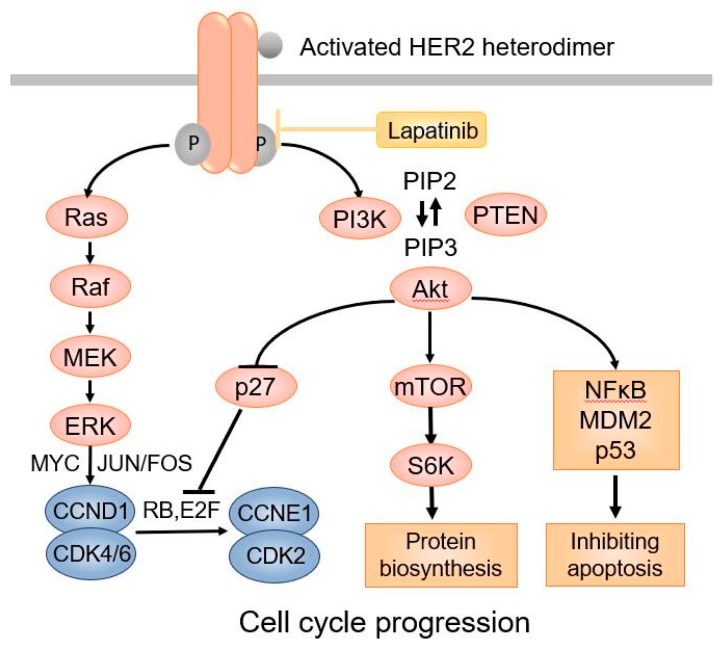
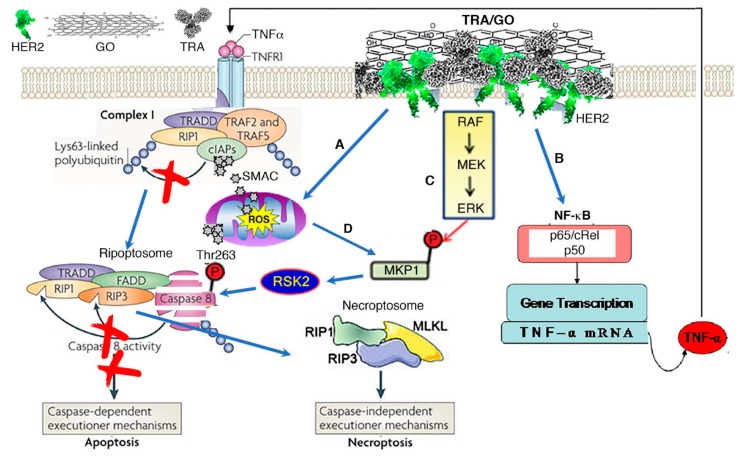
The prognosis for non-resectable or recurrent osteosarcoma (OS) remains poor. The finding that the majority of OS overexpress the protooncogene HER2 raises the possibility of using HER2 as a therapeutic target. However, clinical trials on the anti-HER2 antibody trastuzumab (TRA) in treating OS find no therapeutic benefit. HER2 overexpression in OS is not generally associated with gene amplification, with low-level expression regarded as HER2 "negative", as per criteria used to classify breast cancer HER2 status. Nevertheless, active HER2-targeting approaches, such as virus-based HER2 vaccines or CAR-T cells have generated promising results. More recently, it has been found that the noncovalent association of TRA with nanomaterial graphene oxide (GO) generates stable TRA/GO complexes capable of rapidly killing OS cells. TRA/GO induces oxidative stress and strong HER2 signaling to elicit immediate degradation of both cIAP (cellular inhibitor of apoptosis protein) and caspase 8, leading to activation of necroptosis. This is an attractive mechanism of cancer cell death as chemo/apoptosis-resistant tumors may remain susceptible to necroptosis. In addition, necroptosis is potentially immunogenic to promote tumor immunity, as opposed to apoptosis that tends to silence tumor immunity. Currently, no established anticancer therapeutics are known to eliminate cancers by necroptosis. The aim of this article is to review the rationale and mechanisms of TRA/GO-mediated cytotoxicity.
Keywords: HER2; graphene oxide; necroptosis; osteosarcoma; trastuzumab.
Conflict of interest statement
The authors disclose a patent application filed by the University of Utah.
Figures
References
-
- O’Kane G.M., Cadoo K.A., Walsh E.M., Emerson R., Dervan P., O’Keane C., Hurson B., O’Toole G., Dudeney S., Kavanagh E., et al. Perioperative chemotherapy in the treatment of osteosarcoma: A 26-year single institution review. Clin. Sarcoma Res. 2015;5:17. doi: 10.1186/s13569-015-0032-0. - DOI - PMC - PubMed
-
- Bacci G., Ferrari S., Longhi A., Forni C., Bertoni F., Fabbri N., Zavatta M., Versari M. Neoadjuvant chemotherapy for high grade osteosarcoma of the extremities: Long-term results for patients treated according to the Rizzoli IOR/OS-3b protocol. J. Chemother. 2001;13:93–99. doi: 10.1179/joc.2001.13.1.93. - DOI - PubMed
-
- Schwartz C.L., Wexler L.H., Krailo M.D., Teot L.A., Devidas M., Steinherz L.J., Goorin A.M., Gebhardt M.C., Healey J.H., Sato J.K., et al. Intensified Chemotherapy With Dexrazoxane Cardioprotection in Newly Diagnosed Nonmetastatic Osteosarcoma: A Report From the Children’s Oncology Group. Pediatr. Blood Cancer. 2016;63:54–61. doi: 10.1002/pbc.25753. - DOI - PMC - PubMed
Publication types
MeSH terms
Substances
LinkOut - more resources
Full Text Sources
Research Materials
Miscellaneous
