


Membrane-associated mucins of the ocular surface: New genes, new protein functions and new biological roles in human and mouse
- PMID: 31493487
- PMCID: PMC10276350
- DOI: 10.1016/j.preteyeres.2019.100777
Membrane-associated mucins of the ocular surface: New genes, new protein functions and new biological roles in human and mouse
Abstract
The mucosal glycocalyx of the ocular surface constitutes the point of interaction between the tear film and the apical epithelial cells. Membrane-associated mucins (MAMs) are the defining molecules of the glycocalyx in all mucosal epithelia. Long recognized for their biophysical properties of hydration, lubrication, anti-adhesion and repulsion, MAMs maintain the wet ocular surface, lubricate the blink, stabilize the tear film and create a physical barrier to the outside world. However, it is increasingly appreciated that MAMs also function as cell surface receptors that transduce information from the outside to the inside of the cell. A number of excellent review articles have provided perspective on the field as it has progressed since 1987, when molecular cloning of the first MAM was reported. The current article provides an update for the ocular surface, placing it into the broad context of findings made in other organ systems, and including new genes, new protein functions and new biological roles. We discuss the epithelial tissue-equivalent with mucosal differentiation, the key model system making these advances possible. In addition, we make the first systematic comparison of MAMs in human and mouse, establishing the basis for using knockout mice for investigations with the complexity of an in vivo system. Lastly, we discuss findings from human genetics/genomics, which are providing clues to new MAM roles previously unimagined. Taken together, this information allows us to generate hypotheses for the next stage of investigation to expand our knowledge of MAM function in intracellular signaling and roles unique to the ocular surface.
Keywords: Epithelial tissue-equivalent; Glycocalyx; Knockout mouse; Membrane-associated mucin; Ocular surface; Signal transduction.
Copyright © 2019 Elsevier Ltd. All rights reserved.
Conflict of interest statement
Declaration of Interest
MEF and SJ are named as inventors on an issued United States patent entitled “Structure/Function of Clusterin Pharmaceuticals” and a pending patent application entitled “Method to Protect and Seal the Ocular Surface” (United States application 16/103,741, filed Aug 14, 2018), assigned to the University of Southern California and related to work mentioned herein. MEF is a co-founder and serves as Chief Scientific Officer for Proteris Biotech, Inc., a company focused on developing pharmaceuticals for treating eye disease. The other authors have no commercial or proprietary interest in any concept or product described in this article.
Figures
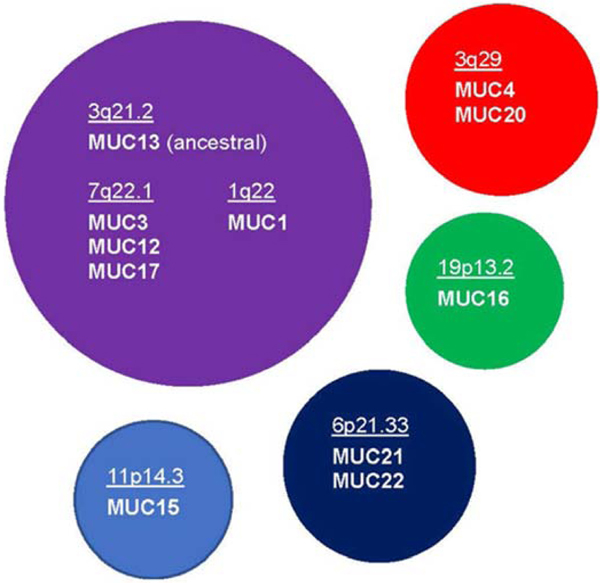
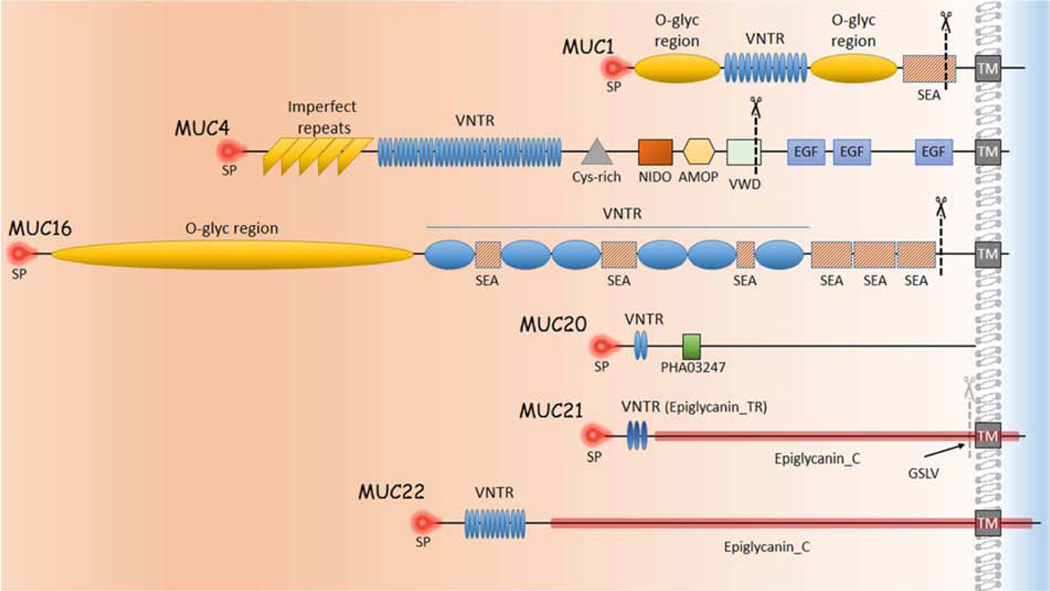
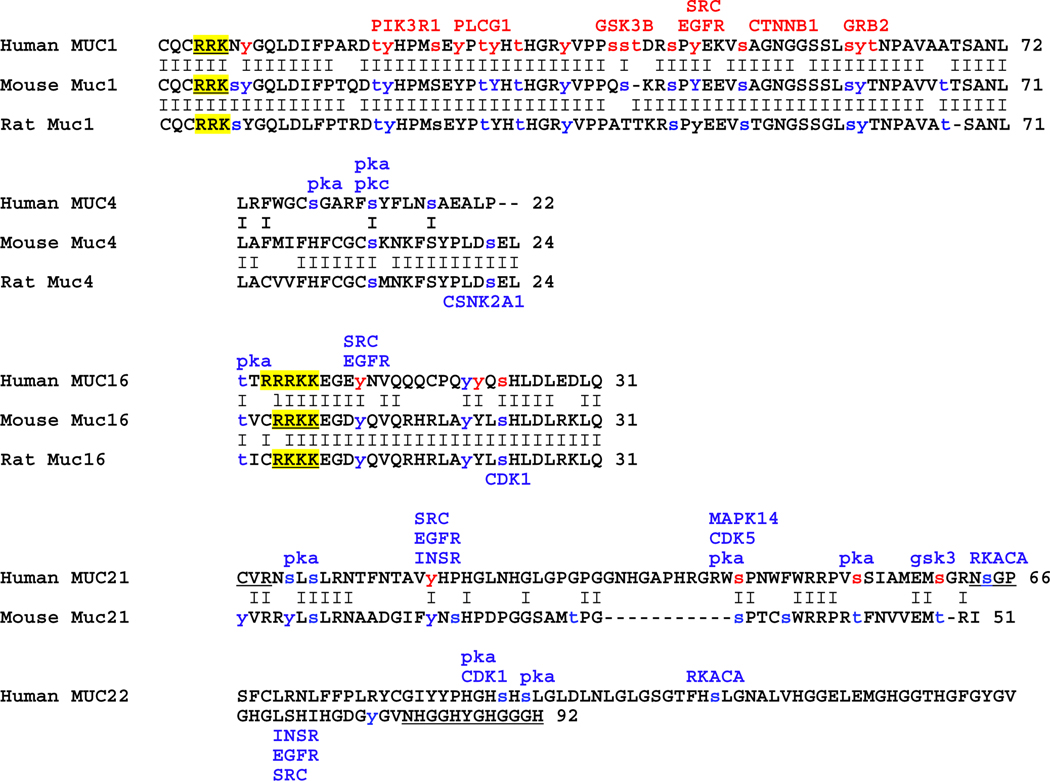
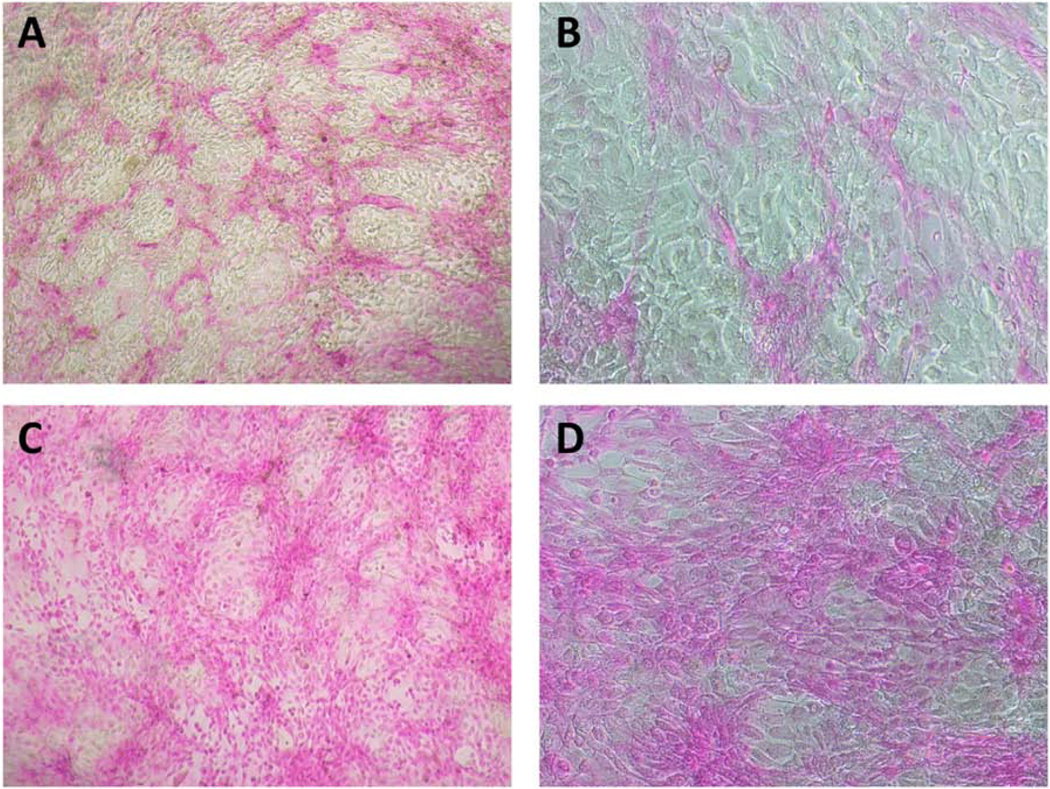
References
-
- Abelson MB, Ingerman A, 2005. The Dye-namics of Dry-Eye Diagnosis. Review of Ophthalmology https://www.reviewofophthalmology.com/article/the-dye-namics-of-dry-eye-....
-
- Ablamowicz AF, Nichols JJ, 2016. Ocular Surface Membrane-Associated Mucins. The ocular surface 14, 331–341. - PubMed
-
- Agrawal B, Krantz MJ, Parker J, Longenecker BM, 1998. Expression of MUC1 mucin on activated human T cells: implications for a role of MUC1 in normal immune regulation. Cancer research 58, 4079–4081. - PubMed
-
- Aithal A, Junker WM, Kshirsagar P, Das S, Kaur S, Orzechowski C, Gautam SK, Jahan R, Sheinin YM, Lakshmanan I, Ponnusamy MP, Batra SK, Jain M, 2018. Development and characterization of carboxy-terminus specific monoclonal antibodies for understanding MUC16 cleavage in human ovarian cancer. PloS one 13, e0193907. - PMC - PubMed
Publication types
MeSH terms
Substances
Grants and funding
LinkOut - more resources
Full Text Sources
Medical
