Comparative Study
. 2019 Sep 30;37(42):6208-6220.
doi: 10.1016/j.vaccine.2019.08.030. Epub 2019 Sep 5.

Comparison of adjuvants to optimize influenza neutralizing antibody responses

Affiliations
Comparative Study

Comparison of adjuvants to optimize influenza neutralizing antibody responses

Rebecca S Rudicell et al. Vaccine. .

Abstract

Seasonal influenza vaccines represent a positive intervention to limit the spread of the virus and protect public health. Yet continual influenza evolution and its ability to evade immunity pose a constant threat. For these reasons, vaccines with improved potency and breadth of protection remain an important need. We previously developed a next-generation influenza vaccine that displays the trimeric influenza hemagglutinin (HA) on a ferritin nanoparticle (NP) to optimize its presentation. Similar to other vaccines, HA-nanoparticle vaccine efficacy is increased by the inclusion of adjuvants during immunization. To identify the optimal adjuvants to enhance influenza immunity, we systematically analyzed TLR agonists for their ability to elicit immune responses. HA-NPs were compatible with nearly all adjuvants tested, including TLR2, TLR4, TLR7/8, and TLR9 agonists, squalene oil-in-water mixtures, and STING agonists. In addition, we chemically conjugated TLR7/8 and TLR9 ligands directly to the HA-ferritin nanoparticle. These TLR agonist-conjugated nanoparticles induced stronger antibody responses than nanoparticles alone, which allowed the use of a 5000-fold-lower dose of adjuvant than traditional admixtures. One candidate, the oil-in-water adjuvant AF03, was also tested in non-human primates and showed strong induction of neutralizing responses against both matched and heterologous H1N1 viruses. These data suggest that AF03, along with certain TLR agonists, enhance strong neutralizing antibody responses following influenza vaccination and may improve the breadth, potency, and ultimately vaccine protection in humans.

Keywords: AF03; Adjuvants; Influenza vaccine; Nanoparticles; STING agonists; TLR agonists.


Conflict of interest statement

Declaration of interests

The authors declare that they have no known competing financial interests or personal relationships that could have appeared to influence the work reported in this paper.

Figures

Figure 1.
Figure 1.. Comparison of adjuvants to elicit influenza neutralizing antibodies.
The neutralizing antibody response induced by HA-NP immunization was measured by lentivirus reporter neutralization assays against homologous NC99 virus (A). Mice were vaccinated at week 0 and week 3, with serum collections at week 2, 5, 6, 7, and a terminal bleed at week 8. Lentivirus reporter neutralization assays were performed with sera from week 6 and HAI was performed with sera from week 8. The nanoparticles were tested alone and with traditional adjuvants, including Alum and AF03; TLR agonists; and STING agonists. Adjuvants that induced high neutralizing titers as measured by the neutralization assay were selected for additional HAI analyses against homologous NC99 virus (B). All measured treatments significantly boosted HAI titers (p<0.0001) over unadjuvanted HA-NP. Mean ± SEM is graphed. **** p<0.0001; *** p<0.001; **p<0.01; *p<0.05.
Figure 2.
Figure 2.. Breadth of immune responses induced by adjuvants used in immunization.
Adjuvants that induced high neutralizing titers against homologous virus were selected for analyses against two additional H1 viruses, Beij95 and Bris07. Lentivirus reporter neutralization (A) and HAI (B) were used to measure the breadth of neutralization in mouse serum following two immunizations. Mean ± SEM is graphed. **** p<0.0001; *p<0.05.
Figure 3.
Figure 3.. Characterization of TLR conjugated HA-NPs.
(A) Molecular structures of the linker-TLR7/8-agonist complex and linker-TLR9-agonist complex are shown. (B) Electron micrographs of particles before and after conjugation confirm intact nanoparticle formation.
Figure 4.
Figure 4.. ELISA binding, neutralization, and HAI titers of a TLR7/8-agonist- and a TLR9- agonist conjugated to HA-NP.
The immunogenicity of HA-NP-3M012 conjugated nanoparticles (A) and HA-NP-CpG conjugated nanoparticles (B) were tested in mice and analyzed by ELISA binding, lentivirus reporter neutralization, and HAI assays. Admixture controls included a mix of HA-NP and 10 μg 3M012 or 20 μg CpG, and a mix of HA-NP and 1.7 ng 3M012 or 21 ng CpG (equimolar matches to the conjugates). A matched dose of unconjugated HA-NP was also included in the analyses. Mean ± SEM is graphed. **** p<0.0001; *** p<0.001; **p<0.01; *p<0.05.
Figure 5.
Figure 5.. Dose-dependent antibody responses of a TLR7/8-agonist-conjugated nanoparticle.
HA-NP-3M012 immunogenicity was tested in mice at four doses: 0.1 μg, 0.5 μg, 2.5 μg, and 12.5 μg. Admixture controls and unconjugated nanoparticle were included for comparison. Serum neutralization was measured in the NC99 lentivirus reporter assay (left) and NC99 HAI assay (right). Arrows highlight the 2.5 μg dose, wherein the HA-NP-3M012 conjugate induced similar antibody titers to HA-NP + 3M012, despite containing over 5000-fold less 3M012 adjuvant. Mean ± SEM is graphed.
Figure 6.
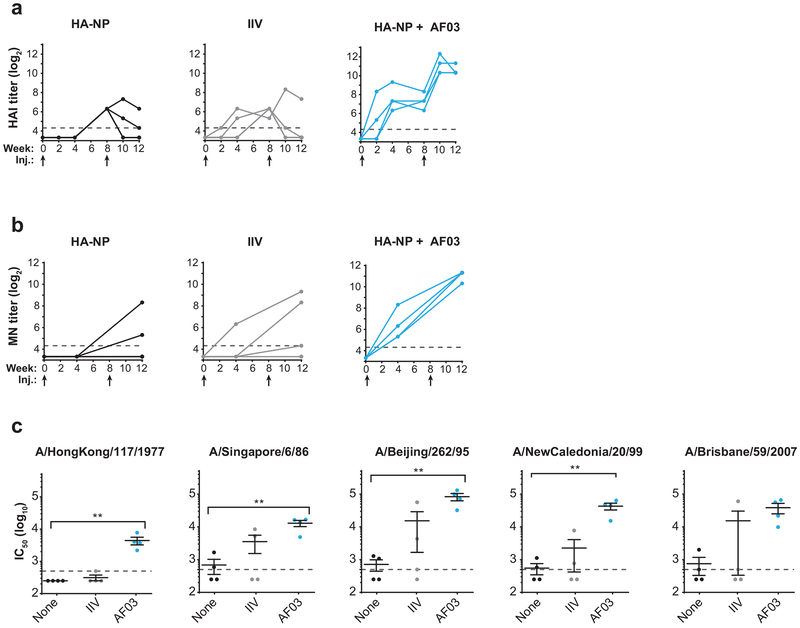
Figure 6.. Immune responses induced by adjuvanted immunizations in NHP.
Monkeys were immunized at week 0 and week 8 with 15 μg of HA-NPs adjuvanted with AF03, unadjuvanted HA-NP, or a matched dose of NC99 IIV, and antibody responses were monitored at 0, 2, and 4 weeks after each immunization. HAI titers (A) and microneutralization titers (B) were significantly boosted in the AF03 treatment group over controls at week 12. Homologous and heterologous neutralization titers were measured by lentivirus reporter neutralization assays at week 12 ((C); **p<0.01).

References

    1. Weir JP, Gruber MF. An overview of the regulation of influenza vaccines in the United States. Influenza Other Respir Viruses. 2016;10:354–60. - PMC - PubMed
    1. Krammer F. Novel universal influenza virus vaccine approaches. Curr Opin Virol. 2016;17:95–103. - PMC - PubMed
    1. Garten RJ, Davis CT, Russell CA, Shu B, Lindstrom S, Balish A, et al. Antigenic and genetic characteristics of swine-origin 2009 A(H1N1) influenza viruses circulating in humans. Science. 2009;325:197–201. - PMC - PubMed
    1. Zost SJ, Parkhouse K, Gumina ME, Kim K, Diaz Perez S, Wilson PC, et al. Contemporary H3N2 influenza viruses have a glycosylation site that alters binding of antibodies elicited by egg-adapted vaccine strains. Proc Natl Acad Sci U S A. 2017;114:12578–83. - PMC - PubMed
    1. Wu NC, Zost SJ, Thompson AJ, Oyen D, Nycholat CM, McBride R, et al. A structural explanation for the low effectiveness of the seasonal influenza H3N2 vaccine. PLoS Pathog. 2017;13:e1006682. - PMC - PubMed

Publication types